

Osiris, Volume 39 : Disability and the History of Science
Book Details
Format
Paperback / softback
ISBN-10
0226835626
ISBN-13
9780226835624
Publisher
University of Chicago Press Journals
Imprint
University of Chicago Press Journals
Country of Manufacture
GB
Country of Publication
GB
Publication Date
Sep 2nd, 2024
Product Classification:
HistoryDisability: social aspectsScience: general issuesHistory of science
KSh 5,050.00
Currently unavailable
0 in stock
Delivery Location
Delivery fee: Select location
Secure
Quality
Fast
Presents a powerful new vision of the history of science through the lens of disability studies.
Disability has been a central-if unacknowledged-force in the history of science, as in the scientific disciplines. Across historical epistemology and laboratory research, disability has been "good to think with": an object of investigation made to yield generalizable truths. Yet disability is rarely imagined to be the source of expertise, especially the kind of expertise that produces (rational, neutral, universal) scientific knowledge.
This volume of Osiris places disability history and the history of science in conversation to foreground disability epistemologies, disabled scientists, and disability sciencing (engagement with scientific tools and processes). Looking beyond paradigms of medicalization and industrialization, the volume authors also examine knowledge production about disability from the ancient world to the present in fields ranging from mathematics to the social sciences, resulting in groundbreaking histories of taken-for-granted terms such as impairment, infirmity, epidemics, and shogai.
Some contributors trace the disabling impacts of scientific theories and practices in the contexts of war, factory labor, insurance, and colonialism; others excavate racial and settler ableism in the history of scientific facts, protocols, and collections; still others query the boundaries between scientific, lay, and disability expertise. Contending that disability alters method, authors bring new sources and interpretation techniques to the history of science, overturn familiar narratives, apply disability analyses to established terms and archives, and discuss accessibility issues for disabled historians. The resulting volume announces a disability history of science.
Disability has been a central-if unacknowledged-force in the history of science, as in the scientific disciplines. Across historical epistemology and laboratory research, disability has been "good to think with": an object of investigation made to yield generalizable truths. Yet disability is rarely imagined to be the source of expertise, especially the kind of expertise that produces (rational, neutral, universal) scientific knowledge.
This volume of Osiris places disability history and the history of science in conversation to foreground disability epistemologies, disabled scientists, and disability sciencing (engagement with scientific tools and processes). Looking beyond paradigms of medicalization and industrialization, the volume authors also examine knowledge production about disability from the ancient world to the present in fields ranging from mathematics to the social sciences, resulting in groundbreaking histories of taken-for-granted terms such as impairment, infirmity, epidemics, and shogai.
Some contributors trace the disabling impacts of scientific theories and practices in the contexts of war, factory labor, insurance, and colonialism; others excavate racial and settler ableism in the history of scientific facts, protocols, and collections; still others query the boundaries between scientific, lay, and disability expertise. Contending that disability alters method, authors bring new sources and interpretation techniques to the history of science, overturn familiar narratives, apply disability analyses to established terms and archives, and discuss accessibility issues for disabled historians. The resulting volume announces a disability history of science.
Presents a powerful new vision of the history of science through the lens of disability studies.
Disability has been a central—if unacknowledged—force in the history of science, as in the scientific disciplines. Across historical epistemology and laboratory research, disability has been “good to think with”: an object of investigation made to yield generalizable truths. Yet disability is rarely imagined to be the source of expertise, especially the kind of expertise that produces (rational, neutral, universal) scientific knowledge.
This volume of Osiris places disability history and the history of science in conversation to foreground disability epistemologies, disabled scientists, and disability sciencing (engagement with scientific tools and processes). Looking beyond paradigms of medicalization and industrialization, the volume authors also examine knowledge production about disability from the ancient world to the present in fields ranging from mathematics to the social sciences, resulting in groundbreaking histories of taken-for-granted terms such as impairment, infirmity, epidemics, and shōgai.
Some contributors trace the disabling impacts of scientific theories and practices in the contexts of war, factory labor, insurance, and colonialism; others excavate racial and settler ableism in the history of scientific facts, protocols, and collections; still others query the boundaries between scientific, lay, and disability expertise. Contending that disability alters method, authors bring new sources and interpretation techniques to the history of science, overturn familiar narratives, apply disability analyses to established terms and archives, and discuss accessibility issues for disabled historians. The resulting volume announces a disability history of science.
Disability has been a central—if unacknowledged—force in the history of science, as in the scientific disciplines. Across historical epistemology and laboratory research, disability has been “good to think with”: an object of investigation made to yield generalizable truths. Yet disability is rarely imagined to be the source of expertise, especially the kind of expertise that produces (rational, neutral, universal) scientific knowledge.
This volume of Osiris places disability history and the history of science in conversation to foreground disability epistemologies, disabled scientists, and disability sciencing (engagement with scientific tools and processes). Looking beyond paradigms of medicalization and industrialization, the volume authors also examine knowledge production about disability from the ancient world to the present in fields ranging from mathematics to the social sciences, resulting in groundbreaking histories of taken-for-granted terms such as impairment, infirmity, epidemics, and shōgai.
Some contributors trace the disabling impacts of scientific theories and practices in the contexts of war, factory labor, insurance, and colonialism; others excavate racial and settler ableism in the history of scientific facts, protocols, and collections; still others query the boundaries between scientific, lay, and disability expertise. Contending that disability alters method, authors bring new sources and interpretation techniques to the history of science, overturn familiar narratives, apply disability analyses to established terms and archives, and discuss accessibility issues for disabled historians. The resulting volume announces a disability history of science.
Get Osiris, Volume 39 by Jaipreet Virdi at the best price and quality guaranteed only at Werezi Africa's largest book ecommerce store. The book was published by University of Chicago Press Journals.
Customers Who Bought This Also Bought
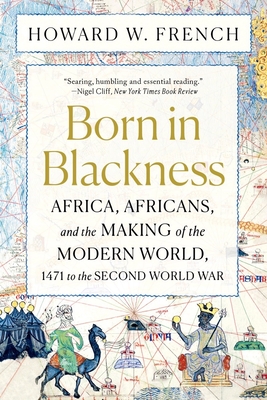
Born in Blackness – Africa, Africans, and the Making of the Modern World, 1471 to the Second World War
KSh 2,950.00

Migrations
KSh 5,450.00

The Lost City of Z
KSh 2,000.00

On War
KSh 1,200.00

The Lumumba Plot
KSh 3,050.00

Boer War
KSh 3,400.00
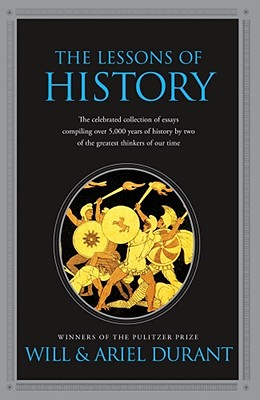
The Lessons of History
KSh 1,800.00

White Nights and Other Stories
KSh 3,900.00
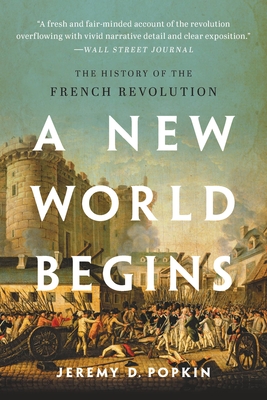
A New World Begins
KSh 3,950.00

Reformation
KSh 3,400.00

Hiroshima Men
KSh 4,500.00
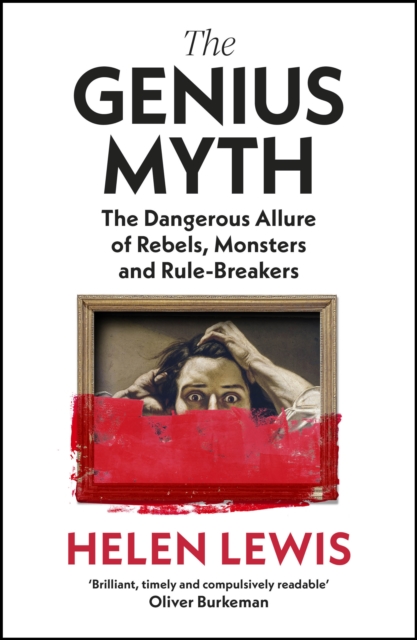
Genius Myth
KSh 3,050.00
