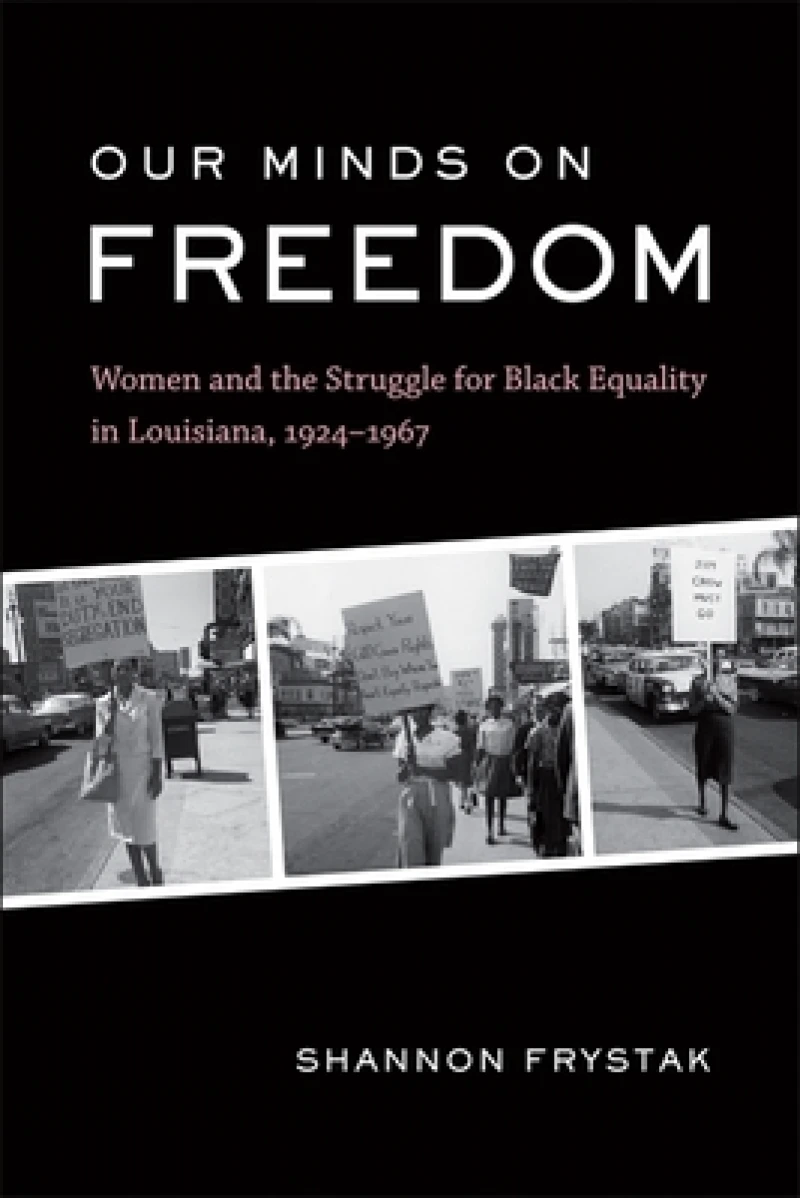
Our Minds on Freedom : Women and the Struggle for Black Equality in Louisiana, 1924-1967
Book Details
Format
Paperback / Softback
ISBN-10
0807172367
ISBN-13
9780807172360
Publisher
Louisiana State University Press
Imprint
Louisiana State University Press
Country of Manufacture
US
Country of Publication
GB
Publication Date
Feb 5th, 2020
Print length
280 Pages
Weight
426 grams
Dimensions
15.30 x 22.80 x 2.00 cms
Product Classification:
History of the Americas20th century history: c 1900 to c 2000Social & cultural historyGender studies, gender groupsGender studies: women and girlsEthnic studies / EthnicityGender studies, gender groupsGender studies: womenEthnic studiesBlack & Asian studiesCivics and citizenshipHuman rightsHuman rights, civil rightsCivil rights & citizenshipHistoryHistory of the AmericasSocial and cultural historyLocal history
Ksh 5,600.00
Werezi Extended Catalogue
Delivery in 12 days
1 copies in stock
Delivery Location
Delivery fee: Select location
Delivery in 12 days
Secure
Quality
Fast
Explores the organisational and leadership roles female civil rights activists in Louisiana played from the 1920s to the 1960s. Shannon Frystak highlights a diverse group of courageous women who fought alongside their brothers and fathers, uncles and cousins, to achieve a more racially just Louisiana.
Literature on the civil rights movement has long highlighted the leadership of ministerial men and young black revolutionaries, such as Reverend Martin Luther King, Jr., Stokely Carmichael, and Malcolm X. Recent studies have begun to explore female participation in the struggle for racial justice, but women continue to be relegated to the margins of civil rights history. In Our Minds on Freedom, Shannon Frystak explores the organizational and leadership roles female civil rights activists in Louisiana played from the 1920s to the 1960s. She highlights a diverse group of courageous women who fought alongside their brothers and fathers, uncles and cousins, to achieve a more racially just Louisiana.
From the Depression through World War II and the postwar years, Frystak shows, black women in Louisiana joined and led local unions and civil rights organizations, agitating for voting rights and equal treatment in the public arena, in employment, and in admission to the state's institutions of higher learning. At the same time, black and white women began to find common ground in organizations such as the YWCA, the NAACP, and the National Urban League. Frystak explores how women of both races worked together to organize the 1953 Baton Rouge bus boycott, which served as inspiration for the more famous Montgomery bus boycott two years later; to alter the system of unequal education throughout the state; and to integrate New Orleans schools after the 1954 Brown decision.
In the early 1960s, a new generation of female activists joined their older counterparts to work with the NAACP, the Congress of Racial Equality, and a number of local grassroots civil rights organizations. Frystak vividly describes the very real dangers they faced canvassing for voter registration in Louisiana's rural areas, teaching in Freedom Schools, and hosting out-of-town civil rights workers in their homes.
As Frystak shows, the civil rights movement allowed women to step out of their prescribed roles as wives, mothers, and daughters and become significant actors, indeed leaders, in a social-change structure largely dominated by men. Our Minds on Freedom is a welcome addition to the literature of the civil rights movement and will intrigue those interested in African American history, women's history, Louisiana, or the U.S. South.
From the Depression through World War II and the postwar years, Frystak shows, black women in Louisiana joined and led local unions and civil rights organizations, agitating for voting rights and equal treatment in the public arena, in employment, and in admission to the state's institutions of higher learning. At the same time, black and white women began to find common ground in organizations such as the YWCA, the NAACP, and the National Urban League. Frystak explores how women of both races worked together to organize the 1953 Baton Rouge bus boycott, which served as inspiration for the more famous Montgomery bus boycott two years later; to alter the system of unequal education throughout the state; and to integrate New Orleans schools after the 1954 Brown decision.
In the early 1960s, a new generation of female activists joined their older counterparts to work with the NAACP, the Congress of Racial Equality, and a number of local grassroots civil rights organizations. Frystak vividly describes the very real dangers they faced canvassing for voter registration in Louisiana's rural areas, teaching in Freedom Schools, and hosting out-of-town civil rights workers in their homes.
As Frystak shows, the civil rights movement allowed women to step out of their prescribed roles as wives, mothers, and daughters and become significant actors, indeed leaders, in a social-change structure largely dominated by men. Our Minds on Freedom is a welcome addition to the literature of the civil rights movement and will intrigue those interested in African American history, women's history, Louisiana, or the U.S. South.
Get Our Minds on Freedom by at the best price and quality guaranteed only at Werezi Africa's largest book ecommerce store. The book was published by Louisiana State University Press and it has pages.