
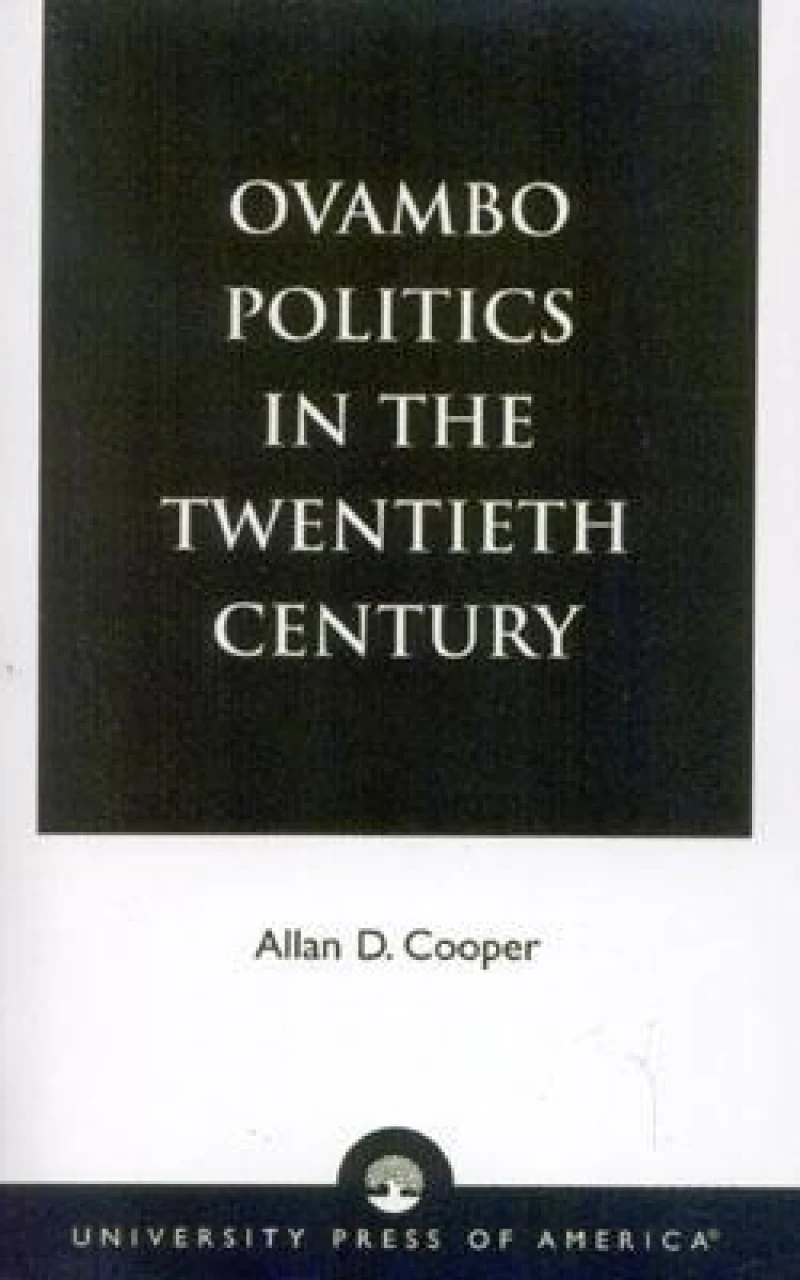
Ovambo Politics in the Twentieth Century
Book Details
Format
Paperback / Softback
ISBN-10
0761821104
ISBN-13
9780761821106
Publisher
University Press of America
Imprint
University Press of America
Country of Manufacture
GB
Country of Publication
GB
Publication Date
Nov 19th, 2001
Print length
362 Pages
Weight
463 grams
Dimensions
21.50 x 13.80 x 2.70 cms
Product Classification:
Politics & government
Ksh 17,450.00
Manufactured on Demand
0 in stock
Delivery Location
Delivery fee: Select location
Secure
Quality
Fast
Ovambo Politics in the Twentieth Century offers a paradigm shift from how studies typically treat the colonization of Africa. Using archival documentation from government and industry sources, Cooper offers a detailed historical analysis of the seven major communities comprising the Ovambo- Namibia's largest ethnic group. His examination reveals that these Ovambo communities engaged in competitive political relations with each other throughout the German colonial era as well as the subsequent occupation of territory by the white minority government of South Africa. Each community alternated between strategies of resistance and collaboration with colonial authorities in order to maximize their geopolitical advantage with their ethnic neighbors. Cooper provides documentation showing that even the assassination of King Mandume in 1917 by South African forces involved the participation of leaders from other Ovambo communities. Ovambo Politics in the Twentieth Century is intended for Africanists, ethnographers, Namibians seeking an understanding of their own history, labor historians, students of colonial history, and students of revolutionary movements.
Ovambo Politics in the Twentieth Century offers a paradigm shift from how studies typically treat the colonization of Africa. Using archival documentation from government and industry sources, Cooper offers a detailed historical analysis of the seven major communities comprising the Ovambo- Namibia''s largest ethnic group. His examination reveals that these Ovambo communities engaged in competitive political relations with each other throughout the German colonial era as well as the subsequent occupation of territory by the white minority government of South Africa. Each community alternated between strategies of resistance and collaboration with colonial authorities in order to maximize their geopolitical advantage with their ethnic neighbors. Cooper provides documentation showing that even the assassination of King Mandume in 1917 by South African forces involved the participation of leaders from other Ovambo communities. Ovambo Politics in the Twentieth Century is intended for Africanists, ethnographers, Namibians seeking an understanding of their own history, labor historians, students of colonial history, and students of revolutionary movements.
Get Ovambo Politics in the Twentieth Century by at the best price and quality guaranteed only at Werezi Africa's largest book ecommerce store. The book was published by University Press of America and it has pages.

