
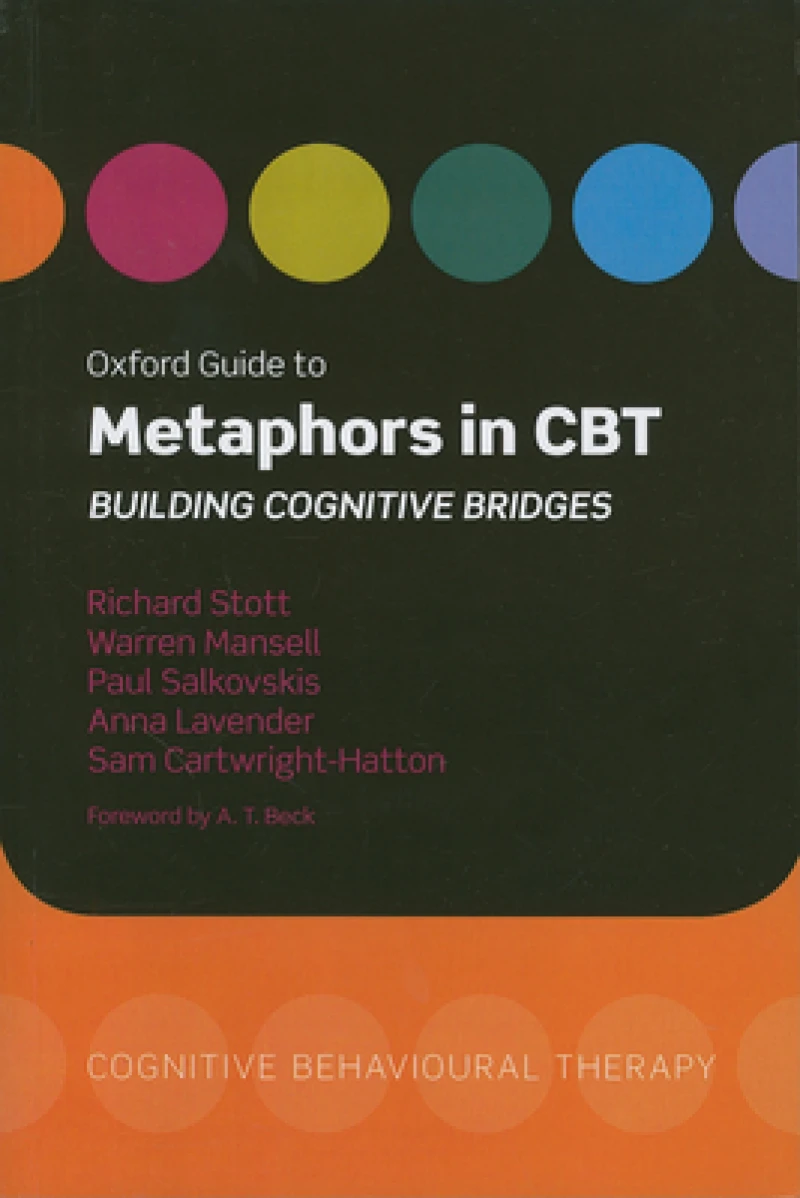
Oxford Guide to Metaphors in CBT : Building Cognitive Bridges
Book Details
Format
Paperback / Softback
Book Series
Oxford Guides to Cognitive Behavioural Therapy
ISBN-10
0199207496
ISBN-13
9780199207497
Publisher
Oxford University Press
Imprint
Oxford University Press
Country of Manufacture
GB
Country of Publication
GB
Publication Date
May 13th, 2010
Print length
260 Pages
Weight
420 grams
Dimensions
23.20 x 15.70 x 1.40 cms
Product Classification:
Cognitive behavioural therapy
Ksh 11,150.00
Werezi Extended Catalogue
Delivery in 14 days
5 copies in stock
Delivery Location
Delivery fee: Select location
Delivery in 14 days
Secure
Quality
Fast
This book is the first to show how metaphors can be used productively in CBT as an integral part of the treatment. It describes the use of metaphors for a wide range of problems, and brings together hundreds of metaphors that experienced therapists have used to great success. It will be a valuable sourcebook for all CBT therapists.
The business of cognitive therapy is to transform meanings. What better way to achieve this than through a metaphor? Metaphors straddle two different domains at once, providing a conceptual bridge from a problematic interpretation to a fresh new perspective that can cast one''s experiences in a new light. Even the simplest metaphor can be used again and again with different clients, yet still achieve the desired effect. One such example is the ''broken leg'' metaphor for depression. Clients with depression are understandably frustrated with their symptoms. They may often push themselves to get better or tell themselves that they should be better by now. As a therapist, it is fair to ask, would the client be so harsh and demanding on herself after getting a broken leg? A broken leg needs time to heal and you need to begin to walk on it gradually as it builds up in strength. "You can''t run before you can walk", and if you try, you are likely to make it worse. For many clients this simple metaphor is enlightening, changing their view of their symptoms as a sign of their own laziness and worthlessness, to a view of them as part of an understandable illness, that while open to improvement, cannot get better over night. This book shows just how metaphors can be used productively in CBT as an integral part of the treatment. It describes the use of metaphors for a wide range of problems, including anxiety and depression, and provides countless examples of metaphors that have been used by others in CBT. It brings together in one place hundreds of metaphors that experienced therapists have used to great success. It will be a valuable sourcebook for all cognitive behaviour therapists, as well as those training in CBT.
Get Oxford Guide to Metaphors in CBT by at the best price and quality guaranteed only at Werezi Africa's largest book ecommerce store. The book was published by Oxford University Press and it has pages.

