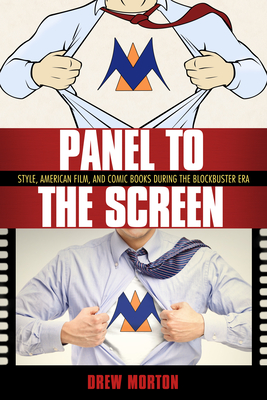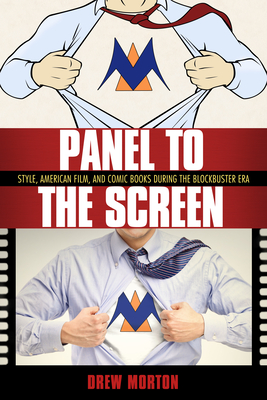
Panel to the Screen : Style, American Film, and Comic Books During the Blockbuster Era
by
Drew Morton
Book Details
Format
Hardback
ISBN-10
1496809785
ISBN-13
9781496809780
Publisher
University Press of Mississippi
Imprint
University Press of Mississippi
Country of Manufacture
US
Country of Publication
GB
Publication Date
Nov 30th, 2016
Print length
208 Pages
Weight
500 grams
Dimensions
22.80 x 15.20 x 1.40 cms
Product Classification:
Comic book & cartoon artAnimated films
KSh 15,850.00
Currently unavailable
0 in stock
Delivery Location
Delivery fee: Select location
Secure
Quality
Fast
Over the past forty years, American film has entered into a formal interaction with the comic book. Such comic book adaptations as Sin City, 300, and Scott Pilgrim vs. the World have adopted components of their source materials' visual style. The screen has been fractured into panels, the photographic has given way to the graphic, and the steady rhythm of cinematic time has evolved into a far more malleable element. In other words, films have begun to look like comics. Yet, this interplay also occurs in the other direction. In order to retain cultural relevancy, comic books have begun to look like films. Frank Miller's original Sin City comics are indebted to film noir while Stephen King's The Dark Tower series could be a Sergio Leone spaghetti western translated onto paper. Film and comic books continuously lean on one another to reimagine their formal attributes and stylistic possibilities. In Panel to the Screen, Drew Morton examines this dialogue in its intersecting and rapidly changing cultural, technological, and industrial contexts. Early on, many questioned the prospect of a ""low"" art form suited for children translating into ""high"" art material capable of drawing colossal box office takes. Now the naysayers are as quiet as the queued crowds at Comic-Cons are massive. Morton provides a nuanced account of this phenomenon by using formal analysis of the texts in a real-world context of studio budgets, grosses, and audience reception.
Get Panel to the Screen by Drew Morton at the best price and quality guaranteed only at Werezi Africa's largest book ecommerce store. The book was published by University Press of Mississippi and it has 208 pages.
Customers Who Bought This Also Bought
Tokyo Ghoul Illustrations: zakki
KSh 3,600.00

Draw Manga Action
KSh 2,700.00

The Secret History of Wonder Woman
KSh 3,050.00

Philosophy of Snoopy
KSh 1,800.00

Peanuts Guide to Friendship
KSh 1,800.00
Official Peanuts
KSh 1,800.00

Art of Marvel Vol.1
KSh 3,400.00

Art of Marvel Vol.2
KSh 3,400.00

Life Lessons from Lucy
KSh 1,800.00
Official Peanuts
KSh 1,800.00

Marvel Comics Library 2
KSh 31,500.00
Bobbie Goods Sunshine Coloring & Drawing
KSh 2,000.00