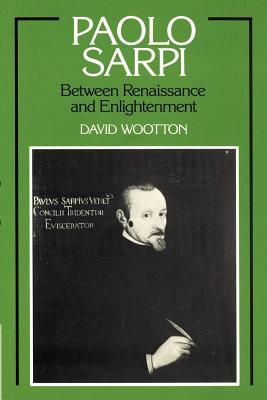
Paolo Sarpi : Between Renaissance and Enlightenment
Book Details
Format
Paperback / softback
ISBN-10
0521892341
ISBN-13
9780521892346
Publisher
Cambridge University Press
Imprint
Cambridge University Press
Country of Manufacture
GB
Country of Publication
GB
Publication Date
Apr 4th, 2002
Print length
204 Pages
Weight
320 grams
Dimensions
18.60 x 22.90 x 1.90 cms
Product Classification:
Christian theologyHistory of ideasHistory of ideasChristianity
KSh 6,100.00
Currently unavailable
0 in stock
Delivery Location
Delivery fee: Select location
Secure
Quality
Fast
In this book David Wootton assesses Sarpi's public opinions in the light of the views expressed in his private papers, reinterprets his life work as being the expression, not of a love of intellectual liberty, nor of a commitment to Protestantism, but of a carefully thought out hostility to doctrinal religion.
Paolo Sarpi (1552–1623) is remembered as the defender of Venice against the Papal Interdict of 1606 and as the first, and greatest, historian of the Counter-Reformation. The sources of his undoubted hostility to clerical authority have always been a matter of controversy; many contemporaries claimed that Sarpi was an 'atheist', while to others his anticlericalism suggested that he was in secret a Protestant. In the present book David Wootton argues that Sarpi's public opinions must be assessed in the light of the views expressed in his private papers. Starting from the Pensiere, in which Sarpi formulated a series of philosophical and historical arguments against Christianity, Mr Wootton seeks to reinterpret Sarpi's life work as being the expression, not of a love of intellectual liberty, nor of a commitment to Protestantism, but of a carefully thought out hostility to doctrinal religion. This interpretation of Sarpi serves to cast new light on the man and his work. But it also throws new light on the intellectual history of his age. Historians such as Lucien Febvre and R. H. Popkin have sought to deny the existence of systematic unbelief in Sarpi's day. Others, such as Christopher Hill and Carlo Ginzburg, have found evidence of a radical, popular tradition of unbelief. This book seeks, through its account of Sarpi's beliefs, to penetrate the hypocrisy which contemporaries agreed characterised the age, and to lay the foundations for a new understanding of the intellectual origins of unbelief.
Get Paolo Sarpi by David Wootton at the best price and quality guaranteed only at Werezi Africa's largest book ecommerce store. The book was published by Cambridge University Press and it has 204 pages.
Customers Who Bought This Also Bought
Problem of Pain
KSh 2,000.00

Screwtape Letters
KSh 2,000.00

Great Divorce
KSh 2,000.00

Miracles
KSh 2,000.00
The Holiness of God
KSh 2,950.00

Making Sense of God
KSh 2,350.00

Reason for God
KSh 2,350.00

Total Forgiveness
KSh 2,350.00
What Is Reformed Theology?
KSh 2,700.00

Pilgrims Regress
KSh 2,000.00

Four Loves
KSh 2,000.00
How to Be Christian
KSh 2,000.00