
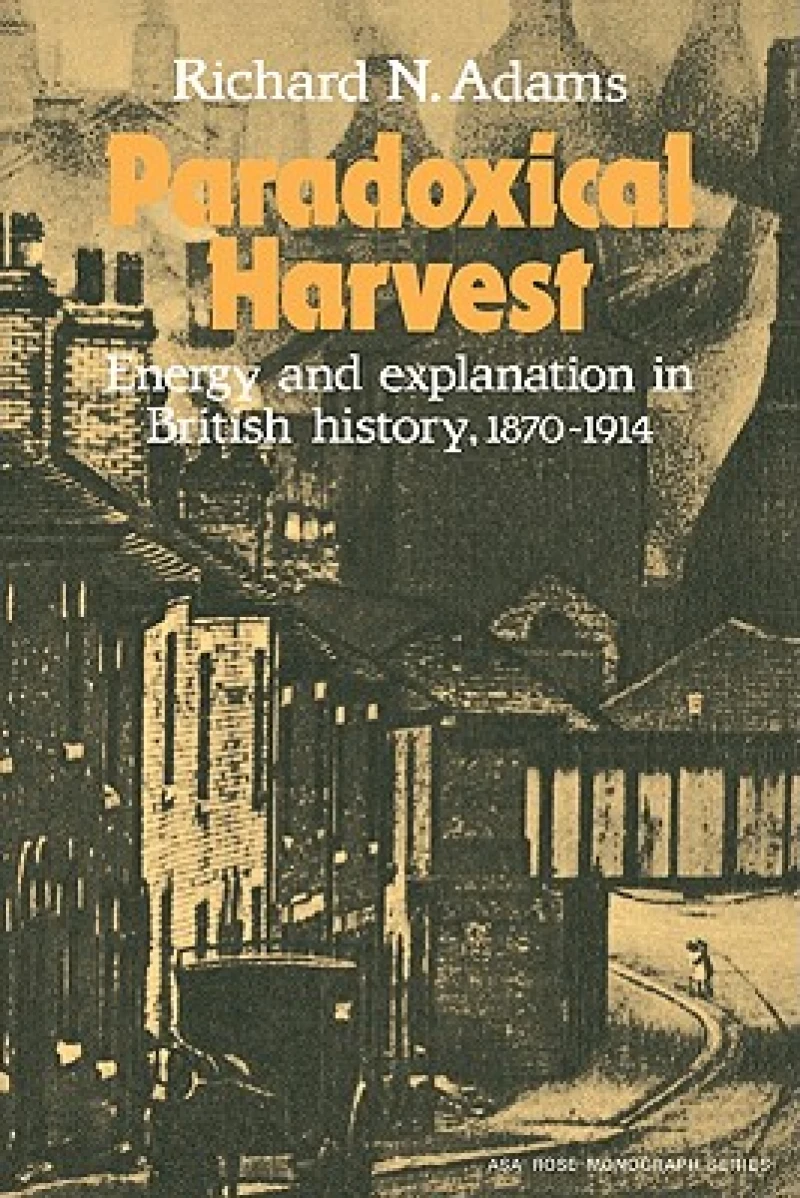
Paradoxical Harvest : Energy and explanation in British History, 1870–1914
Book Details
Format
Paperback / Softback
ISBN-10
0521288665
ISBN-13
9780521288668
Publisher
Cambridge University Press
Imprint
Cambridge University Press
Country of Manufacture
GB
Country of Publication
GB
Publication Date
Sep 30th, 1982
Print length
156 Pages
Weight
244 grams
Dimensions
22.80 x 15.20 x 1.30 cms
Ksh 5,600.00
Manufactured on Demand
0 in stock
Delivery Location
Delivery fee: Select location
Secure
Quality
Fast
This book is a study of the relationship between the use of energy in society and the general pattern of development in Great Britain during the 1870–1914 era. Professor Adams argues that Britain's apparent 'decline' in this period was not in fact a decline but a levelling off in capacity to do work, a result of the country's collective decision to invest more heavily abroad than at home.
This book is a study of the relationship between the use of energy in society and the general pattern of development in Great Britain during the 1870–1914 era. Professor Adams argues that Britain's apparent 'decline' in this period was not in fact a decline but a levelling off in capacity to do work, a result of the country's collective decision to invest more heavily abroad than at home. This pattern accords with Lotka's general energetic principle of natural selection. Specifically, Britain found it necessary to invest abroad, thereby creating an industrial environment for its own products and giving the impetus to other industrial nations - especially the United States and Germany - to seriously threaten Britain's primary position in industry and trade. The book should be of interest to those concerned with development, economic growth, energy and society, cultural development, and in general to specialists in anthropology, sociology, European and British history, economics and economic history.
Get Paradoxical Harvest by at the best price and quality guaranteed only at Werezi Africa's largest book ecommerce store. The book was published by Cambridge University Press and it has pages.

