
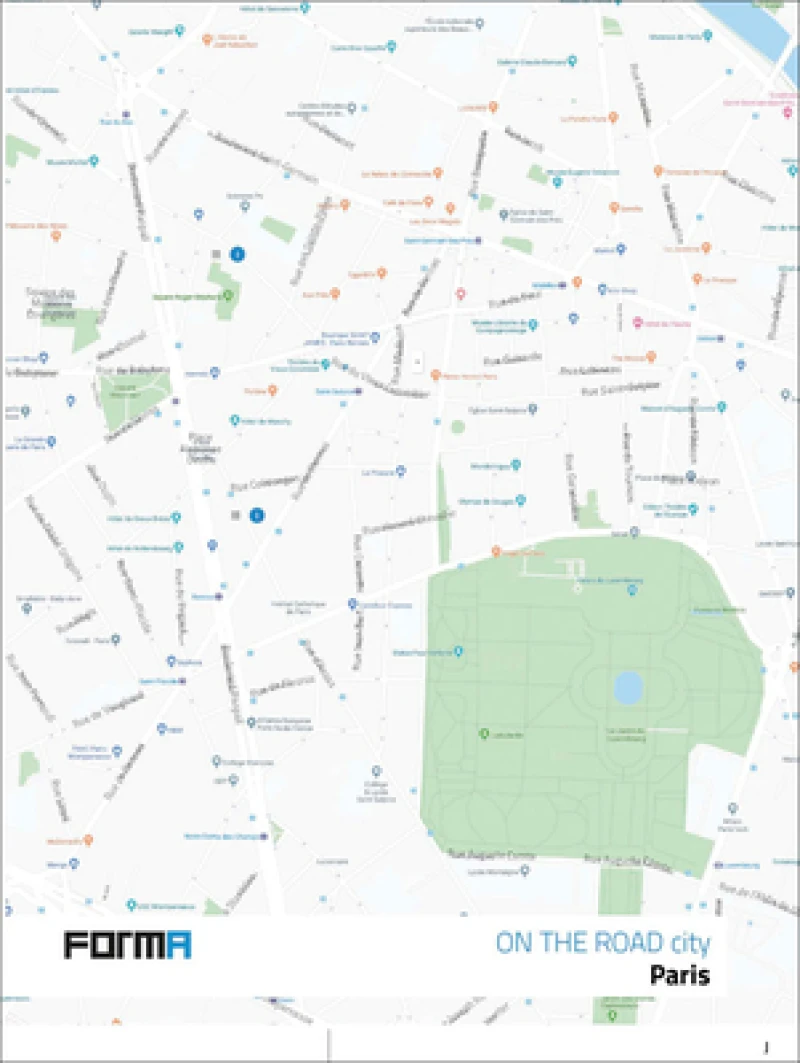
Paris: On the Road Architecture Guides
Book Details
Format
Paperback / Softback
Book Series
On the Road Architecture Guides
ISBN-10
8855210807
ISBN-13
9788855210805
Publisher
Forma Edizioni
Imprint
Forma Edizioni
Country of Manufacture
IT
Country of Publication
GB
Publication Date
Jun 26th, 2024
Print length
224 Pages
Weight
284 grams
Dimensions
16.00 x 11.90 x 1.70 cms
Product Classification:
Architecture
Ksh 3,050.00
Werezi Extended Catalogue
Delivery in 14 days
1 copies in stock
Delivery Location
Delivery fee: Select location
Delivery in 14 days
Secure
Quality
Fast
The Paris guide is focused on describing the complexity of this European metropolis through its 20th and 21st century architecture.
The Paris guide is focused on describing the complexity of this European metropolis through its 20th and 21st century architecture.
Following Haussmann’s transformations, Paris, the most densely constructed city in Europe, expanded thanks to a flexibility based on a matrix able to absorb and integrate the directional courses of the architecture of the period. However, the complexity of the urban transformations and the changes in the Parisian architectural panorama did not erase the solid identity of the city’s urban image. This book guides the reader through decades of Parisian architectural history beginning with the great names of the Modernist movement, Loos, Le Corbusier and Oscar Niemeyer. The second half of the 20th century is famous for the cultural vitality of the city reflected in the innovative architecture of the Centre George Pompidou designed by Piano and Rogers. The Pompidou Centre is both the symbol and result of the 1968 student revolution. The 1980s and 90s were defined by the forceful initiatives of President François Mitterrand, promoter and advocate of iconic projects like the Louvre Pyramid, the Musée d’Orsay renovation, the Parc de la Villette and the Arab World Institute. The present period is represented with several selected projects that have elevated the quality of certain areas on the outskirts of the urban agglomeration.
Following Haussmann’s transformations, Paris, the most densely constructed city in Europe, expanded thanks to a flexibility based on a matrix able to absorb and integrate the directional courses of the architecture of the period. However, the complexity of the urban transformations and the changes in the Parisian architectural panorama did not erase the solid identity of the city’s urban image. This book guides the reader through decades of Parisian architectural history beginning with the great names of the Modernist movement, Loos, Le Corbusier and Oscar Niemeyer. The second half of the 20th century is famous for the cultural vitality of the city reflected in the innovative architecture of the Centre George Pompidou designed by Piano and Rogers. The Pompidou Centre is both the symbol and result of the 1968 student revolution. The 1980s and 90s were defined by the forceful initiatives of President François Mitterrand, promoter and advocate of iconic projects like the Louvre Pyramid, the Musée d’Orsay renovation, the Parc de la Villette and the Arab World Institute. The present period is represented with several selected projects that have elevated the quality of certain areas on the outskirts of the urban agglomeration.
Get Paris: On the Road Architecture Guides by at the best price and quality guaranteed only at Werezi Africa's largest book ecommerce store. The book was published by Forma Edizioni and it has pages.

