
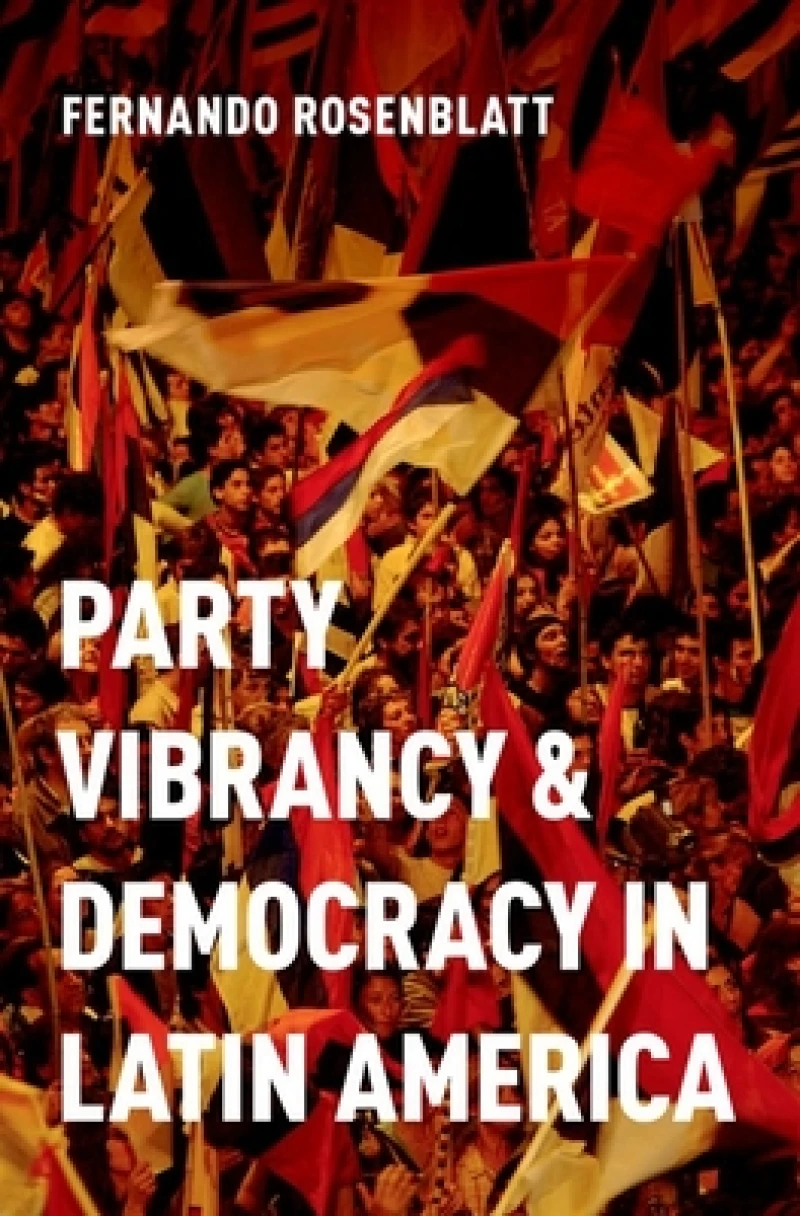
Party Vibrancy and Democracy in Latin America
Book Details
Format
Hardback or Cased Book
ISBN-10
0190870044
ISBN-13
9780190870041
Publisher
Oxford University Press Inc
Imprint
Oxford University Press Inc
Country of Manufacture
US
Country of Publication
GB
Publication Date
Jun 7th, 2018
Print length
304 Pages
Weight
552 grams
Dimensions
24.30 x 16.80 x 2.90 cms
Product Classification:
Comparative politicsInternational relations
Ksh 17,550.00
Manufactured on Demand
0 in stock
Delivery Location
Delivery fee: Select location
Secure
Quality
Fast
In Party Vibrancy and Democracy in Latin America, Fernando Rosenblatt sheds new light on why some parties remain lively organizations that generate intense attachment over time. He concentrates on party performance in three of the region''s more stable countries--Chile, Costa Rica, and Uruguay--because they are regarded as ''consolidated'' democracies with records of good governance. Even in some of these countries, he shows, party instability is a problem.
Even in Latin America''s most socially and economically stable countries, new parties emerge constantly, old parties collapse, and party systems across the region are notoriously fragile. Still, there are also successful stories. There have been a number of parties in Colombia, Chile, and Venezuela that used to be able to operate well beyond electoral cycles and preserve a significant presence in their respective countries for decades. How do such political parties remain vibrant organizations over time?In Party Vibrancy and Democracy in Latin America, Fernando Rosenblatt sheds new light on how party vibrancy is maintained and reproduced over time in three of the region''s more stable countries-Chile, Costa Rica, and Uruguay. Referencing these three "consolidated" democracies with records of good governance, Rosenblatt identifies the complex interaction between four causal factors that can explain party vibrancy: Purpose, Trauma, Channels of Ambition, and Moderate Exit Barriers. "Purpose" activates prospective loyalty among party members. "Trauma" refers to a shared traumatic past which engenders retrospective loyalty. "Channels of Ambition" are established routes by which individuals can pursue political careers. Finally, "Moderate Exit Barriers" are rules that set costs of defection at reasonable levels. When these factors work together throughout a party''s "Golden Age," they can demonstrate a link between party organizations´ stability and the quality of democratic representation across Latin America. As Rosenblatt finds, when parties remain vibrant organizations, democracies are better able to withstand challenges long-term. A unique qualitative study, Party Vibrancy and Democracy in Latin America demonstrates how the vitality of political parties can directly and indirectly impact how effective they are as intermediaries for their citizens not just in Latin America, but around the world.
Get Party Vibrancy and Democracy in Latin America by at the best price and quality guaranteed only at Werezi Africa's largest book ecommerce store. The book was published by Oxford University Press Inc and it has pages.

