
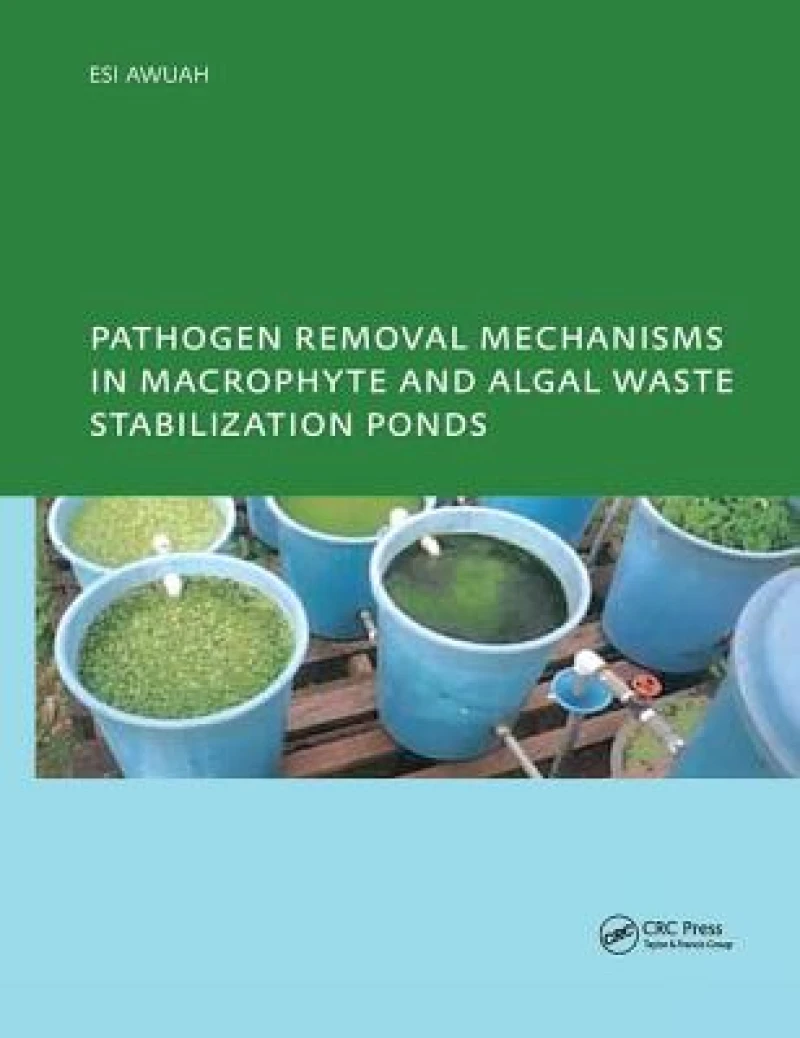
Pathogen Removal Mechanisms in Macrophyte and Algal Waste Stabilization Ponds : PhD: UNESCO-IHE Institute, Delft
by
E. Awuah
Book Details
Format
Hardback or Cased Book
ISBN-10
113846869X
ISBN-13
9781138468696
Publisher
Taylor & Francis Ltd
Imprint
CRC Press
Country of Manufacture
GB
Country of Publication
GB
Publication Date
Oct 9th, 2017
Print length
160 Pages
Weight
420 grams
Dimensions
18.10 x 25.20 x 1.70 cms
Product Classification:
Soil science, sedimentologyWater supply & treatment
Ksh 25,200.00
Werezi Extended Catalogue
0 in stock
Delivery Location
Delivery fee: Select location
Secure
Quality
Fast
Waste stabilization ponds are recognized as the solution to domestic wastewater treatment in developing countries. This is because it is cheap, easy to construct and do not require high skilled labour. This study addresses the mechanisms involved in faecal bacteria removal in both macrophyte and algal-based waste stabilization ponds.
Pathogen removal mechanisms in macrophyte and algal-based waste stabilization ponds were studied in Ghana and Colombia. The macrophytes used were water lettuce (Pistia stratiotes) and duckweeds (Lemna paucicostata and Spirodela polyrhiza). The selection of the species was based on economic importance and availability. Lemna was used during the initial investigations. However, Lemna could not withstand the ammonia levels in the wastewater used. Spirodela polyrhiza a rarer species in Ghana was therefore used in subsequent studies. The main mechanisms considered in this study were pH, protozoa predation and surface attachment. The microorganisms used were faecal bacteria namely; Escherichia coli, other coliforms, Salmonella sp., other enterobacteria, E. coli, ATCC13706 and enterococci. Studies were conducted using batch scale, continuous flow bench and pilot scale ponds. Results indicated in order of importance that long retention periods, attachment, sedimentation, predation and low pH are mechanisms in macrophyte ponds enhancing faecal bacteria removal, while in the algal ponds long retention periods, sunlight penetration, high pH, attachment and sedimentation are the mechanisms of importance in faecal bacteria removal. Presence of protozoa was also found to be important but true grazing studies could not be quantified. Dissolved oxygen did not play a major role in faecal bacteria removal.
Get Pathogen Removal Mechanisms in Macrophyte and Algal Waste Stabilization Ponds by at the best price and quality guaranteed only at Werezi Africa's largest book ecommerce store. The book was published by Taylor & Francis Ltd and it has pages.

