
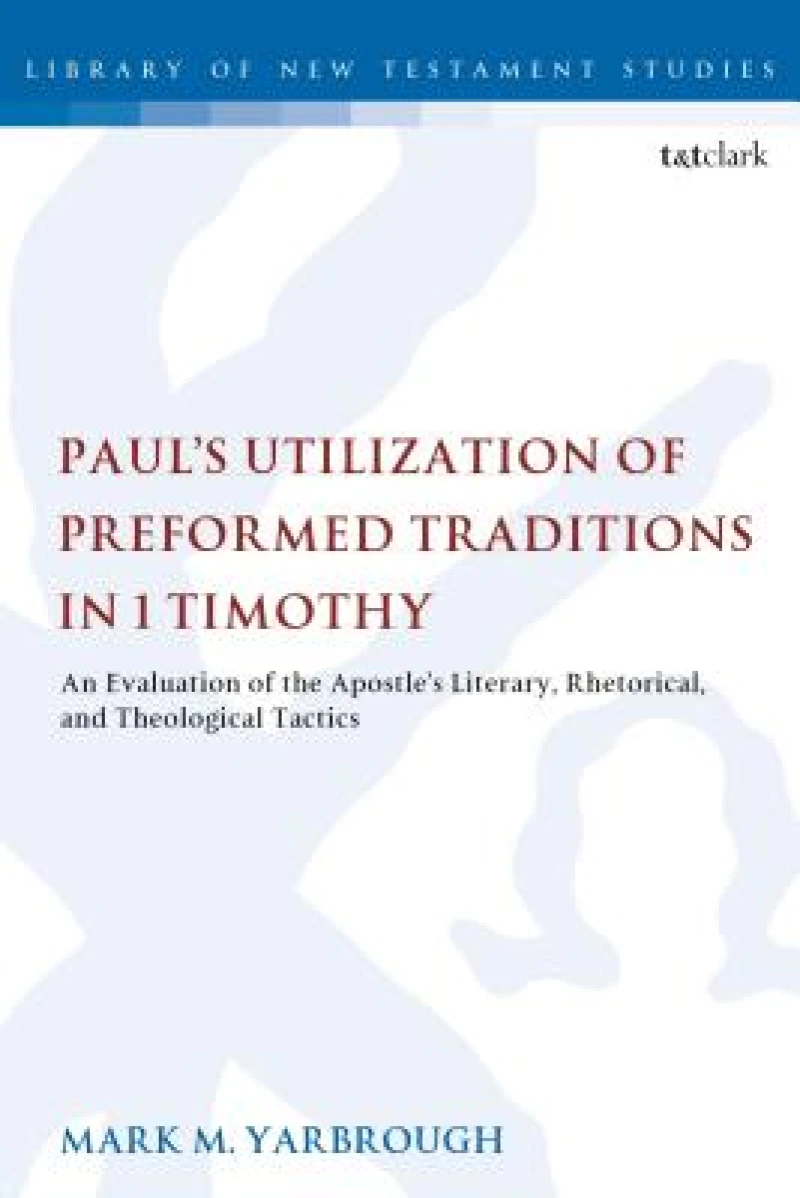
Paul's Utilization of Preformed Traditions in 1 Timothy : An evaluation of the Apostle's literary, rhetorical, and theological tactics
Book Details
Format
Paperback / Softback
Book Series
The Library of New Testament Studies
ISBN-10
0567689247
ISBN-13
9780567689245
Publisher
Bloomsbury Publishing PLC
Imprint
T.& T.Clark Ltd
Country of Manufacture
GB
Country of Publication
GB
Publication Date
Jun 27th, 2019
Print length
256 Pages
Weight
386 grams
Dimensions
15.60 x 23.20 x 1.70 cms
Product Classification:
New Testaments
Ksh 5,400.00
Manufactured on Demand
Delivery in 14 days
1 copies in stock
Delivery Location
Delivery fee: Select location
Delivery in 14 days
Secure
Quality
Fast
Mark Yarbrough assesses the question of whether traditional ‘preformed' material contributes to the message and understanding of Paul's first letter to Timothy. The issue is addressed in three sections. Part one evaluates previous works interacting with ‘traditional' material in the New Testament. Through a critique of historically proposed criteria, Yarbrough identifies eight criteria as the primary tools by which to discern units of preformed material. In the second part of the book Yarbrough evaluates nineteen passages in 1 Timothy according to the criteria previously determined. From this base he embraces twelve of the nineteen passages as preformed material. These passages are subsequently examined in depth according to the author's distinct methodology. Part three demonstrates four functions of the preformed traditions in 1 Timothy. Firstly, that they may be seen as strengthening the literary cohesion of the letter. Secondly, that the traditional units afford the author rhetorical leverage which may be best identified as the provision of authority, the establishment of an instant rapport with the primary audience, and the assistance conferred in addressing this implied audience. Thirdly, they present theological directives that confront the character and belief of the false teachers. Finally, Yarbrough asserts that the preformed traditions exist as a combatant against counter-mission doctrine. In conclusion, this study displays that the traditional material which may be discerned within the letter contributes significantly to the overall message and understanding of 1 Timothy.
Mark Yarbrough assesses the question of whether traditional ‘preformed'' material contributes to the message and understanding of Paul''s first letter to Timothy. The issue is addressed in three sections. Part one evaluates previous works interacting with ‘traditional'' material in the New Testament. Through a critique of historically proposed criteria, Yarbrough identifies eight criteria as the primary tools by which to discern units of preformed material.
In the second part of the book Yarbrough evaluates nineteen passages in 1 Timothy according to the criteria previously determined. From this base he embraces twelve of the nineteen passages as preformed material. These passages are subsequently examined in depth according to the author''s distinct methodology. Part three demonstrates four functions of the preformed traditions in 1 Timothy. Firstly, that they may be seen as strengthening the literary cohesion of the letter. Secondly, that the traditional units afford the author rhetorical leverage which may be best identified as the provision of authority, the establishment of an instant rapport with the primary audience, and the assistance conferred in addressing this implied audience. Thirdly, they present theological directives that confront the character and belief of the false teachers.
Finally, Yarbrough asserts that the preformed traditions exist as a combatant against counter-mission doctrine. In conclusion, this study displays that the traditional material which may be discerned within the letter contributes significantly to the overall message and understanding of 1 Timothy.
Get Paul's Utilization of Preformed Traditions in 1 Timothy by at the best price and quality guaranteed only at Werezi Africa's largest book ecommerce store. The book was published by Bloomsbury Publishing PLC and it has pages.

