
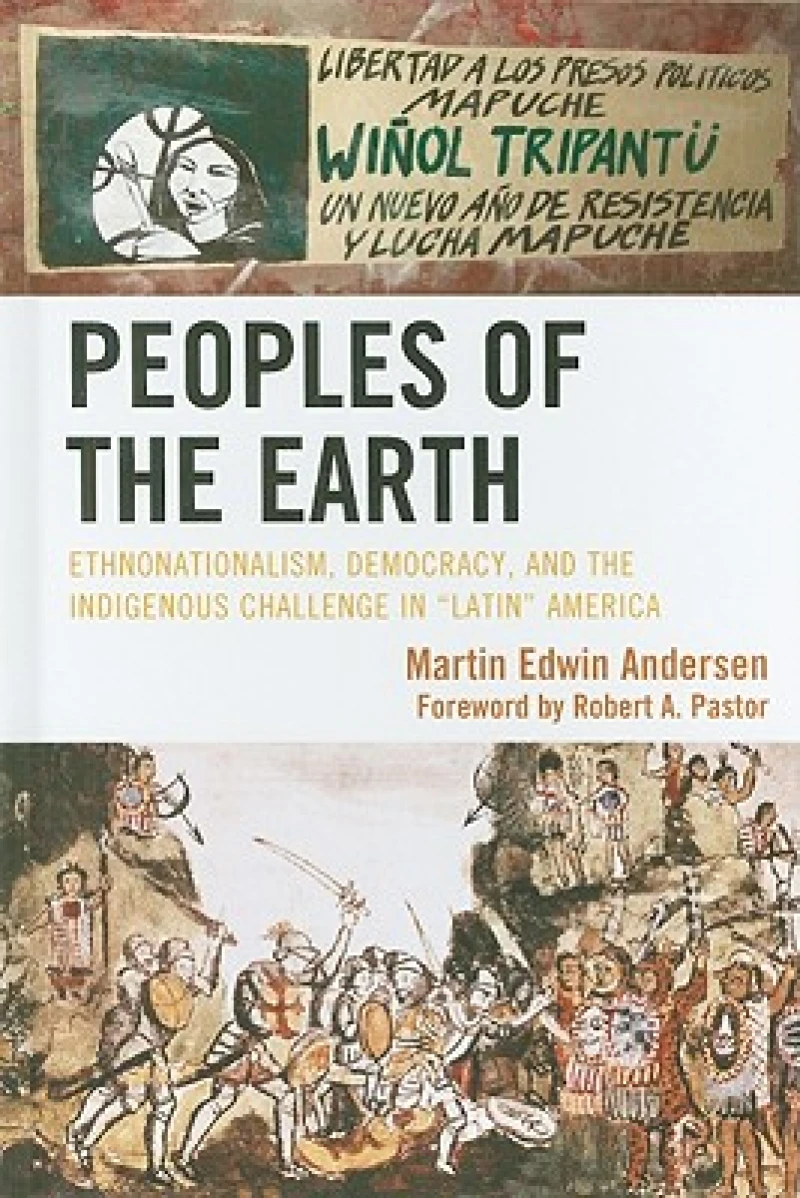
Peoples of the Earth : Ethnonationalism, Democracy, and the Indigenous Challenge in 'Latin' America
Book Details
Format
Hardback or Cased Book
ISBN-10
0739143913
ISBN-13
9780739143919
Publisher
Bloomsbury Publishing Plc
Imprint
Lexington Books
Country of Manufacture
GB
Country of Publication
GB
Publication Date
Feb 15th, 2010
Print length
300 Pages
Weight
630 grams
Dimensions
23.60 x 16.10 x 2.70 cms
Product Classification:
Indigenous peoples / IndigeneityIndigenous peoplesPolitics & governmentPolitics and government
Ksh 21,400.00
Manufactured on Demand
0 in stock
Delivery Location
Delivery fee: Select location
Secure
Quality
Fast
Peoples of the Earth employs a comparative history of ethno-nationalism to examine Indian activism and its challenges to the political, social and economic status quo in the countries of Central and South America. It explores the intersect between problems of democratic empowerment and security-including the appearance of radical Islam among Indians in two important countries-arising from the re-emergence of dormant forms of ethnic militancy and unprecedented internal challenges to nation-states. The institutions and practices of Indian self-government in the United States and Canada are examined as a means of comparison with contemporary phenomena in Central and South America, suggesting frameworks for the successful democratic incorporation of the region''s most disenfranchised peoples. European models emerging from ''intermestic'' dilemmas are considered, as are those involving the Inuit people (or Eskimos) in the Canadian far north, as policymakers there ''think outside the box'' in ways that include more robust roles for both sub-national and international bodies. Finally, the work challenges policymakers to broaden the debate about how to approach the issues of political and economic empowerment and regional security concerning Native peoples, to include consideration of new ways of protecting both land rights and the environment, thus avoiding a zero-sum solution between the region''s 40 million Indians and the rest of its peoples. Peoples of the Earth has the potential to become a pioneer study addressing ethnic activism, characterized by multiple, small groups pressing for state recognition and democratic participation, while also promoting a defence of the environment and natural resources. Part of its attractiveness is the likelihood that the work will lead to further investigations and will become an authoritative point of departure for the fertile area of ethnonationalism studies in Latin America. Each country chapter provides a succinct but substantial presentation of the basic issues and challenges facing the Native peoples of the country. Overall, the book has an excellent mix of historical and contemporary analysis.
Get Peoples of the Earth by at the best price and quality guaranteed only at Werezi Africa's largest book ecommerce store. The book was published by Bloomsbury Publishing Plc and it has pages.

