
Book Details
Format
Paperback / softback
ISBN-10
1349624179
ISBN-13
9781349624171
Edition
1st ed. 2000
Publisher
Palgrave Macmillan
Imprint
Palgrave Macmillan
Country of Manufacture
GB
Country of Publication
GB
Publication Date
Dec 31st, 1999
Print length
232 Pages
Weight
316 grams
Dimensions
21.50 x 14.00 x 1.50 cms
Product Classification:
Interdisciplinary studies
KSh 16,200.00
Currently unavailable
0 in stock
Delivery Location
Delivery fee: Select location
Secure
Quality
Fast
Looking at the representation of the animal in law, religious writings, literary representation, science and political ideas, what emerges is a sense of the fragility of humanity, a sense of a species which always requires an external addition - property, civilisation, education, mastery of the natural world - to be fully human.
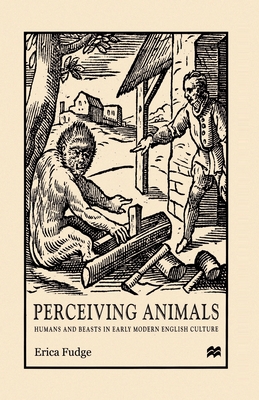
When we look at the human understanding of beasts in the past what we see are not only the foundations of our own perception of animals but humans contemplating their own status. Perceiving Animals argues that what is revealed in a wide range of writing from the early modern period is a recurring attempt to separate the human from the beast. Looking at the representation of the animal in law, religious writings, literary representation, science and political ideas, what emerges is a sense of the fragility of humanity, a sense of a species which always requires an external addition - property, civilisation, education, mastery of the natural world - to be fully human. Erica Fudge engages with both canonical and non-canonical texts from the period 1558-1649, and examines previously unchallenged aspects of the status of humanity: what does it mean to own an animal? How does civilisation take place, and what does this tell us about uncivilised man? What does the humanist emphasis on education mean for the uneducated? Does science ever offer humanity separation from the beast? Texts by writers including Edward Coke, Ben Jonson, Francis Bacon and Richard Overton are re-examined, and the status of humanity comes under question. Perceiving Animals argues that within early modern English culture there is an uncomfortable sense of humanity with a superiority which is not innate, but dangerously unnatural.
Get Perceiving Animals by NA NA at the best price and quality guaranteed only at Werezi Africa's largest book ecommerce store. The book was published by Palgrave Macmillan and it has 232 pages.
Customers Who Bought This Also Bought

Night Rules
KSh 30,950.00

Inclusive Participation in Planning in the UK
KSh 30,950.00

Reinventing the River City
KSh 17,500.00

Inclusive Participation in Planning in the UK
KSh 7,900.00

Night Rules
KSh 7,200.00

Reinventing the River City
KSh 4,150.00

Ideology and Cinematography in Hollywood, 1930-39
KSh 23,400.00

Public Spaces and the Politics of Citizen Participation
KSh 7,900.00
Laws of Nature
KSh 23,400.00

Planning and Design for Sustainable Urban Mobility
KSh 11,450.00

La recherche interdisciplinaire sous la loupe
KSh 7,550.00

2000 Lectures and Memoirs
KSh 16,700.00
More by NA NA

Chaucer's Pardoner and Gender Theory
KSh 8,100.00

Parting the Curtain
KSh 17,350.00

New Security Challenges
KSh 16,200.00

Marx @ 2000
KSh 16,200.00

Romania Versus the United States
KSh 14,400.00

Jewish Philosophy A-Z
KSh 4,850.00

America and the World, 1898-2025
KSh 8,100.00
A Lexicon of Social Well-Being
KSh 8,100.00

My Lai
KSh 16,200.00

Sunset Over the Islands
KSh 16,200.00
Racializing Class, Classifying Race
KSh 16,200.00

International Macroeconomics
KSh 23,400.00
