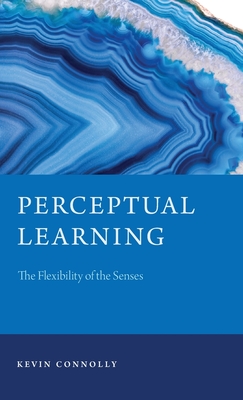
Perceptual Learning : The Flexibility of the Senses
Book Details
Format
Hardback
Book Series
Philosophy of Mind Series
ISBN-10
0190662891
ISBN-13
9780190662899
Publisher
Oxford University Press Inc
Imprint
Oxford University Press Inc
Country of Manufacture
US
Country of Publication
GB
Publication Date
Mar 21st, 2019
Print length
272 Pages
Weight
416 grams
Dimensions
21.70 x 14.80 x 2.70 cms
Product Classification:
Philosophy: metaphysics & ontologyPhilosophy of mindCognition & cognitive psychology
KSh 15,200.00
Currently unavailable
0 in stock
Delivery Location
Delivery fee: Select location
Secure
Quality
Fast
This book uses recent evidence from psychology and neuroscience to show that perceptual learning is genuinely perceptual, rather than post-perceptual. It also offers a taxonomy for classifying cases in the philosophical literature.
Experts from wine tasters to radiologists to bird watchers have all undergone perceptual learning-long-term changes in perception that result from practice or experience. Philosophers have been discussing such cases for centuries, from the 14th-century Indian philosopher Vedanta Desika to the 18th-century Scottish philosopher Thomas Reid, and into contemporary times. This book uses recent evidence from psychology and neuroscience to show that perceptual learning is genuinely perceptual, rather than post-perceptual. It also offers a taxonomy for classifying cases in the philosophical literature. In some cases, perceptual learning involves changes in how one attends; in other cases, it involves a learned ability to differentiate two properties, or to perceive two properties as unified. Connolly uses this taxonomy to rethink several domains of perception in terms of perceptual learning, including multisensory perception, color perception, and speech perception. As a whole, the book offers a theory of the function of perceptual learning. Perceptual learning embeds into our quick perceptual systems what would be a slower task were it to be done in a controlled, cognitive manner. A novice wine taster drinking a Cabernet Sauvignon might have to think about its features first and then infer the type of wine, while an expert can identify it immediately. This learned ability to immediately identify the wine enables the expert to think about other things like the vineyard or the vintage of the wine. More generally, perceptual learning serves to free up cognitive resources for other tasks. This book offers a comprehensive empirically-informed account, and explores the nature, scope, and theoretical implications of perceptual learning.
Get Perceptual Learning by Kevin Connolly at the best price and quality guaranteed only at Werezi Africa's largest book ecommerce store. The book was published by Oxford University Press Inc and it has 272 pages.
Customers Who Bought This Also Bought

Neville Goddard
KSh 5,850.00

Groundwork for the Metaphysics of Morals
KSh 2,000.00
The Sovereignty of Good
KSh 5,400.00
The Life Of The Mind
KSh 3,950.00
Groundwork for the Metaphysics of Morals – With an Updated Translation, Introduction, and Notes
KSh 1,950.00

De Anima (On the Soul)
KSh 2,350.00
Kant: The Metaphysics of Morals
KSh 5,300.00

Prolegomena to Any Future Metaphysics
KSh 2,700.00
An Inquiry Into Meaning and Truth
KSh 3,750.00

Hegel''s Inversion of Philosophy
KSh 17,100.00

Duns Scotus: Philosophical Writings
KSh 4,150.00

Metaphysics as a Guide to Morals
KSh 2,700.00