
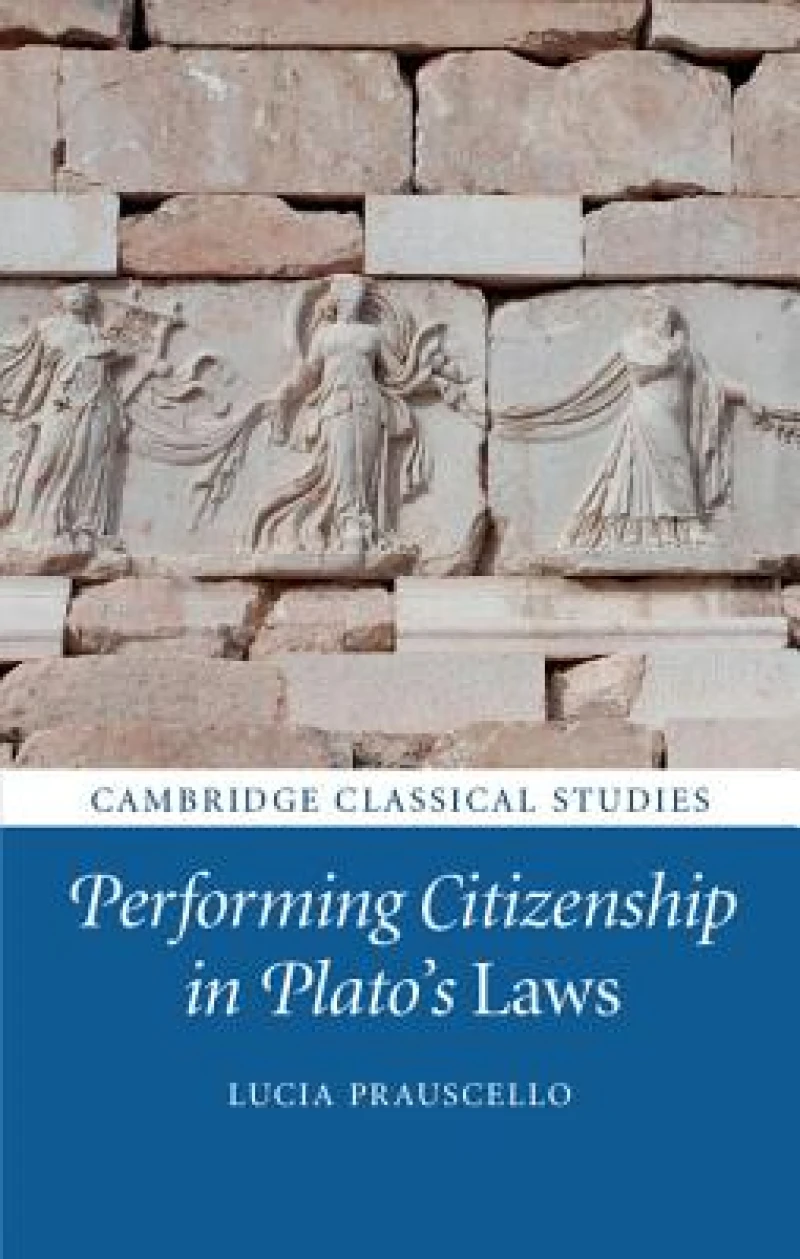
Performing Citizenship in Plato''s Laws
Book Details
Format
Hardback or Cased Book
Book Series
Cambridge Classical Studies
ISBN-10
1107072883
ISBN-13
9781107072886
Publisher
Cambridge University Press
Imprint
Cambridge University Press
Country of Manufacture
US
Country of Publication
GB
Publication Date
Nov 13th, 2014
Print length
281 Pages
Weight
47 grams
Dimensions
22.40 x 16.20 x 1.90 cms
Ksh 17,800.00
Manufactured on Demand
0 in stock
Delivery Location
Delivery fee: Select location
Secure
Quality
Fast
This book shows how Plato, in the Laws, theorizes citizenship as simultaneously a political, ethical, and aesthetic practice. Essential reading for all scholars interested in citizenship and the impact of rhetoric in shaping the forms and content of political discourse in societies.
In the Laws, Plato theorizes citizenship as simultaneously a political, ethical, and aesthetic practice. His reflection on citizenship finds its roots in a descriptive psychology of human experience, with sentience and, above all, volition seen as the primary targets of a lifelong training in the values of citizenship. In the city of Magnesia described in the Laws erôs for civic virtue is presented as a motivational resource not only within the reach of the ''ordinary'' citizen, but also factored by default into its educational system. Supporting a vision of ''perfect citizenship'' based on an internalized obedience to the laws, and persuading the entire polity to consent willingly to it, requires an ideology that must be rhetorically all-inclusive. In this city ''ordinary'' citizenship itself will be troped as a performative action: Magnesia''s choral performances become a fundamental channel for shaping, feeling and communicating a strong sense of civic identity and unity.
Get Performing Citizenship in Plato''s Laws by at the best price and quality guaranteed only at Werezi Africa's largest book ecommerce store. The book was published by Cambridge University Press and it has pages.

