
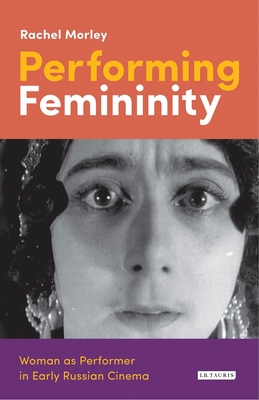
Performing Femininity : Woman as Performer in Early Russian Cinema
Book Details
Format
Paperback / softback
Book Series
KINO - The Russian and Soviet Cinema
ISBN-10
1350242861
ISBN-13
9781350242869
Publisher
Bloomsbury Publishing PLC
Imprint
Bloomsbury Academic
Country of Manufacture
GB
Country of Publication
GB
Publication Date
Jul 29th, 2021
Print length
304 Pages
Weight
388 grams
Dimensions
21.60 x 13.90 x 2.20 cms
KSh 6,750.00
Currently unavailable
0 in stock
Delivery Location
Delivery fee: Select location
Secure
Quality
Fast
Oriental dancers, ballerinas, actresses and opera singers the figure of the female performer is ubiquitous in the cinema of pre-Revolutionary Russia. From the first feature film, Romashkov''s Stenka Razin (1908), through the sophisticated melodramas of the 1910s, to Viskovsky''s The Last Tango (1918), made shortly before the pre-Revolutionary film industry was dismantled by the new Soviet government, the female performer remains central. In this groundbreaking new study, Rachel Morley argues that early Russian film-makers used the character of the female performer to explore key contemporary concerns from changing conceptions of femininity and the emergence of the so-called New Woman, to broader questions concerning gender identity. Morley also reveals that the film-makers repeatedly used this archetype of femininity to experiment with cinematic technology and develop a specific cinematic language."
Get Performing Femininity by Rachel Morley at the best price and quality guaranteed only at Werezi Africa's largest book ecommerce store. The book was published by Bloomsbury Publishing PLC and it has 304 pages.
Customers Who Bought This Also Bought

Worthy
KSh 3,500.00

Angels And Demons
KSh 1,900.00

Thinking in Pictures
KSh 6,100.00

Reel to Real
KSh 4,500.00
Duke in His Domain
KSh 550.00

The Lord of the Rings Tarot and Guidebook
KSh 4,150.00
The Lord of the Rings Memory Journal
KSh 2,200.00
With Nails
KSh 2,000.00
Dark Matter
KSh 3,600.00
Marvel''s Black Panther - Script To Page
KSh 3,250.00
Warner Bros – The Making of an American Movie Studio
KSh 2,750.00

A Deadly Episode
KSh 3,950.00


