
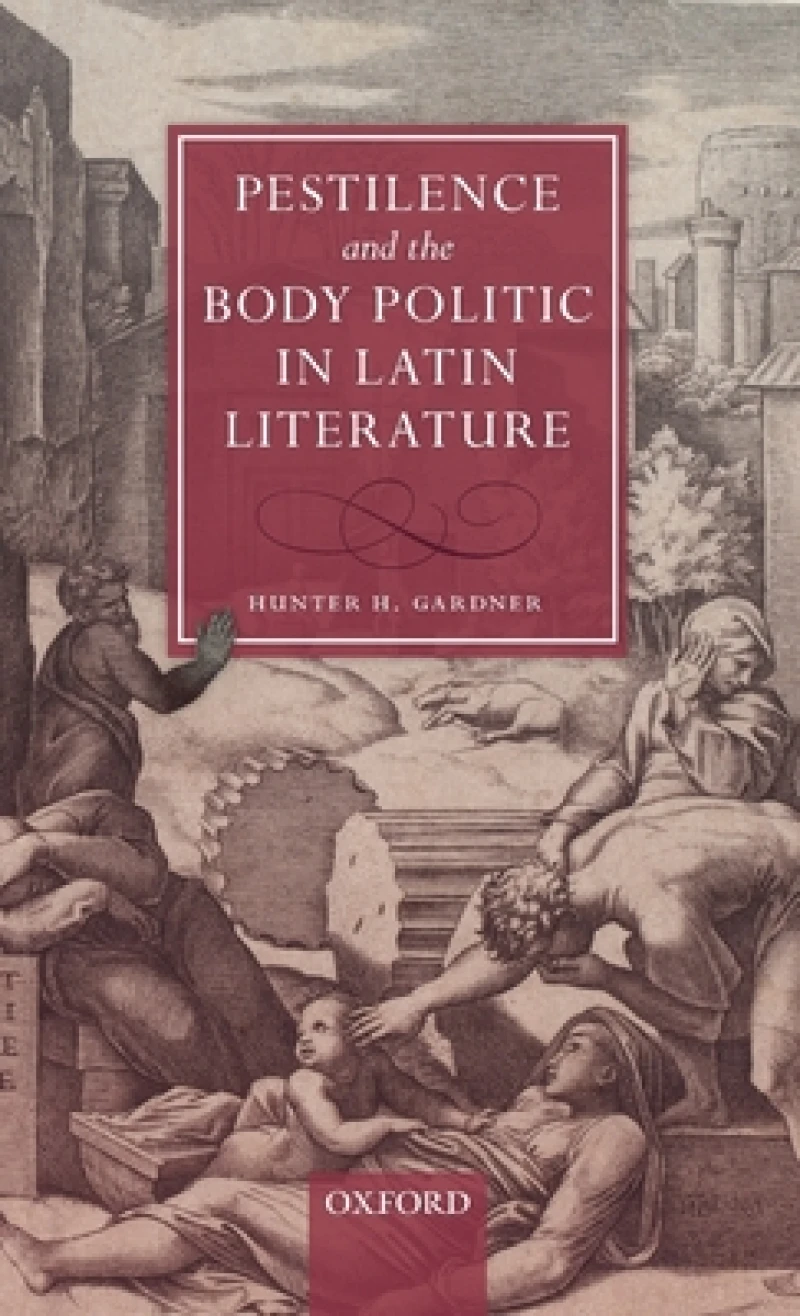
Pestilence and the Body Politic in Latin Literature
Book Details
Format
Hardback or Cased Book
ISBN-10
0198796420
ISBN-13
9780198796428
Publisher
Oxford University Press
Imprint
Oxford University Press
Country of Manufacture
GB
Country of Publication
GB
Publication Date
Jul 16th, 2019
Print length
316 Pages
Weight
526 grams
Dimensions
14.60 x 22.20 x 2.90 cms
Product Classification:
Films, cinemaLiterary studies: classical, early & medievalHistory of medicine
Ksh 20,800.00
Manufactured on Demand
0 in stock
Delivery Location
Delivery fee: Select location
Secure
Quality
Fast
Roman writers of the late Roman Republic and early Empire developed important conventions of the western plague narrative as a response to the destabilization of the body politic. This volume examines how they used largely fictive representations of epidemic disease to address the collapse of the social order and suggest remedies for its recovery.
Scientists, journalists, novelists, and filmmakers continue to generate narratives of contagion, stories shaped by a tradition of disease discourse that extends to early Greco-Roman literature. Lucretius, Vergil, and Ovid developed important conventions of the western plague narrative as a response to the breakdown of the Roman res publica in the mid-first century CE and the reconstitution of stabilized government under the Augustan Principate (31 BCE-14 CE): relying on the metaphoric relationship between the human body and the body politic, these authors used largely fictive representations of epidemic disease to address the collapse of the social order and suggest remedies for its recovery. Theorists such as Susan Sontag and René Girard have observed how the rhetoric of disease frequently signals social, psychological, or political pathologies, but their observations have rarely been applied to Latin literary practices. Pestilence and the Body Politic in Latin Literature explores how the origins and spread of outbreaks described by Roman writers enact a drama in which the concerns of the individual must be weighed against those of the collective, staged in an environment signalling both reversion to a pre-historic Golden Age and the devastation characteristic of a post-apocalyptic landscape. Such innovations in Latin literature have impacted representations as diverse as Carlo Coppola''s paintings of a seventeenth-century outbreak of bubonic plague in Naples and Margaret Atwood''s Maddaddam Trilogy. Understanding why Latin writers developed these tropes for articulating contagious disease and imbuing them with meaning for the collapse of the Roman body politic allows us to clarify what more recent disease discourses mean both for their creators and for the populations they afflict in contemporary media.
Get Pestilence and the Body Politic in Latin Literature by at the best price and quality guaranteed only at Werezi Africa's largest book ecommerce store. The book was published by Oxford University Press and it has pages.

