
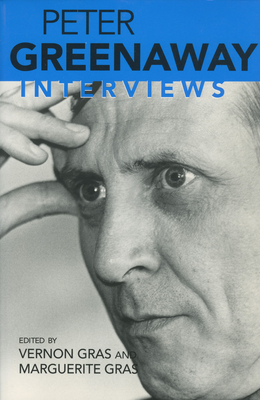
Peter Greenaway : Interviews
Book Details
Format
Paperback / softback
ISBN-10
1578062551
ISBN-13
9781578062553
Publisher
University Press of Mississippi
Imprint
University Press of Mississippi
Country of Manufacture
US
Country of Publication
GB
Publication Date
Jul 1st, 2000
Print length
277 Pages
Weight
370 grams
Dimensions
15.40 x 22.80 x 1.90 cms
KSh 4,350.00
Currently unavailable
0 in stock
Delivery Location
Delivery fee: Select location
Secure
Quality
Fast
In this collection the ever-controversial Peter Greenaway discusses his philosophies of film, art, aesthetics, literature, and reality, criticizing and even condemning the standard fare of what he calls Hollywood cinema.
In these twenty-one interviews, filmmaker Peter Greenaway expresses his film aesthetic and discusses his combat with the dominant Hollywood style of filmmaking. His films have run unmistakably against the main current of present cinematic practice, from the short film Windows in the mid-seventies, to his more popular but nonetheless challenging films such as A Zed and Two Noughts and The Pillow Book in the nineties. In this collection the ever-controversial Greenaway discusses his philosophies of film, art, aesthetics, literature, and reality, criticizing and even condemning the standard fare of what he calls Hollywood cinema. For him such films tell stories or they translate literature with its linear narrative onto a medium that he feels should be preeminently visual. He finds that, instead of foregrounding the image and the composition of visual elements as in the long history of painting, Hollywood-style directors seem mesmerized by the ""and then and then"" narrative. In these provocative interviews Greenaway tells of his ambition to make cinema a medium based more on image than on narrative. He explains his painterly approach in such films as Prospero''s Books and The Cook, the Thief, His Wife, and Her Lover, defends his use of total nudity of both sexes, and declares that traditional literary-based cinema is dead. He believes that the most creative imaginations, the most innovative technologies, and the greatest financial resources are being devoted to television and the Internet and that Hollywood moviemaking is no longer in the vanguard. ""If you go into the basilica of St. Peter in Rome,"" he says, ""and sit through a service near the high altar of Bernini, you will experience a synthesis of stone, light, music, incense. It is a form of total art, which is what the cinema of the 20th century was supposed to be, even if it only rarely lives up to this ideal."" Vernon Gras is a professor of English and cultural studies at George Mason University. Marguerite Gras was a legislative research staffer at the U.S. House of Representatives, 1974-1991.
Get Peter Greenaway by Marguerite Gras at the best price and quality guaranteed only at Werezi Africa's largest book ecommerce store. The book was published by University Press of Mississippi and it has 277 pages.
Customers Who Bought This Also Bought
Worthy
KSh 3,500.00
Angels And Demons
KSh 1,900.00

Thinking in Pictures
KSh 6,100.00
Reel to Real
KSh 4,500.00
Duke in His Domain
KSh 550.00

The Lord of the Rings Tarot and Guidebook
KSh 4,150.00
The Lord of the Rings Memory Journal
KSh 2,200.00
With Nails
KSh 2,000.00
Dark Matter
KSh 3,600.00
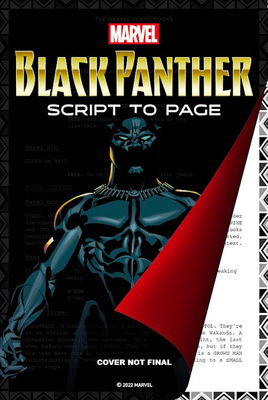
Marvel''s Black Panther - Script To Page
KSh 3,250.00
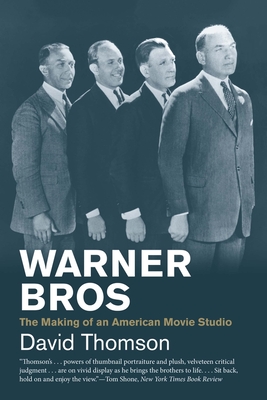
Warner Bros – The Making of an American Movie Studio
KSh 2,750.00

A Deadly Episode
KSh 3,950.00
