
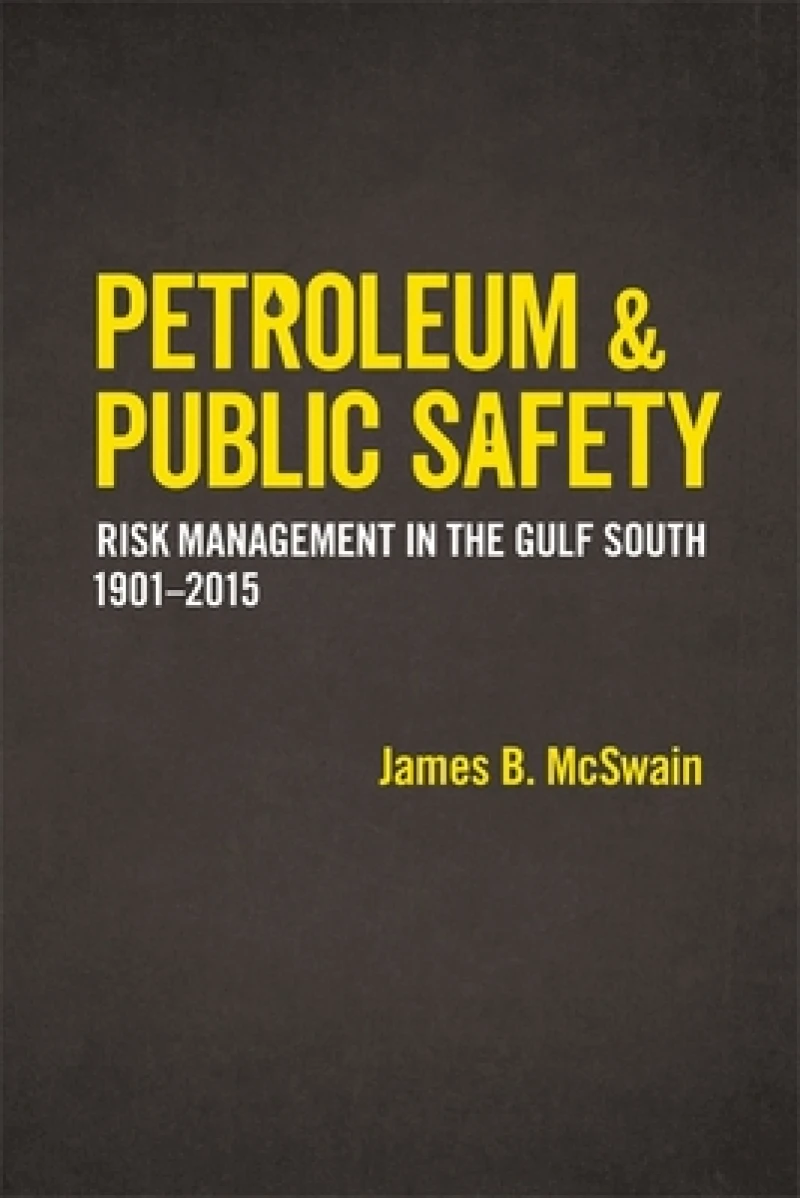
Petroleum and Public Safety : Risk Management in the Gulf South, 1901-2015
Book Details
Format
Hardback or Cased Book
Book Series
Making the Modern South
ISBN-10
0807169129
ISBN-13
9780807169124
Publisher
Louisiana State University Press
Imprint
Louisiana State University Press
Country of Manufacture
US
Country of Publication
GB
Publication Date
Jun 20th, 2018
Print length
392 Pages
Weight
660 grams
Dimensions
23.70 x 16.30 x 3.20 cms
Ksh 8,600.00
Werezi Extended Catalogue
Delivery in 14 days
1 copies in stock
Delivery Location
Delivery fee: Select location
Delivery in 14 days
Secure
Quality
Fast
Throughout the twentieth century, cities such as Houston, Galveston, New Orleans, and Mobile grappled with the safety hazards created by oil and gas industries. James McSwain reveals how these cities created standards based on technical, scientific, and engineering knowledge to devise politically workable ordinances.
Throughout the twentieth century, cities such as Houston, Galveston, New Orleans, and Mobile grappled with the safety hazards created by oil and gas industries as well as the role municipal governments should play in protecting the public from these threats. James B. McSwain's Petroleum and Public Safety reveals how officials in these cities created standards based on technical, scientific, and engineering knowledge to devise politically workable ordinances related to the storage and handling of fuel.
Each of the cities studied in this volume struggled through protracted debates regarding the regulation of crude petroleum and fuel oil, sparked by the famous Spindletop strike of 1901 and the regional oil boom in the decades that followed. Municipal governments sought to ensure the safety of their citizens while still reaping lucrative economic benefits from local petroleum industry activities. Drawing on historical antecedents such as fire-protection engineering, the cities of the Gulf South came to adopt voluntary, consensual fire codes issued by insurance associations and standards organisations such as the National Board of Fire Underwriters, the National Fire Protection Association, and the Southern Standard Building Code Conference. The culmination of such efforts was the creation of the International Fire Code, an overarching fire-protection guide that is widely used in the United States, Mexico, the Caribbean, and Central America. In devising ordinances, Gulf South officials pursued the politics of risk management, as they hammered out strategies to eliminate or mitigate the dangers associated with petroleum industries and to reduce the possible consequences of catastrophic oil explosions and fires.
Using an array of original sources, including newspapers, municipal records, fire-insurance documents, and risk-management literature, McSwain demonstrates that Gulf South cities played a vital role in twentieth-century modernization.
Each of the cities studied in this volume struggled through protracted debates regarding the regulation of crude petroleum and fuel oil, sparked by the famous Spindletop strike of 1901 and the regional oil boom in the decades that followed. Municipal governments sought to ensure the safety of their citizens while still reaping lucrative economic benefits from local petroleum industry activities. Drawing on historical antecedents such as fire-protection engineering, the cities of the Gulf South came to adopt voluntary, consensual fire codes issued by insurance associations and standards organisations such as the National Board of Fire Underwriters, the National Fire Protection Association, and the Southern Standard Building Code Conference. The culmination of such efforts was the creation of the International Fire Code, an overarching fire-protection guide that is widely used in the United States, Mexico, the Caribbean, and Central America. In devising ordinances, Gulf South officials pursued the politics of risk management, as they hammered out strategies to eliminate or mitigate the dangers associated with petroleum industries and to reduce the possible consequences of catastrophic oil explosions and fires.
Using an array of original sources, including newspapers, municipal records, fire-insurance documents, and risk-management literature, McSwain demonstrates that Gulf South cities played a vital role in twentieth-century modernization.
Get Petroleum and Public Safety by at the best price and quality guaranteed only at Werezi Africa's largest book ecommerce store. The book was published by Louisiana State University Press and it has pages.

