
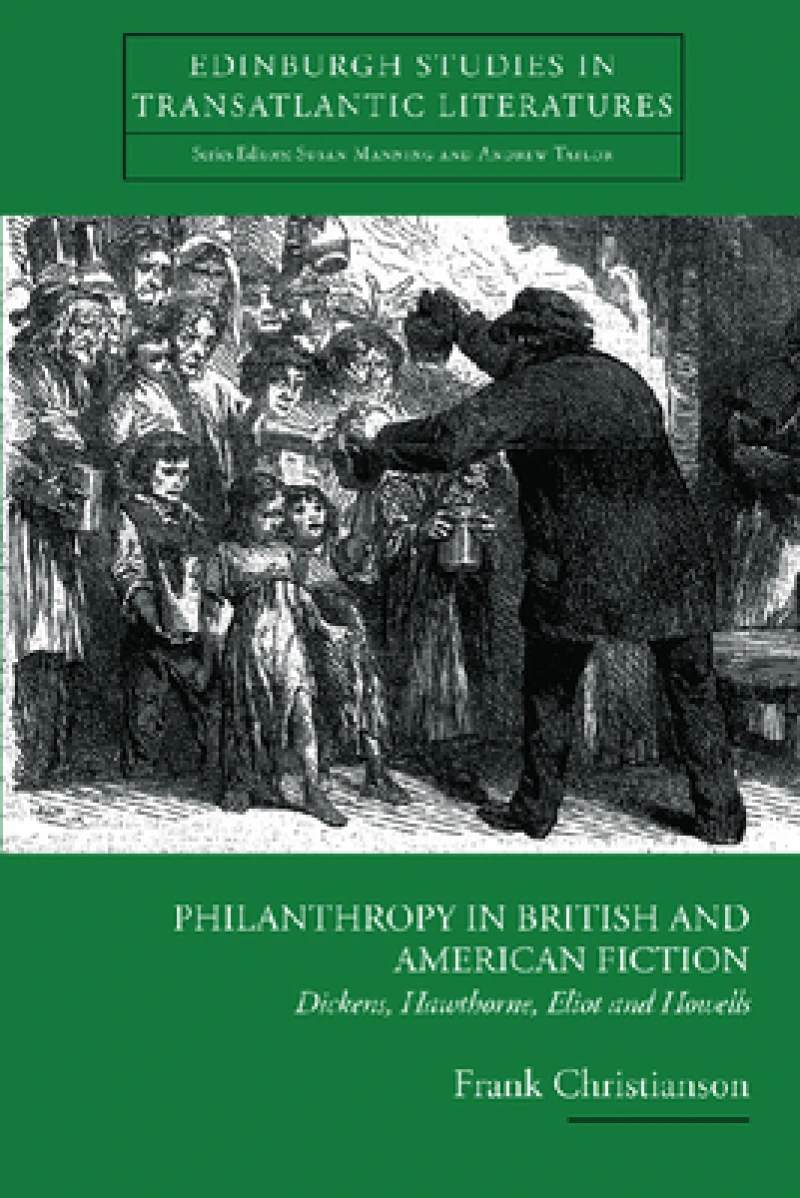
Philanthropy in British and American Fiction : Dickens, Hawthorne, Eliot and Howells
Book Details
Format
Hardback or Cased Book
Book Series
Edinburgh Studies in Transatlantic Literatures
ISBN-10
0748625089
ISBN-13
9780748625086
Publisher
Edinburgh University Press
Imprint
Edinburgh University Press
Country of Manufacture
GB
Country of Publication
GB
Publication Date
Nov 28th, 2007
Print length
256 Pages
Weight
484 grams
Dimensions
24.00 x 16.40 x 1.90 cms
Ksh 18,900.00
Werezi Extended Catalogue
0 in stock
Delivery Location
Delivery fee: Select location
Secure
Quality
Fast
Explores the relationship between philanthropy and literary realism in novels by Charles Dickens, Nathaniel Hawthorne, George Eliot, and William Dean Howells, and examines how each used the figure of philanthropy both to redefine the sentiments that informed social identity and to refashion their own aesthetic practices.
During the 19th century the U.S. and Britain came to share an economic profile unparalleled in their respective histories. This book suggests that this early high capitalism came to serve as the ground for a new kind of cosmopolitanism in the age of literary realism, and argues for the necessity of a transnational analysis based upon economic relationships of which people on both sides of the Atlantic were increasingly conscious. The nexus of this exploration of economics, aesthetics and moral philosophy is philanthropy.
Pushing beyond reductive debates over the benevolent or mercenary qualities of industrial era philanthropy, the following questions are addressed: what form and function does philanthropy assume in British and American fiction respectively? What are the rhetorical components of a discourse of philanthropy and in which cultural domains did it operate? How was philanthropy practiced and represented in a period marked by self-interest and rational calculation? The author explores the relationship between philanthropy and literary realism in novels by Charles Dickens, Nathaniel Hawthorne, George Eliot, and William Dean Howells, and examines how each used the figure of philanthropy both to redefine the sentiments that informed social identity and to refashion their own aesthetic practices.
The heart of this study consists of two comparative sections: the first contains chapters on contemporaries Hawthorne and Dickens; the second contains chapters on second-generation realists Eliot and Howells in order to examine the altruistic imagination at a culminating point in the history of literary realism.
Pushing beyond reductive debates over the benevolent or mercenary qualities of industrial era philanthropy, the following questions are addressed: what form and function does philanthropy assume in British and American fiction respectively? What are the rhetorical components of a discourse of philanthropy and in which cultural domains did it operate? How was philanthropy practiced and represented in a period marked by self-interest and rational calculation? The author explores the relationship between philanthropy and literary realism in novels by Charles Dickens, Nathaniel Hawthorne, George Eliot, and William Dean Howells, and examines how each used the figure of philanthropy both to redefine the sentiments that informed social identity and to refashion their own aesthetic practices.
The heart of this study consists of two comparative sections: the first contains chapters on contemporaries Hawthorne and Dickens; the second contains chapters on second-generation realists Eliot and Howells in order to examine the altruistic imagination at a culminating point in the history of literary realism.
Get Philanthropy in British and American Fiction by at the best price and quality guaranteed only at Werezi Africa's largest book ecommerce store. The book was published by Edinburgh University Press and it has pages.

