
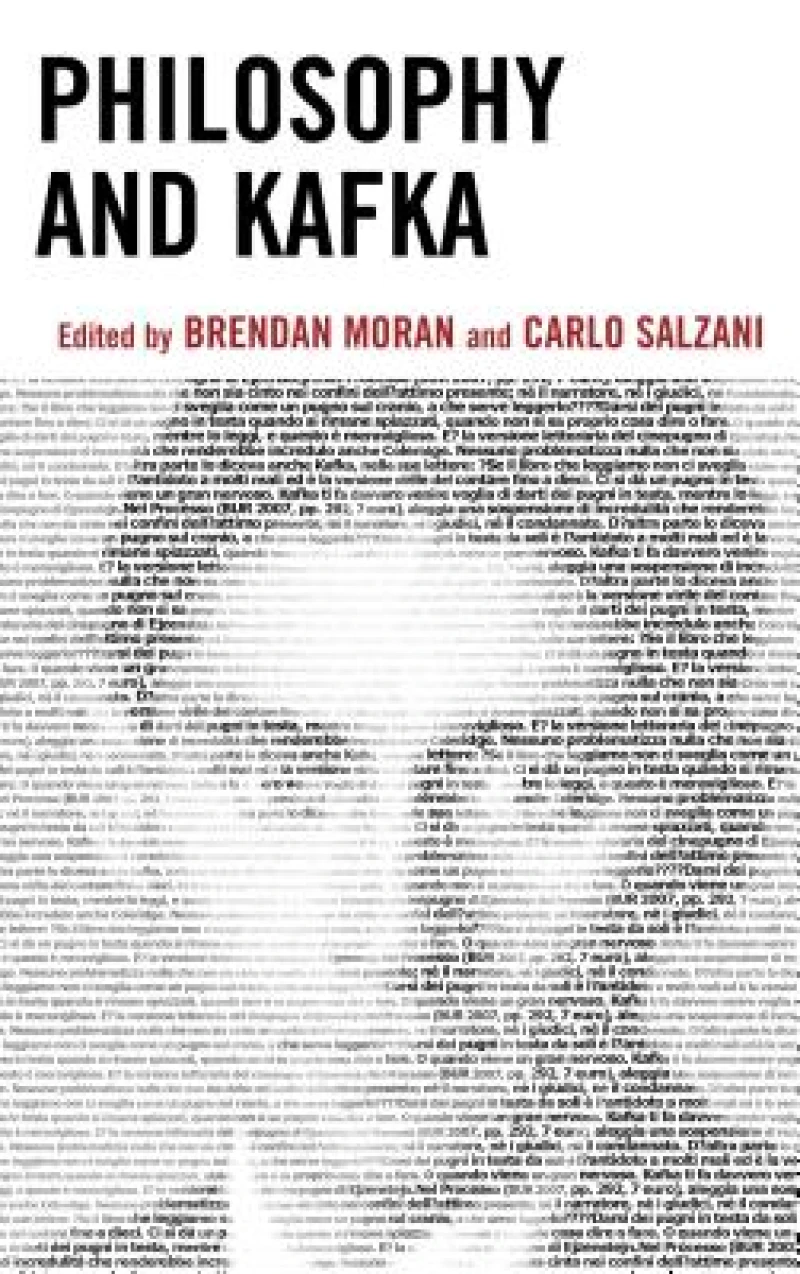
Philosophy and Kafka
Book Details
Format
Paperback / Softback
ISBN-10
1498511260
ISBN-13
9781498511261
Publisher
Bloomsbury Publishing Plc
Imprint
Lexington Books
Country of Manufacture
GB
Country of Publication
GB
Publication Date
Feb 25th, 2015
Print length
300 Pages
Weight
440 grams
Dimensions
15.50 x 22.80 x 2.70 cms
Ksh 9,950.00
Manufactured on Demand
0 in stock
Delivery Location
Delivery fee: Select location
Secure
Quality
Fast
The relationship of philosophy with Kafka’s oeuvre is complex. It has been argued that Kafka’s novels and stories defy philosophic extrapolation; conversely, it has also been suggested that precisely the tendency of Kafka’s writings to elude discursive solution is itself a philosophical tendency, one that is somehow contributing to a wiser relationship of human beings with language. These matters are the focus of the proposed volume on Philosophy and Kafka.
The proposed collection brings together essays that interrogate the relationship of philosophy and Kafka, and offer new and original interpretations. The volume obviously cannot claim completeness, but it partially does justice to the multiplicity of philosophical issues and philosophical interpretations at stake.
This variety informs the composition of the volume itself. A number of essays focus on specific philosophical commentaries on Kafka’s work, from Adorno’s to Agamben’s, from Arendt’s to Benjamin’s, from Deleuze and Guattari’s to Derrida’s. A number of essays consider the possible relevance of certain philosophical outlooks for examining Kafka’s writings: here Kafka’s name goes alongside those of Socrates, Kant, Kierkegaard, Nietzsche, Wittgenstein, Buber, Heidegger, Blanchot, and Levinas. Finally, a number of essays consider Kafka’s writings in terms of a specific philosophical theme, such as communication and subjectivity, language and meaning, knowledge and truth, the human/animal divide, justice, and freedom. In all contributions to the volume, such themes, motifs, and interpretations arise. To varying degrees, all essays are concerned with the relationship of literature and philosophy, and thus with the philosophical significance of Kafka’s writings.
The proposed collection brings together essays that interrogate the relationship of philosophy and Kafka, and offer new and original interpretations. The volume obviously cannot claim completeness, but it partially does justice to the multiplicity of philosophical issues and philosophical interpretations at stake.
This variety informs the composition of the volume itself. A number of essays focus on specific philosophical commentaries on Kafka’s work, from Adorno’s to Agamben’s, from Arendt’s to Benjamin’s, from Deleuze and Guattari’s to Derrida’s. A number of essays consider the possible relevance of certain philosophical outlooks for examining Kafka’s writings: here Kafka’s name goes alongside those of Socrates, Kant, Kierkegaard, Nietzsche, Wittgenstein, Buber, Heidegger, Blanchot, and Levinas. Finally, a number of essays consider Kafka’s writings in terms of a specific philosophical theme, such as communication and subjectivity, language and meaning, knowledge and truth, the human/animal divide, justice, and freedom. In all contributions to the volume, such themes, motifs, and interpretations arise. To varying degrees, all essays are concerned with the relationship of literature and philosophy, and thus with the philosophical significance of Kafka’s writings.
Get Philosophy and Kafka by at the best price and quality guaranteed only at Werezi Africa's largest book ecommerce store. The book was published by Bloomsbury Publishing Plc and it has pages.

