
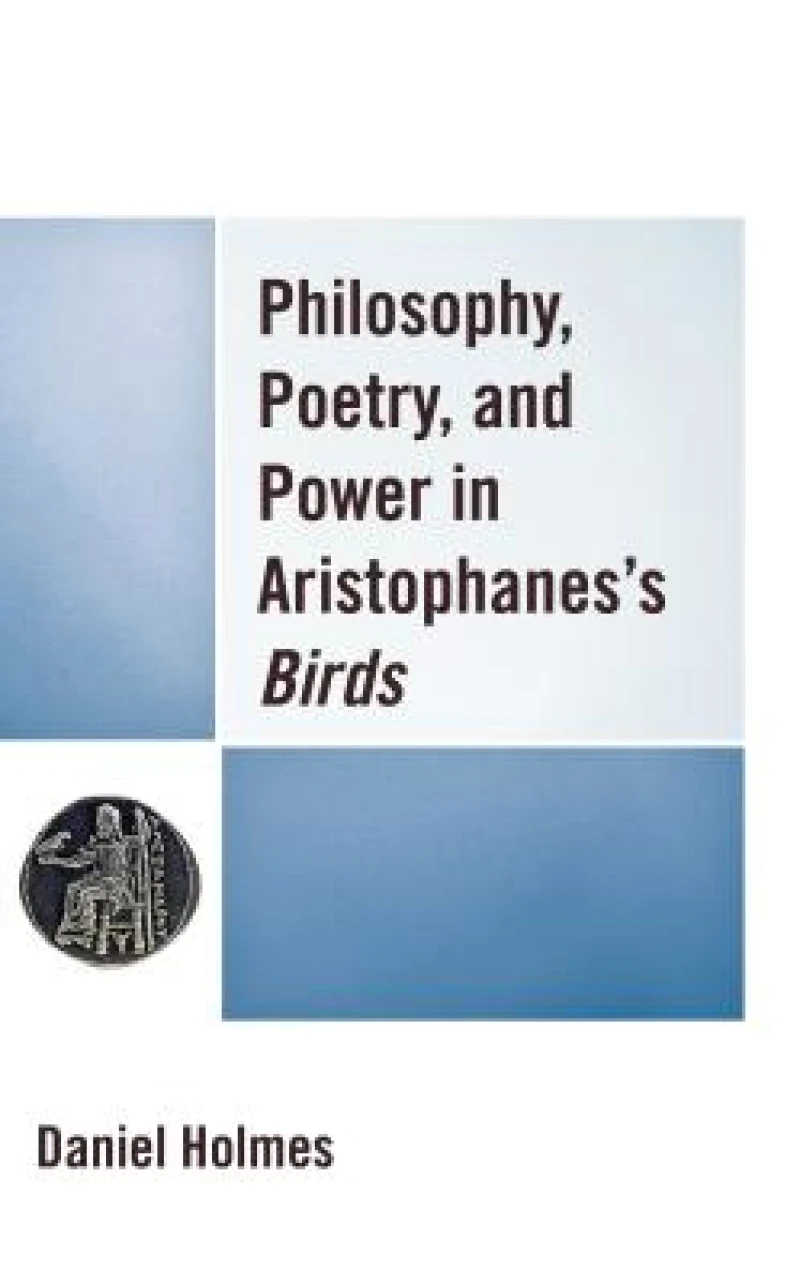
Philosophy, Poetry, and Power in Aristophanes's Birds
Book Details
Format
Hardback or Cased Book
ISBN-10
1498590764
ISBN-13
9781498590761
Publisher
Bloomsbury Publishing Plc
Imprint
Lexington Books
Country of Manufacture
GB
Country of Publication
GB
Publication Date
Nov 23rd, 2018
Print length
246 Pages
Weight
532 grams
Dimensions
23.60 x 15.90 x 2.20 cms
Ksh 21,250.00
Manufactured on Demand
0 in stock
Delivery Location
Delivery fee: Select location
Secure
Quality
Fast
This book presents a close, linear reading of Aristophanes’ Birds. It argues that the play provides a continuation and deepening of the author’s critique of the sophists found in Clouds.
Aristophanes was clearly anxious about the role of the sophists and the “new” education in Athens. After the perceived failure of Clouds in 423 and its subsequent, unperformed revision, Aristophanes, this book argues, returned in 414 with Birds, a continuation and deepening of his critique found in Clouds. Peisetaerus or “persuader of his comrades,” the protagonist of Birds, though an old man, is clearly a student of Socrates’ phrontisterion. Unlike Socrates, however, he is political and ambitious and he understands the whole of human nature, both rational and irrational. Peisetaerus employs the various deconstructive techniques of Socrates and his allies (which is summed up on the comic sage in the image of “father-beating”) to overturn not just human society, but, with the help of his new allies, the divine and musical birds, the cosmos. After his new gods and bird city, Cloudcuckooland, are actually established, however, the hero re-introduces the “old” ways - justice, moderation, and obedience to law – but now under his personal authority, and thereby becomes “the highest of the gods.” Thus, the author postulates, in 414 Aristophanes has come to acknowledge the potency of the apparent civic-minded turn (or element) of the sophists, while aware of the self-aggrandizing nature of their ambition. Peisetaerus, unlike Socrates, is successful: he is establishing a just polis and cosmos and, therefore, must be victorious. But the consequence or cost of this success is illustrated through the Bird Chorus. After the polis is founded, the birds never again sing of their musical reciprocity with the Muses, the source of melodies for men. The birds are now political and the policemen of human beings. The sophist-run cosmos has lost its music. The new Zeus is an ugly bird-mutant. The gods and all nomoi have lost their beauty, honor, and reverential nature. Birds, in its finale, hilariously, but boldly illuminates the inherent tension between philosophy (reason) and poetry (divinely-inspired tradition).
Get Philosophy, Poetry, and Power in Aristophanes's Birds by at the best price and quality guaranteed only at Werezi Africa's largest book ecommerce store. The book was published by Bloomsbury Publishing Plc and it has pages.

