
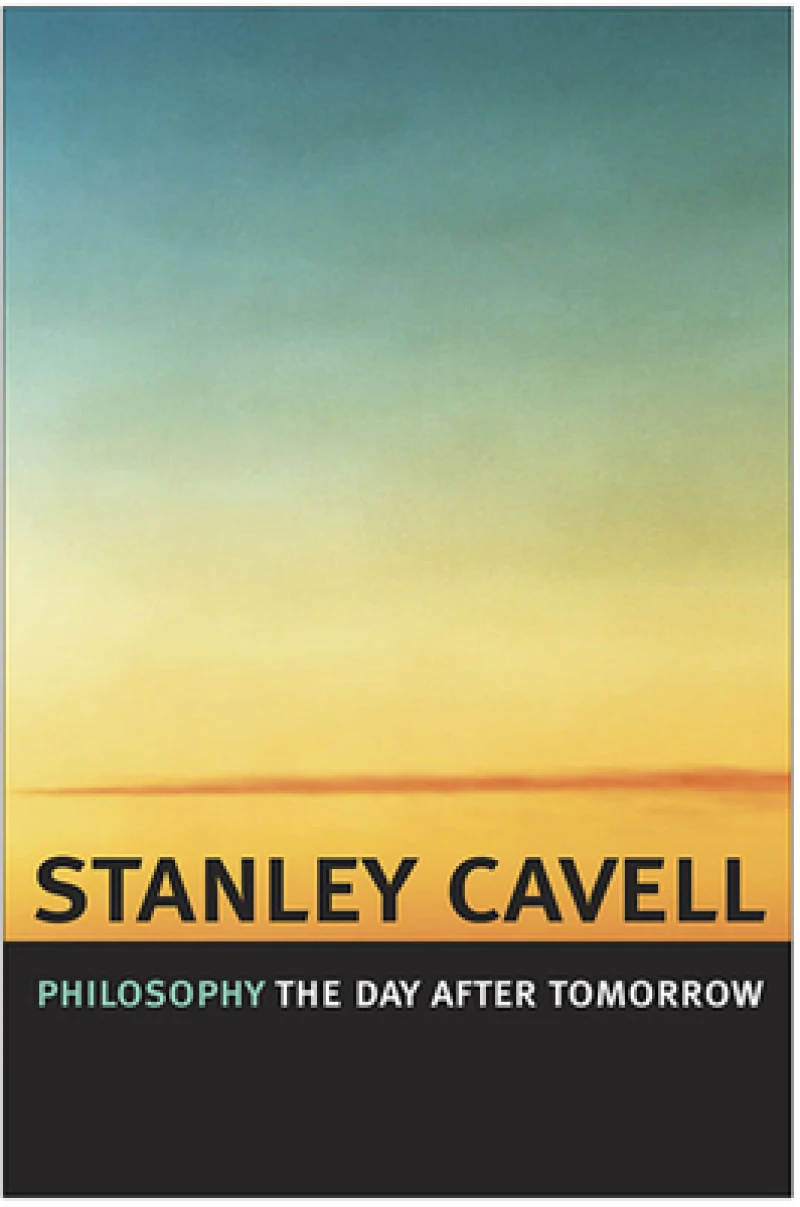
Philosophy the Day After Tomorrow
Book Details
Format
Paperback / Softback
ISBN-10
0674022327
ISBN-13
9780674022324
Publisher
Harvard University Press
Imprint
The Belknap Press
Country of Manufacture
US
Country of Publication
GB
Publication Date
Oct 1st, 2006
Print length
328 Pages
Weight
406 grams
Dimensions
21.60 x 14.20 x 1.80 cms
Product Classification:
Western philosophy, from c 1900 -Western philosophy from c 1800
Ksh 5,200.00
Werezi Extended Catalogue
Delivery in 14 days
1 copies in stock
Delivery Location
Delivery fee: Select location
Delivery in 14 days
Secure
Quality
Fast
Seeking for philosophy the same spirit and assurance conveyed by artists like Fred Astaire, Cavell presents essays exploring the meaning of grace and gesture in film and on stage, in language and in life. Critical to the renaissance in American thought Cavell hopes to provoke is the recognition of the centrality of the “ordinary” to American life.
Nietzsche characterized the philosopher as the man of tomorrow and the day after tomorrow--a description befitting Stanley Cavell, with his longtime interest in freedom in the face of an uncertain future. This interest, particularly in the role of language in freedom of the will, is fully engaged in this volume, a collection of retrospective and forward-thinking essays on performative language and on performances in which the question of freedom is the underlying concern. Seeking for philosophy the same spirit and assurance conveyed by an artist like Fred Astaire, Cavell presents essays that explore the meaning of grace and gesture in film and on stage, in language and in life. Cavell's range is broad--from Astaire to Shakespeare's soulful Cordelia. He also analyzes filmic gestures that bespeak racial stereotypes, opening a key topic that runs through the book: What is the nature of praise? The theme of aesthetic judgment, viewed in the light of "passionate utterance," is everywhere evident in Cavell's effort to provoke a renaissance in American thought. Critical to such a rebirth is a recognition of the centrality of the "ordinary" to American life. Here Cavell, who has alluded to Thoreau throughout, takes up the quintessential American philosopher directly, and in relation to Heidegger; he also returns to his great philosophical love, Wittgenstein. His collection of essays ends, appropriately enough, with an essay on collecting.
Get Philosophy the Day After Tomorrow by at the best price and quality guaranteed only at Werezi Africa's largest book ecommerce store. The book was published by Harvard University Press and it has pages.

