Picturing the Mind
Book Details
Format
Hardback
ISBN-10
026204675X
ISBN-13
9780262046756
Publisher
MIT Press Ltd
Imprint
MIT Press
Country of Manufacture
GB
Country of Publication
GB
Publication Date
Feb 1st, 2022
Print length
184 Pages
Weight
844 grams
Dimensions
20.80 x 23.60 x 2.50 cms
Product Classification:
Cognition & cognitive psychology
KSh 6,500.00
Werezi Extended Catalogue
Delivery in 4 days
1 copies in stock
Delivery Location
Delivery fee: Select location
Delivery in 4 days
Secure
Quality
Fast
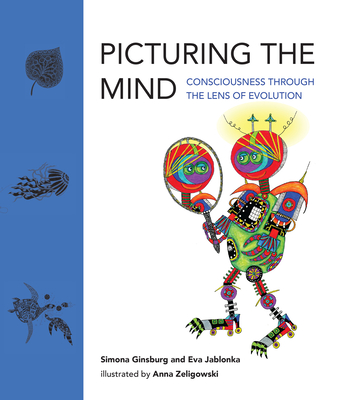
Consciousness in all its possible human and nonhuman varieties, explored through words and images. What is consciousness, and who (or what) is conscious—humans, nonhumans, nonliving beings? How did consciousness evolve? Picturing the Mind pursues these questions through a series of “vistas”—short, engaging texts by Simona Ginsburg and Eva Jablonka, accompanied by Anna Zeligowski’s lively illustrations. Taking an evolutionary perspective, Ginsburg and Jablonka suggest that consciousness can take many forms and is found not only in humans but even in such animals as octopuses (who seem to express emotions by changing color) and bees (who socialize with other bees). They identify the possible evolutionary marker of the transition from nonconscious to conscious animals, and they speculate intriguingly about aliens and artificial intelligence. Each picture and text serves as a starting point for discussion. The authors consider, among other things, what it’s like to be a bat (and then later, what it’s like to be a bat in virtual reality); ask if the self is like a hole in a doughnut; report that women, children, and nonwhite men were once thought by white men to be less richly conscious; and explore what sets humans apart—is it music, toolmaking, cooperative parenting, blushing, sentience, symbolic language? In Picturing the Mind, questions suggest answers.
Consciousness in all its possible human and nonhuman varieties, explored through words and images.
What is consciousness, and who (or what) is conscious—humans, nonhumans, nonliving beings? How did consciousness evolve? Picturing the Mind pursues these questions through a series of “vistas”—short, engaging texts by Simona Ginsburg and Eva Jablonka, accompanied by Anna Zeligowski’s lively illustrations. Taking an evolutionary perspective, Ginsburg and Jablonka suggest that consciousness can take many forms and is found not only in humans but even in such animals as octopuses (who seem to express emotions by changing color) and bees (who socialize with other bees). They identify the possible evolutionary marker of the transition from nonconscious to conscious animals, and they speculate intriguingly about aliens and artificial intelligence.
Each picture and text serves as a starting point for discussion. The authors consider, among other things, what it’s like to be a bat (and then later, what it’s like to be a bat in virtual reality); ask if the self is like a hole in a doughnut; report that women, children, and nonwhite men were once thought by white men to be less richly conscious; and explore what sets humans apart—is it music, toolmaking, cooperative parenting, blushing, sentience, symbolic language? In Picturing the Mind, questions suggest answers.
What is consciousness, and who (or what) is conscious—humans, nonhumans, nonliving beings? How did consciousness evolve? Picturing the Mind pursues these questions through a series of “vistas”—short, engaging texts by Simona Ginsburg and Eva Jablonka, accompanied by Anna Zeligowski’s lively illustrations. Taking an evolutionary perspective, Ginsburg and Jablonka suggest that consciousness can take many forms and is found not only in humans but even in such animals as octopuses (who seem to express emotions by changing color) and bees (who socialize with other bees). They identify the possible evolutionary marker of the transition from nonconscious to conscious animals, and they speculate intriguingly about aliens and artificial intelligence.
Each picture and text serves as a starting point for discussion. The authors consider, among other things, what it’s like to be a bat (and then later, what it’s like to be a bat in virtual reality); ask if the self is like a hole in a doughnut; report that women, children, and nonwhite men were once thought by white men to be less richly conscious; and explore what sets humans apart—is it music, toolmaking, cooperative parenting, blushing, sentience, symbolic language? In Picturing the Mind, questions suggest answers.
Get Picturing the Mind by Eva Jablonka, Simona Ginsburg at the best price and quality guaranteed only at Werezi Africa's largest book ecommerce store. The book was published by MIT Press Ltd and it has 184 pages.
Customers Who Bought This Also Bought
How Emotions Are Made
KSh 2,350.00

Gödel, Escher, Bach
KSh 4,200.00
Thinking, Fast and Slow
KSh 3,050.00
The Art of Seduction
KSh 5,050.00
Noise
KSh 2,000.00
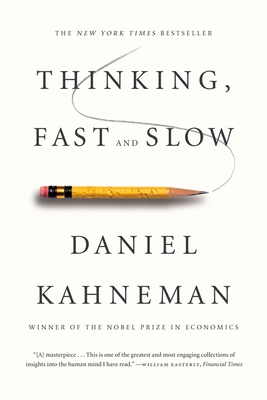
Thinking, Fast and Slow
KSh 2,700.00
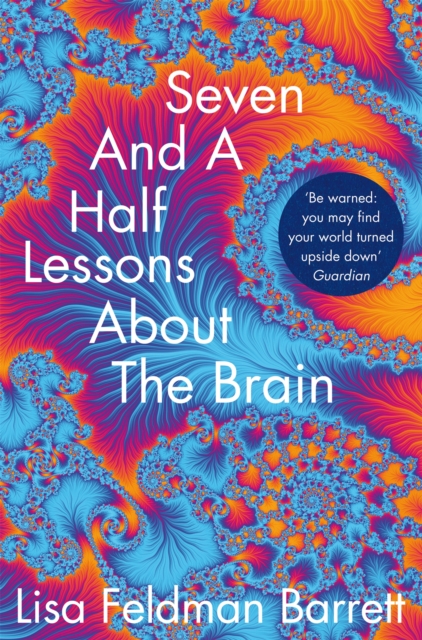
Seven and a Half Lessons About the Brain
KSh 2,000.00
Influence: Science and Practice
KSh 12,850.00

Do the Work
KSh 1,450.00

Thinking in Bets
KSh 5,050.00
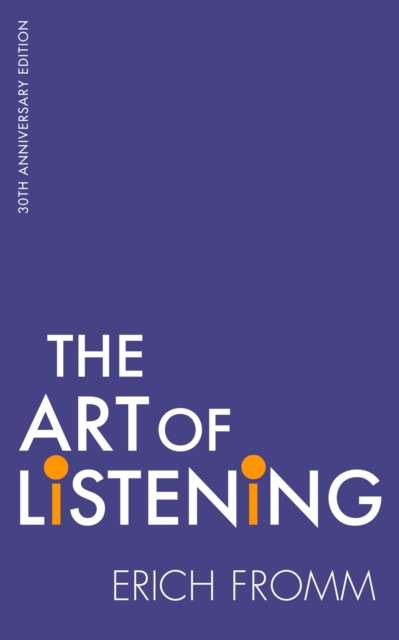
Art Of Listening
KSh 3,050.00
Mind''s Eye
KSh 2,000.00