
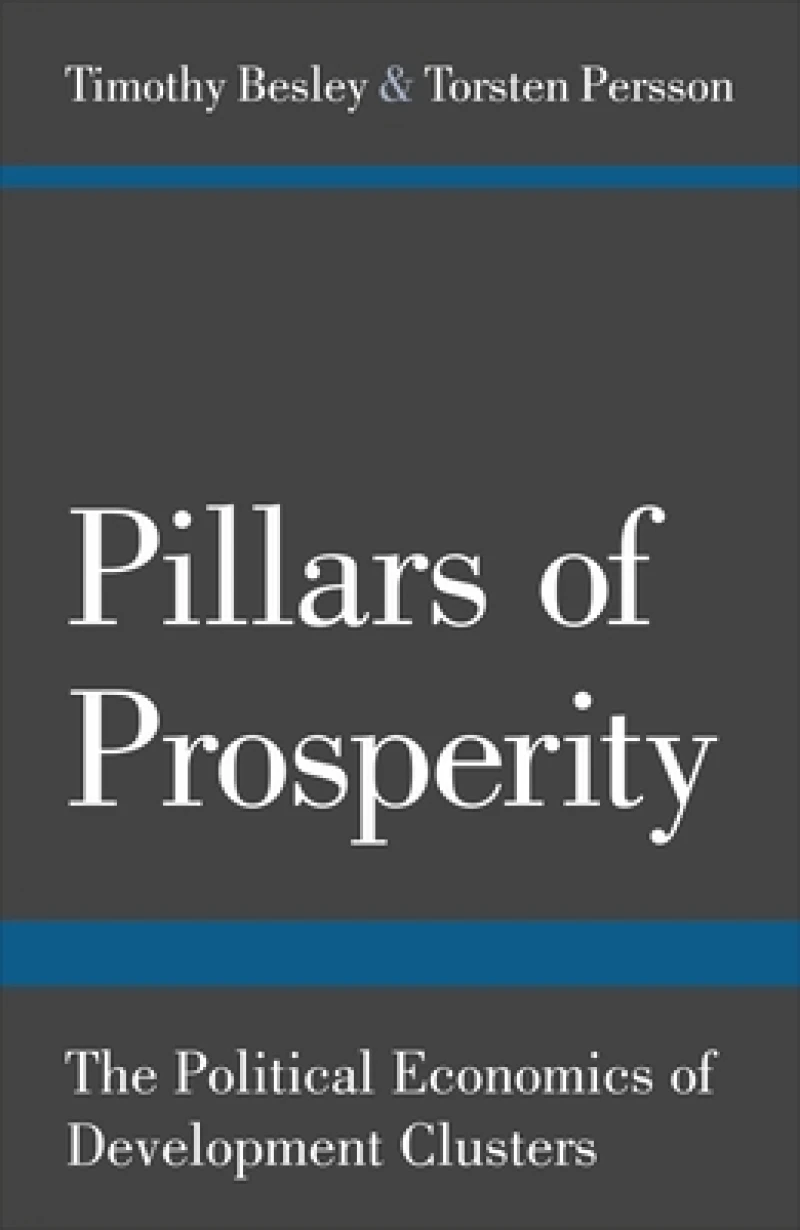
Pillars of Prosperity – The Political Economics of Development Clusters : The Political Economics of Development Clusters
Book Details
Format
Paperback / Softback
Book Series
The Yrjo Jahnsson Lectures
ISBN-10
0691158150
ISBN-13
9780691158150
Publisher
Princeton University Press
Imprint
Princeton University Press
Country of Manufacture
US
Country of Publication
GB
Publication Date
Feb 24th, 2013
Print length
392 Pages
Weight
612 grams
Dimensions
22.60 x 15.10 x 2.30 cms
Ksh 8,100.00
Werezi Extended Catalogue
0 in stock
Delivery Location
Delivery fee: Select location
Secure
Quality
Fast
"Little else is required to carry a state to the highest degree of opulence from the lowest barbarism, but peace, easy taxes, and a tolerable administration of justice; all the rest being brought about by the natural course of things." So wrote Adam Smith a quarter of a millennium ago. Using the tools of modern political economics and combining eco
"Little else is required to carry a state to the highest degree of opulence from the lowest barbarism, but peace, easy taxes, and a tolerable administration of justice; all the rest being brought about by the natural course of things." So wrote Adam Smith a quarter of a millennium ago. Using the tools of modern political economics and combining economic theory with a bird's-eye view of the data, this book reinterprets Smith's pillars of prosperity to explain the existence of development clusters--places that tend to combine effective state institutions, the absence of political violence, and high per-capita incomes. To achieve peace, the authors stress the avoidance of repressive government and civil conflict. Easy taxes, they argue, refers not to low taxes, but a tax system with widespread compliance that collects taxes at a reasonable cost from a broad base, like income. And a tolerable administration of justice is about legal infrastructure that can support the enforcement of contracts and property rights in line with the rule of law. The authors show that countries tend to enjoy all three pillars of prosperity when they have evolved cohesive political institutions that promote common interests, guaranteeing the provision of public goods. In line with much historical research, international conflict has also been an important force behind effective states by fostering common interests. The absence of common interests and/or cohesive political institutions can explain the existence of very different development clusters in fragile states that are plagued by poverty, violence, and weak state capacity.
Get Pillars of Prosperity – The Political Economics of Development Clusters by at the best price and quality guaranteed only at Werezi Africa's largest book ecommerce store. The book was published by Princeton University Press and it has pages.

