
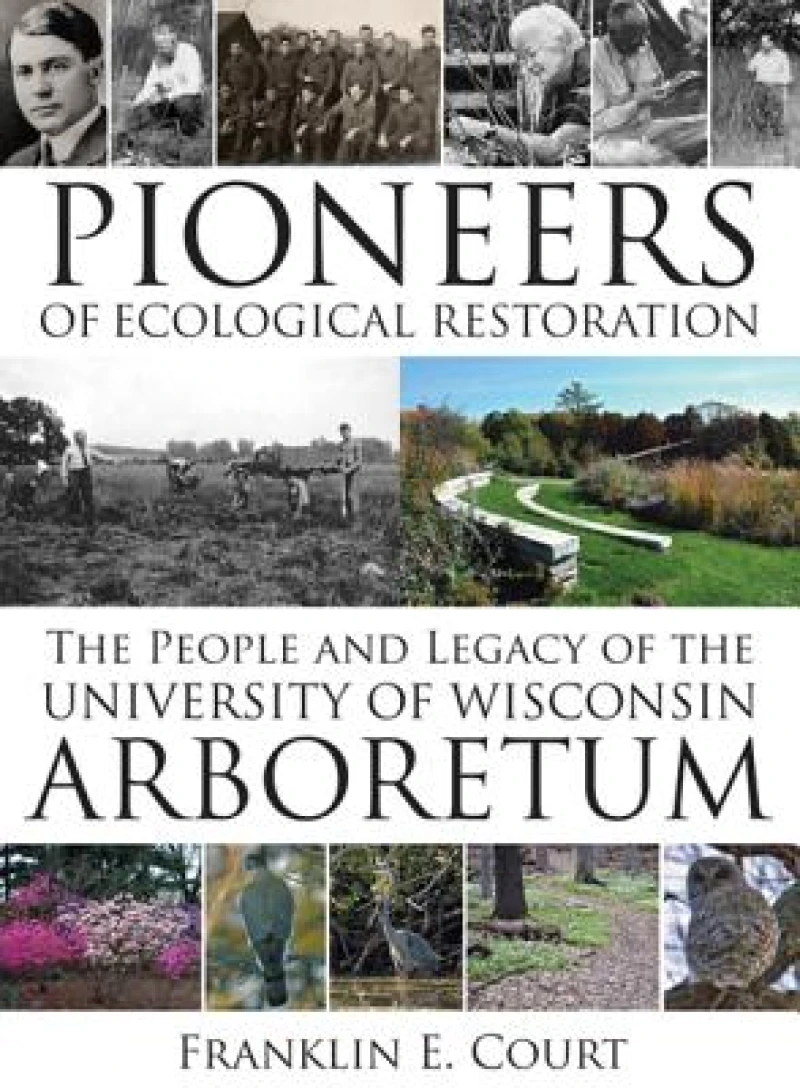
Pioneers of Ecological Restoration : The People and Legacy of the University of Wisconsin Arboretum
Book Details
Format
Paperback / Softback
ISBN-10
0299286649
ISBN-13
9780299286644
Publisher
University of Wisconsin Press
Imprint
University of Wisconsin Press
Country of Manufacture
US
Country of Publication
GB
Publication Date
Jun 30th, 2012
Print length
336 Pages
Weight
465 grams
Dimensions
22.60 x 14.90 x 2.00 cms
Product Classification:
History of the AmericasHistory of the AmericasBotany & plant sciencesBotany and plant sciences
Ksh 4,500.00
Temporarily out of stock, due soon
0 in stock
Delivery Location
Delivery fee: Select location
Secure
Quality
Fast
Internationally renowned for its pioneering role in the ecological restoration of tallgrass prairies, savannas, forests, and wetlands, the University of Wisconsin Arboretum contains the world's oldest and most diverse restored ecological communities. This chronicles the history of the arboretum and the people who created, shaped, and sustained it up to the present.
A rich history of pioneers who shaped an ecological mission to restore tallgrass prairies, forests, and wetlands
Internationally renowned for its pioneering role in the ecological restoration of tallgrass prairies, savannas, forests, and wetlands, the University of Wisconsin Arboretum contains the world’s oldest and most diverse restored ecological communities. A site for land restoration research, public environmental education, and enjoyment by nature lovers, the arboretum remains a vibrant treasure in the heart of Madison’s urban environment.
Pioneers of Ecological Restoration chronicles the history of the arboretum and the people who created, shaped, and sustained it up to the present. Although the arboretum was established by the University of Wisconsin in 1932, author Franklin E. Court begins his history in 1910 with John Nolen, the famous landscape architect who was invited to create plans for the city of Madison, the university campus, and Wisconsin state parks. Drawing extensive details from archives and interviews, Court follows decades of collaborative work related to the arboretum’s lands, including the early efforts of Madison philanthropists and businessmen Michael Olbrich, Paul E. Stark, and Joseph W. “Bud” Jackson.
With labour from the Civilian Conservation Corps during the 1930s Depression, University of Wisconsin scientists began establishing both a traditional horticultural collection of trees and plants and a completely new, visionary approach to recreate native ecosystems. Hundreds of dedicated scientists and staff have carried forward the arboretum’s mission in the decades since, among them G. William Longenecker Aldo Leopold, John T. Curtis, Rosemary Fleming, Virginia Kline, and William R. Jordan III.
This archival record of the arboretum’s history provides rare insights into how the mission of healing and restoring the land gradually shaped the arboretum’s future and its global reputation; how philosophical conflicts, campus politics, changing priorities, and the encroaching city have affected the arboretum over the decades; and how early aspirations (some still unrealised) have continued to motivate the work of this extraordinary institution.
Internationally renowned for its pioneering role in the ecological restoration of tallgrass prairies, savannas, forests, and wetlands, the University of Wisconsin Arboretum contains the world’s oldest and most diverse restored ecological communities. A site for land restoration research, public environmental education, and enjoyment by nature lovers, the arboretum remains a vibrant treasure in the heart of Madison’s urban environment.
Pioneers of Ecological Restoration chronicles the history of the arboretum and the people who created, shaped, and sustained it up to the present. Although the arboretum was established by the University of Wisconsin in 1932, author Franklin E. Court begins his history in 1910 with John Nolen, the famous landscape architect who was invited to create plans for the city of Madison, the university campus, and Wisconsin state parks. Drawing extensive details from archives and interviews, Court follows decades of collaborative work related to the arboretum’s lands, including the early efforts of Madison philanthropists and businessmen Michael Olbrich, Paul E. Stark, and Joseph W. “Bud” Jackson.
With labour from the Civilian Conservation Corps during the 1930s Depression, University of Wisconsin scientists began establishing both a traditional horticultural collection of trees and plants and a completely new, visionary approach to recreate native ecosystems. Hundreds of dedicated scientists and staff have carried forward the arboretum’s mission in the decades since, among them G. William Longenecker Aldo Leopold, John T. Curtis, Rosemary Fleming, Virginia Kline, and William R. Jordan III.
This archival record of the arboretum’s history provides rare insights into how the mission of healing and restoring the land gradually shaped the arboretum’s future and its global reputation; how philosophical conflicts, campus politics, changing priorities, and the encroaching city have affected the arboretum over the decades; and how early aspirations (some still unrealised) have continued to motivate the work of this extraordinary institution.
Get Pioneers of Ecological Restoration by at the best price and quality guaranteed only at Werezi Africa's largest book ecommerce store. The book was published by University of Wisconsin Press and it has pages.

