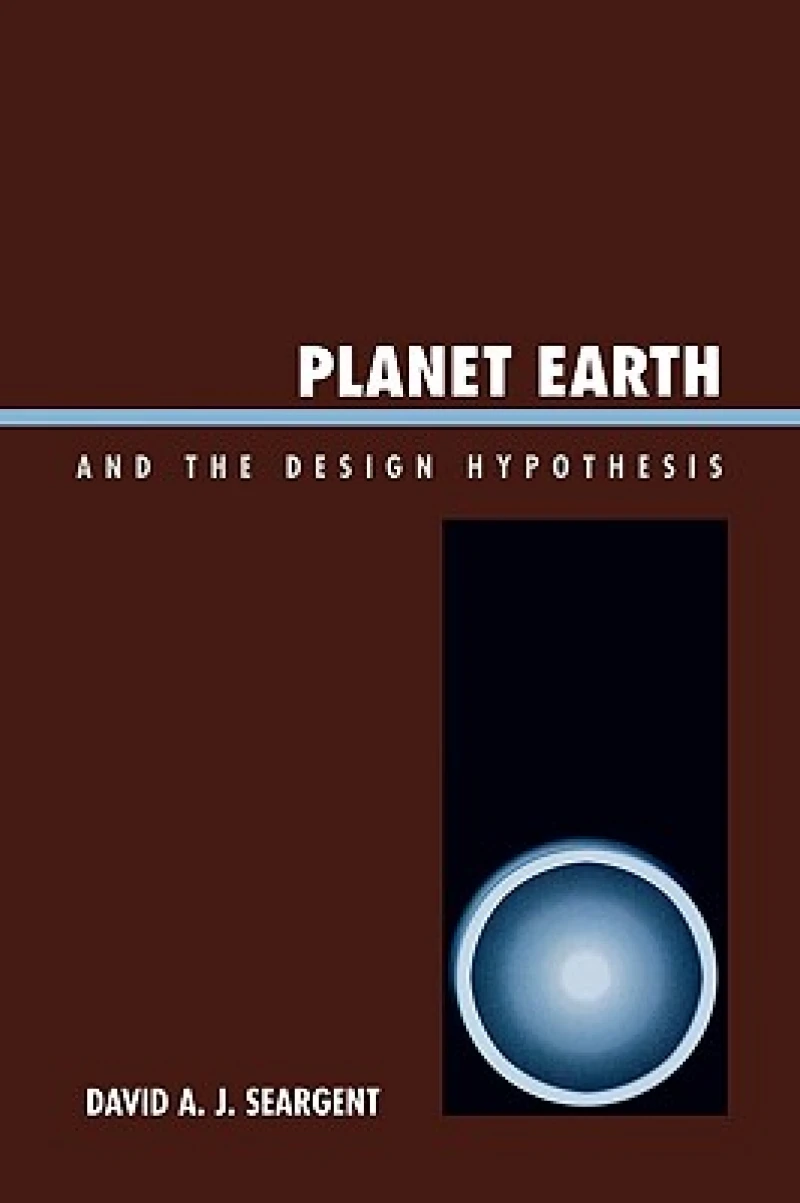
Planet Earth and the Design Hypothesis
Book Details
Format
Paperback / Softback
ISBN-10
0761837558
ISBN-13
9780761837558
Publisher
University Press of America
Imprint
University Press of America
Country of Manufacture
GB
Country of Publication
GB
Publication Date
Jun 14th, 2007
Print length
140 Pages
Weight
213 grams
Dimensions
23.10 x 15.40 x 1.10 cms
Product Classification:
Nature & existence of GodNature and existence of God and of the Divine
Ksh 7,600.00
Manufactured on Demand
0 in stock
Delivery Location
Delivery fee: Select location
Secure
Quality
Fast
In many respects, our planet is a cosmic anomaly. Moreover, it is anomalous in such a way as to provide an excellent environment for complex life in what appears to be a largely hostile universe. Is this simply a fortunate coincidence, or does it speak of something more fundamental, even an underlying intelligent design in nature? To answer this question, we must isolate the characteristics of design and determine whether these are apparent in the natural world. The ensuing discussion will take us beyond the important contributions of mathematician and philosopher W. Dembski and biologist M. Behe to the concept of "Transitive Complexity" (TC). It is argued that where TC is present, intelligent design is the only logical, valid inference.
This work presents evidence of TC in nature using the complexities of biology as its base. Planet Earth and the Design Hypothesis challenges the naturalistic assumptions of much scientific research without denigrating science. Rather, this book argues that the thirst for knowledge that drives scientific research is a basic-and in a very real sense "spiritual"-appetite constituting an essential part of our humanity.
This work presents evidence of TC in nature using the complexities of biology as its base. Planet Earth and the Design Hypothesis challenges the naturalistic assumptions of much scientific research without denigrating science. Rather, this book argues that the thirst for knowledge that drives scientific research is a basic-and in a very real sense "spiritual"-appetite constituting an essential part of our humanity.
Get Planet Earth and the Design Hypothesis by at the best price and quality guaranteed only at Werezi Africa's largest book ecommerce store. The book was published by University Press of America and it has pages.