
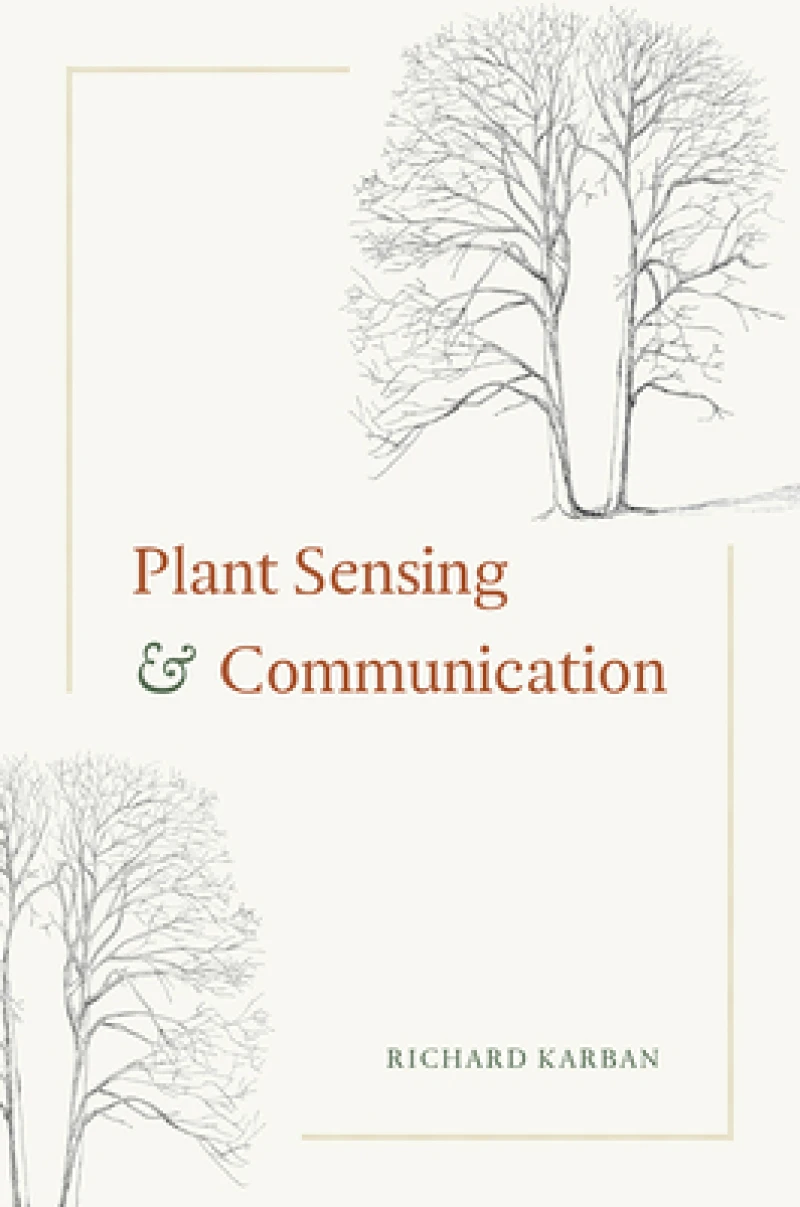
Plant Sensing and Communication
Book Details
Format
Paperback / Softback
Book Series
Interspecific Interactions
ISBN-10
022626470X
ISBN-13
9780226264707
Publisher
The University of Chicago Press
Imprint
University of Chicago Press
Country of Manufacture
US
Country of Publication
GB
Publication Date
Jun 30th, 2015
Print length
240 Pages
Weight
398 grams
Dimensions
15.20 x 22.90 x 1.80 cms
Product Classification:
Botany & plant sciencesBotany and plant sciences
Ksh 5,750.00
Werezi Extended Catalogue
Delivery in 14 days
1 copies in stock
Delivery Location
Delivery fee: Select location
Delivery in 14 days
Secure
Quality
Fast
A flowering weed-mousear cress - can sense the particular chewing noise of its most common caterpillar predator and adjust its chemical defenses. The author provides the first comprehensive overview of what is known about how plants perceive their environments, communicate those perceptions, and learn.
The news that a flowering weed-mousear cress (Arabidopsis thaliana)-can sense the particular chewing noise of its most common caterpillar predator and adjust its chemical defenses in response led to headlines announcing the discovery of the first "hearing" plant. As plants lack central nervous systems (and, indeed, ears), the mechanisms behind this "hearing" are unquestionably very different from those of our own acoustic sense, but the misleading headlines point to an overlooked truth: plants do in fact perceive environmental cues and respond rapidly to them by changing their chemical, morphological, and behavioral traits. In Plant Sensing and Communication, Richard Karban provides the first comprehensive overview of what is known about how plants perceive their environments, communicate those perceptions, and learn. Facing many of the same challenges as animals, plants have developed many similar capabilities: they sense light, chemicals, mechanical stimulation, temperature, electricity, and sound. Moreover, prior experiences have lasting impacts on sensitivity and response to cues; plants, in essence, have memory. Nor are their senses limited to the processes of an individual plant: plants eavesdrop on the cues and behaviors of neighbors and - for example, through flowers and fruits - exchange information with other types of organisms. Far from inanimate organisms limited by their stationery existence, plants, this book makes unquestionably clear, are in constant and lively discourse.
Get Plant Sensing and Communication by at the best price and quality guaranteed only at Werezi Africa's largest book ecommerce store. The book was published by The University of Chicago Press and it has pages.

