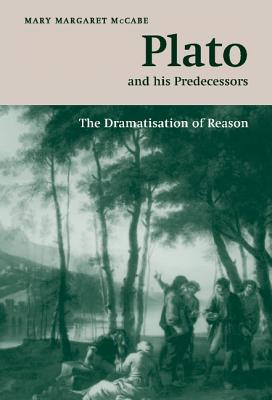
Plato and his Predecessors : The Dramatisation of Reason
Book Details
Format
Hardback
Book Series
The W. B. Stanford Memorial Lectures
ISBN-10
0521653061
ISBN-13
9780521653060
Publisher
Cambridge University Press
Imprint
Cambridge University Press
Country of Manufacture
GB
Country of Publication
GB
Publication Date
Aug 15th, 2000
Print length
328 Pages
Weight
634 grams
Dimensions
16.10 x 23.70 x 2.70 cms
Product Classification:
Western philosophy: Ancient, to c 500Ancient Greek and Roman philosophy
KSh 17,800.00
Currently unavailable
0 in stock
Delivery Location
Delivery fee: Select location
Secure
Quality
Fast
A consideration of how Plato represents his philosophical predecessors. These predecessors appear in imaginary conversations; and they are refuted when they fail to defend their philosophical positions in debate. Professor McCabe argues that Plato's reflections on these conversations allow him to develop a new account of the principles of reason.
How does Plato view his philosophical antecedents? Plato and his Predecessors considers how Plato represents his philosophical predecessors in a late quartet of dialogues: the Theaetetus, the Sophist, the Politicus and the Philebus. Why is it that the sophist Protagoras, or the monist Parmenides, or the advocate of flux, Heraclitus, are so important in these dialogues? And why are they represented as such shadowy figures, barely present at their own refutations? The explanation, the author argues, is a complex one involving both the reflective relation between Plato's dramatic technique and his philosophical purposes, and the very nature of his late philosophical views. For in these encounters with his predecessors we see Plato develop a new account of the principles of reason, against those who would deny them, and forge a fresh view of the best life - the life of the philosopher.
Get Plato and his Predecessors by Mary Margaret McCabe at the best price and quality guaranteed only at Werezi Africa's largest book ecommerce store. The book was published by Cambridge University Press and it has 328 pages.
Customers Who Bought This Also Bought

Silent Patient
KSh 2,000.00
Xmeditations
KSh 700.00
Discourses and Selected Writings
KSh 2,000.00
The Nicomachean Ethics
KSh 1,600.00
The Republic
KSh 2,350.00

Handbook (The Encheiridion)
KSh 1,600.00
Meditations
KSh 1,600.00

Anaximander
KSh 2,000.00

The Life Of The Mind
KSh 3,950.00
Letters from a Stoic
KSh 1,800.00
Great Dialogues of Plato
KSh 1,450.00
Courage Is Calling
KSh 2,150.00