
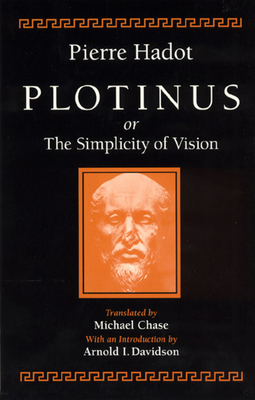
Plotinus or the Simplicity of Vision
by
Pierre Hadot
Book Details
Format
Paperback / softback
ISBN-10
0226311945
ISBN-13
9780226311944
Publisher
The University of Chicago Press
Imprint
University of Chicago Press
Country of Manufacture
US
Country of Publication
GB
Publication Date
Apr 28th, 1998
Print length
145 Pages
Weight
202 grams
Dimensions
21.50 x 14.00 x 1.40 cms
Product Classification:
Western philosophy: Ancient, to c 500Ancient Greek and Roman philosophy
KSh 4,700.00
Werezi Extended Catalogue
Delivery in 12 days
2 copies in stock
Delivery Location
Delivery fee: Select location
Delivery in 12 days
Secure
Quality
Fast
In this work, Hadot examines Plotinus' views on the self, existence, love, virtue, gentleness and solitude. He shows that Plotinus, like other philosophers of his day, believed that Plato and Aristotle had already articulated the essential truths, and so his purpose was to live philosophically.
Since its original publication in France in 1963, Pierre Hadot's lively philosophical portrait of Plotinus remains the preeminent introduction to the man and his thought. Michael Chase's lucid translation--complete with a useful chronology and analytical bibliography--at last makes this book available to the English-speaking world. Hadot carefully examines Plotinus's views on the self, existence, love, virtue, gentleness, and solitude. He shows that Plotinus, like other philosophers of his day, believed that Plato and Aristotle had already articulated the essential truths; for him, the purpose of practicing philosophy was not to profess new truths but to engage in spiritual exercises so as to live philosophically. Seen in this light, Plotinus's counsel against fixation on the body and all earthly matters stemmed not from disgust or fear, but rather from his awareness of the negative effect that bodily preoccupation and material concern could have on spiritual exercises.
Get Plotinus or the Simplicity of Vision by Pierre Hadot at the best price and quality guaranteed only at Werezi Africa's largest book ecommerce store. The book was published by The University of Chicago Press and it has 145 pages.
Customers Who Bought This Also Bought

Silent Patient
KSh 2,000.00
Xmeditations
KSh 700.00
Discourses and Selected Writings
KSh 2,000.00
The Nicomachean Ethics
KSh 1,600.00
The Republic
KSh 2,350.00

Handbook (The Encheiridion)
KSh 1,600.00
Meditations
KSh 1,600.00

Anaximander
KSh 2,000.00

The Life Of The Mind
KSh 3,950.00
Letters from a Stoic
KSh 1,800.00
Great Dialogues of Plato
KSh 1,450.00

Courage Is Calling
KSh 2,150.00
More by Pierre Hadot
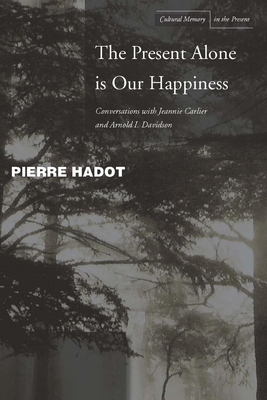
The Present Alone Is Our Happiness
KSh 15,850.00
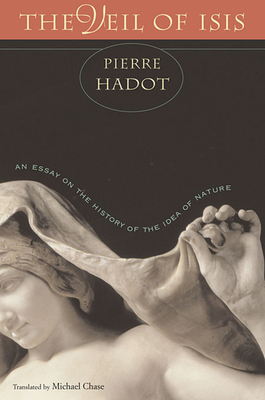
The Veil of Isis – An Essay on the History of the Idea of Nature
KSh 4,650.00
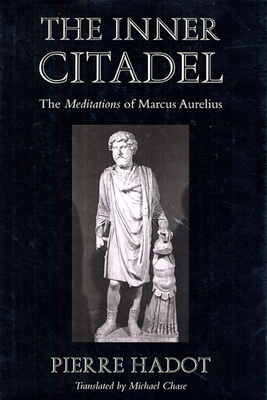
The Inner Citadel – The Meditations of Marcus Aurelius
KSh 5,400.00
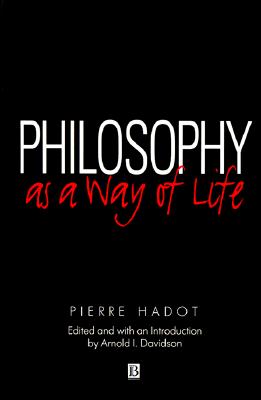
Philosophy as a Way of Life – Spiritual Exercises from Socrates to Foucault
KSh 5,950.00

Don't Forget to Live – Goethe and the Tradition of Spiritual Exercises
KSh 4,200.00
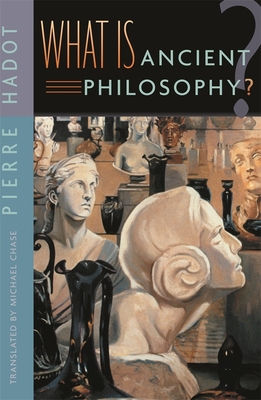
What is Ancient Philosophy ?
KSh 4,650.00
The Present Alone Is Our Happiness
KSh 3,800.00
The Present Alone Is Our Happiness, Second Edition
KSh 3,800.00
