
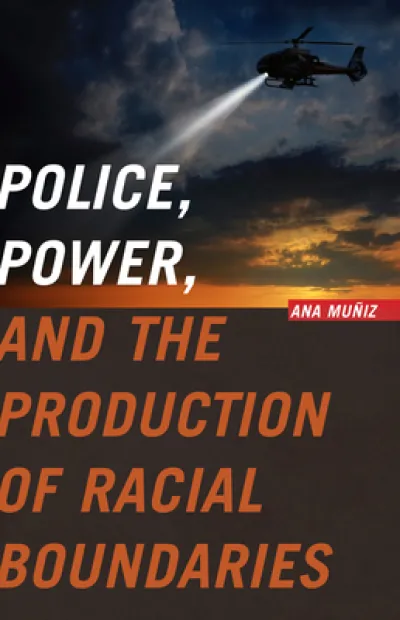
Police, Power, and the Production of Racial Boundaries
by
Ana Muniz
Book Details
Format
Paperback / Softback
Book Series
Critical Issues in Crime and Society
ISBN-10
0813569753
ISBN-13
9780813569758
Publisher
Rutgers University Press
Imprint
Rutgers University Press
Country of Manufacture
US
Country of Publication
GB
Publication Date
Aug 3rd, 2015
Print length
154 Pages
Weight
234 grams
Dimensions
15.20 x 22.70 x 1.40 cms
Product Classification:
Ethnic studiesPolice & security servicesStreet crime / gun crimeOrganized crime
Ksh 5,200.00
Werezi Extended Catalogue
0 in stock
Delivery Location
Delivery fee: Select location
Secure
Quality
Fast
Based on five years of ethnography, archival research, census data analysis, and interviews, Police, Power, and the Production of Racial Boundaries reveals how the LAPD, city prosecutors, and business owners struggled to control who should be considered “dangerous” and how they should be policed in Los Angeles. Ana Muñiz shows how this influential group used policies and everyday procedures to criminalize behaviors commonly associated with blacks and Latinos and to promote an exceedingly aggressive form of policing.
Based on five years of ethnography, archival research, census data analysis, and interviews, Police, Power, and the Production of Racial Boundaries reveals how the LAPD, city prosecutors, and business owners struggled to control who should be considered “dangerous” and how they should be policed in Los Angeles. Sociologist Ana Muñiz shows how these influential groups used policies and everyday procedures to criminalize behaviors commonly associated with blacks and Latinos and to promote an exceedingly aggressive form of policing.
Muñiz illuminates the degree to which the definitions of “gangs” and “deviants” are politically constructed labels born of public policy and court decisions, offering an innovative look at the process of criminalization and underscoring the ways in which a politically powerful coalition can define deviant behavior. As she does so, Muñiz also highlights the various grassroots challenges to such policies and the efforts to call attention to their racist effects. Muñiz describes the fight over two very different methods of policing: community policing (in which the police and the community work together) and the “broken windows” or “zero tolerance” approach (which aggressively polices minor infractions—such as loitering—to deter more serious crime). Police, Power, and the Production of Racial Boundaries also explores the history of the area to explain how Cadillac-Corning became viewed by outsiders as a “violent neighborhood” and how the city’s first gang injunction—a restraining order aimed at alleged gang members—solidified this negative image. As a result, Muñiz shows, Cadillac-Corning and other sections became a test site for repressive practices that eventually spread to the rest of the city.
Muñiz illuminates the degree to which the definitions of “gangs” and “deviants” are politically constructed labels born of public policy and court decisions, offering an innovative look at the process of criminalization and underscoring the ways in which a politically powerful coalition can define deviant behavior. As she does so, Muñiz also highlights the various grassroots challenges to such policies and the efforts to call attention to their racist effects. Muñiz describes the fight over two very different methods of policing: community policing (in which the police and the community work together) and the “broken windows” or “zero tolerance” approach (which aggressively polices minor infractions—such as loitering—to deter more serious crime). Police, Power, and the Production of Racial Boundaries also explores the history of the area to explain how Cadillac-Corning became viewed by outsiders as a “violent neighborhood” and how the city’s first gang injunction—a restraining order aimed at alleged gang members—solidified this negative image. As a result, Muñiz shows, Cadillac-Corning and other sections became a test site for repressive practices that eventually spread to the rest of the city.
Get Police, Power, and the Production of Racial Boundaries by at the best price and quality guaranteed only at Werezi Africa's largest book ecommerce store. The book was published by Rutgers University Press and it has pages.

