
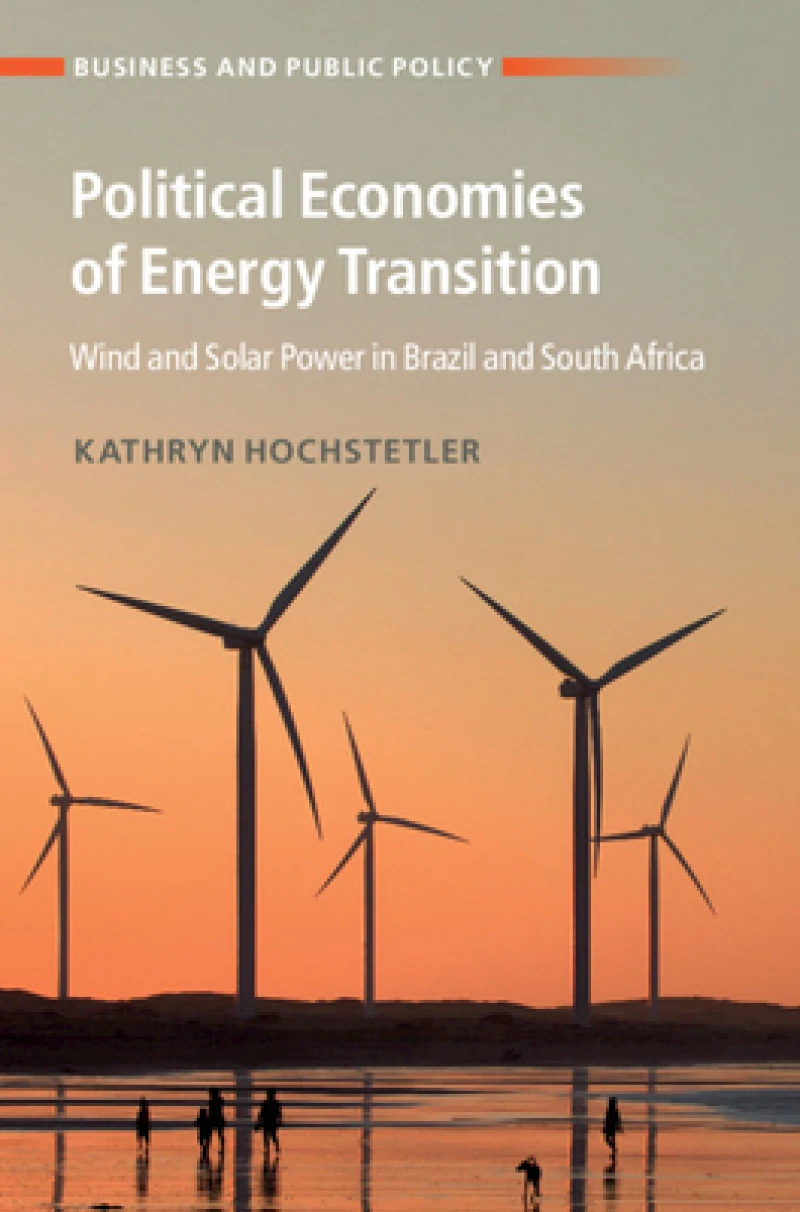
Political Economies of Energy Transition : Wind and Solar Power in Brazil and South Africa
Book Details
Format
Hardback or Cased Book
Book Series
Business and Public Policy
ISBN-10
1108843840
ISBN-13
9781108843843
Publisher
Cambridge University Press
Imprint
Cambridge University Press
Country of Manufacture
GB
Country of Publication
GB
Publication Date
Nov 26th, 2020
Print length
270 Pages
Weight
572 grams
Dimensions
20.90 x 40.20 x 2.50 cms
Product Classification:
History of ideasSocial theoryComparative politicsInternational relationsEnvironmental economics
Ksh 15,650.00
Manufactured on Demand
0 in stock
Delivery Location
Delivery fee: Select location
Secure
Quality
Fast
Most of what we know about energy transition is based on industrialized countries and China - but most future low-carbon transitions will take place in developing countries. Climate change cannot be addressed without them. This book shows how environment and development concerns drive electricity choices in Brazil and South Africa.
Global climate solutions depend on low-carbon energy transitions in developing countries, but little is known about how those will unfold. Examining the transitions of Brazil and South Africa, Hochstetler reveals how choices about wind and solar power respond to four different constellations of interests and institutions, or four simultaneous political economies of energy transition. The political economy of climate change set Brazil and South Africa on different tracks, with South Africa''s coal-based electricity system fighting against an existential threat. Since deforestation dominates Brazil''s climate emissions, climate concerns were secondary there for electricity planning. Both saw significant mobilization around industrial policy and cost and consumption issues, showing the importance of economic considerations for electricity choices in emerging economies. Host communities resisted Brazilian wind power, but accepted other forms. Hochstetler argues that national energy transition finally depends on the intersection of these political economies, with South Africa illustrating a politicized transition mode and Brazil presenting a bureaucracy-dominant one.
Get Political Economies of Energy Transition by at the best price and quality guaranteed only at Werezi Africa's largest book ecommerce store. The book was published by Cambridge University Press and it has pages.

