
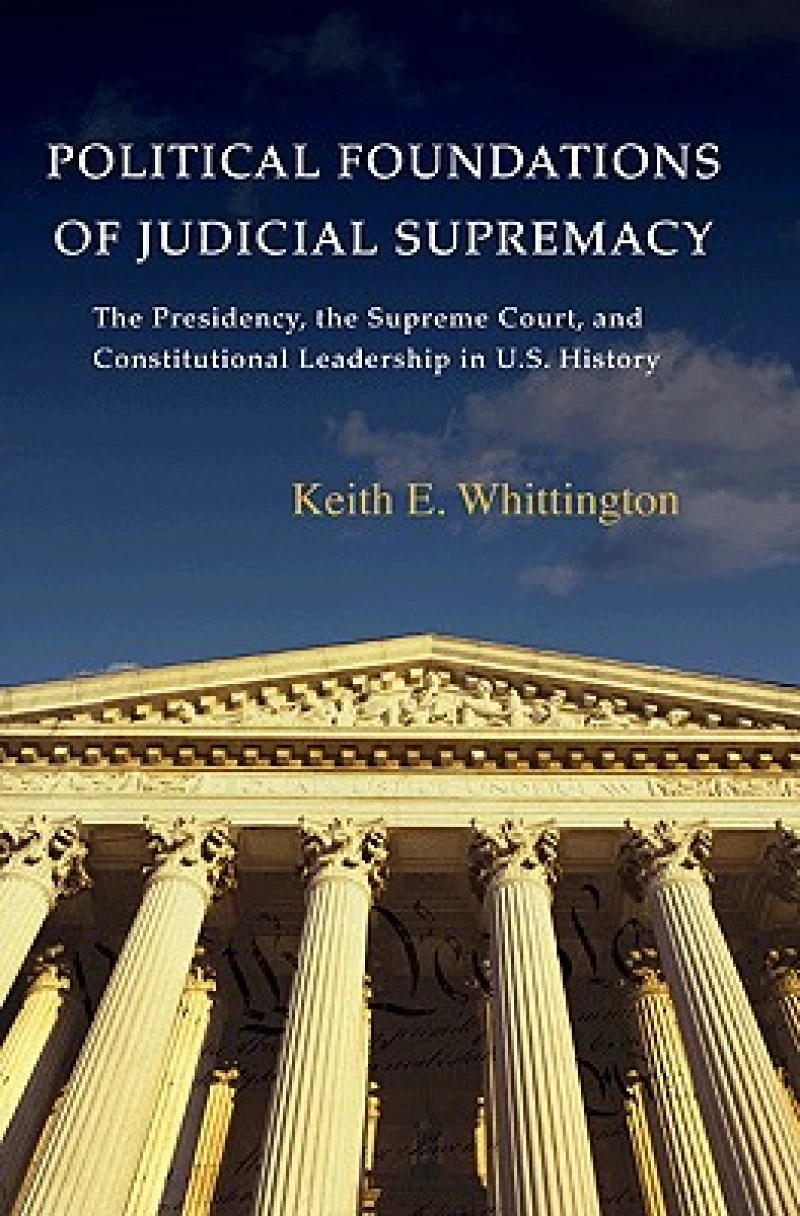
Political Foundations of Judicial Supremacy – The Presidency, the Supreme Court, and Constitutional Leadership in U.S. History : The Presidency, the Supreme Court, and Constitutional Leadership in U.S. History
Book Details
Format
Paperback / Softback
Book Series
Princeton Studies in American Politics
ISBN-10
0691141029
ISBN-13
9780691141022
Publisher
Princeton University Press
Imprint
Princeton University Press
Country of Manufacture
US
Country of Publication
GB
Publication Date
Mar 29th, 2009
Print length
320 Pages
Weight
458 grams
Dimensions
23.40 x 15.50 x 2.00 cms
Ksh 6,850.00
Werezi Extended Catalogue
0 in stock
Delivery Location
Delivery fee: Select location
Secure
Quality
Fast
Shows that presidents and leaders of all stripes have worked to put the Court on a pedestal and have encouraged its justices to accept the role of ultimate interpreters of the Constitution. This work examines why presidents have found judicial supremacy to be in their best interest and why constitutional leadership has been passed to the courts.
Should the Supreme Court have the last word when it comes to interpreting the Constitution? The justices on the Supreme Court certainly seem to think so--and their critics say that this position threatens democracy. But Keith Whittington argues that the Court's justices have not simply seized power and circumvented politics. The justices have had power thrust upon them--by politicians, for the benefit of politicians. In this sweeping political history of judicial supremacy in America, Whittington shows that presidents and political leaders of all stripes have worked to put the Court on a pedestal and have encouraged its justices to accept the role of ultimate interpreters of the Constitution. Whittington examines why presidents have often found judicial supremacy to be in their best interest, why they have rarely assumed responsibility for interpreting the Constitution, and why constitutional leadership has often been passed to the courts. The unprecedented assertiveness of the Rehnquist Court in striking down acts of Congress is only the most recent example of a development that began with the founding generation itself. Presidential bids for constitutional leadership have been rare, but reflect the temporary political advantage in doing so. Far more often, presidents have cooperated in increasing the Court's power and encouraging its activism. Challenging the conventional wisdom that judges have usurped democracy, Whittington shows that judicial supremacy is the product of democratic politics.
Get Political Foundations of Judicial Supremacy – The Presidency, the Supreme Court, and Constitutional Leadership in U.S. History by at the best price and quality guaranteed only at Werezi Africa's largest book ecommerce store. The book was published by Princeton University Press and it has pages.

