
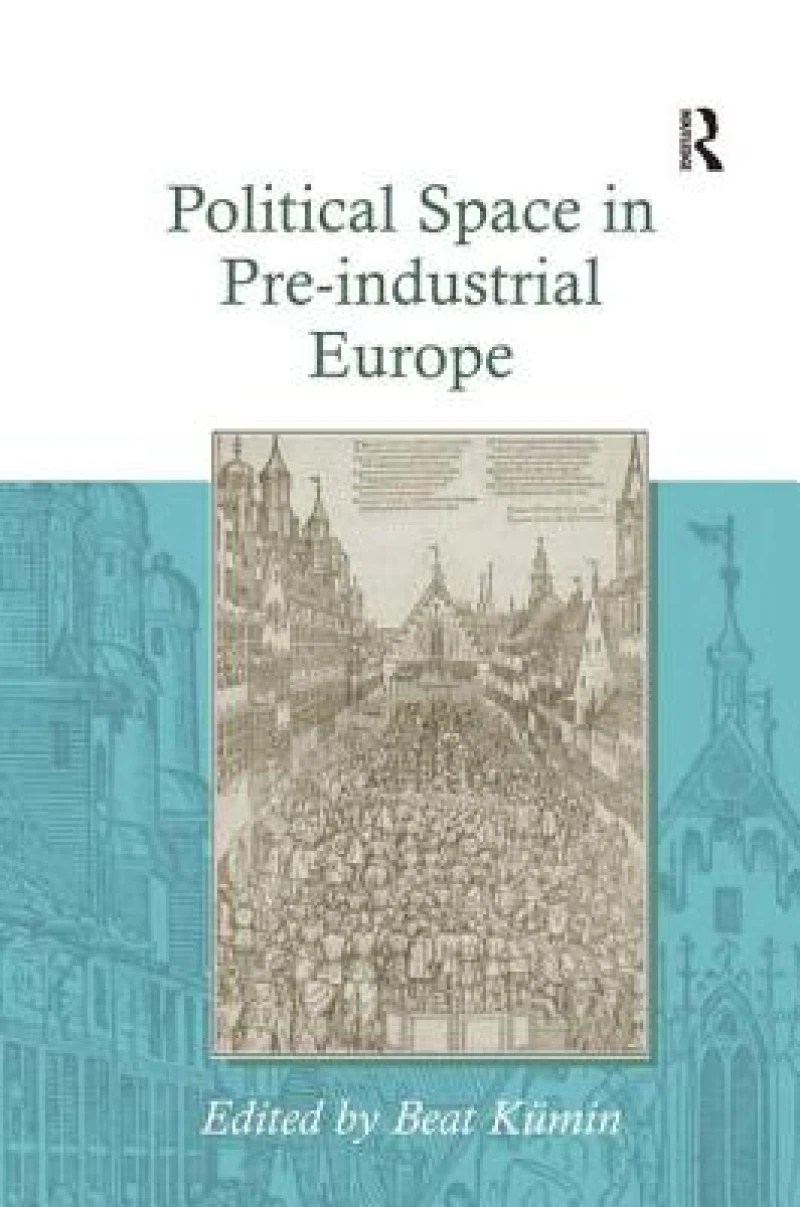
Political Space in Pre-industrial Europe
by
Beat Kumin
Book Details
Format
Hardback or Cased Book
ISBN-10
0754660729
ISBN-13
9780754660729
Publisher
Taylor & Francis Ltd
Imprint
Routledge
Country of Manufacture
GB
Country of Publication
GB
Publication Date
Sep 18th, 2009
Print length
296 Pages
Weight
453 grams
Ksh 30,950.00
Werezi Extended Catalogue
0 in stock
Delivery Location
Delivery fee: Select location
Secure
Quality
Fast
Some historians relate macroeconomics and human agency to regional contexts; others focus on micro-spaces like houses, taverns and parish churches; even virtual or imaginary spaces (such as Purgatory) attract attention. This book examines the potential and limitations of spatial approaches for the political history of preindustrial Europe.
Social and cultural studies are experiencing a ''spatial turn''. Micro-sites, localities, empires as well as virtual or imaginary spaces attract increasing attention. In most of these works, space emerges as a social construct rather than a mere container. This collection examines the potential and limitations of spatial approaches for the political history of pre-industrial Europe. Adopting a broad definition of ''political'', the volume concentrates on two key questions: Where did political exchange take place? How did spatial dimensions affect political life in different periods and contexts? Taken together, the essays demonstrate that pre-modern Europeans made use of a much wider range of political sites than is usually assumed - not just palaces, town halls and courtrooms, but common fields as well as back rooms of provincial inns - and that spatial dimensions provided key variables in political life, both in terms of territorial ambitions and practical governance and in the more abstract forms of patronage networks, representations of power and the emerging public sphere. As such, this book offers a timely and critical engagement with the ''spatial turn'' from a political perspective. Focusing on the distinct constitutional environments of England and the Holy Roman Empire - one associated with early centralization and strong parliamentary powers, the other with political fragmentation and absolutist tendencies - it bridges the common gaps between late medieval and early modern studies and those between historians and scholars from other disciplines. Preface, commentary and a sketch of research perspectives discuss the wider implications of the essays'' findings and reflect upon the value of spatial approaches for political history as a whole.
Get Political Space in Pre-industrial Europe by at the best price and quality guaranteed only at Werezi Africa's largest book ecommerce store. The book was published by Taylor & Francis Ltd and it has pages.

