
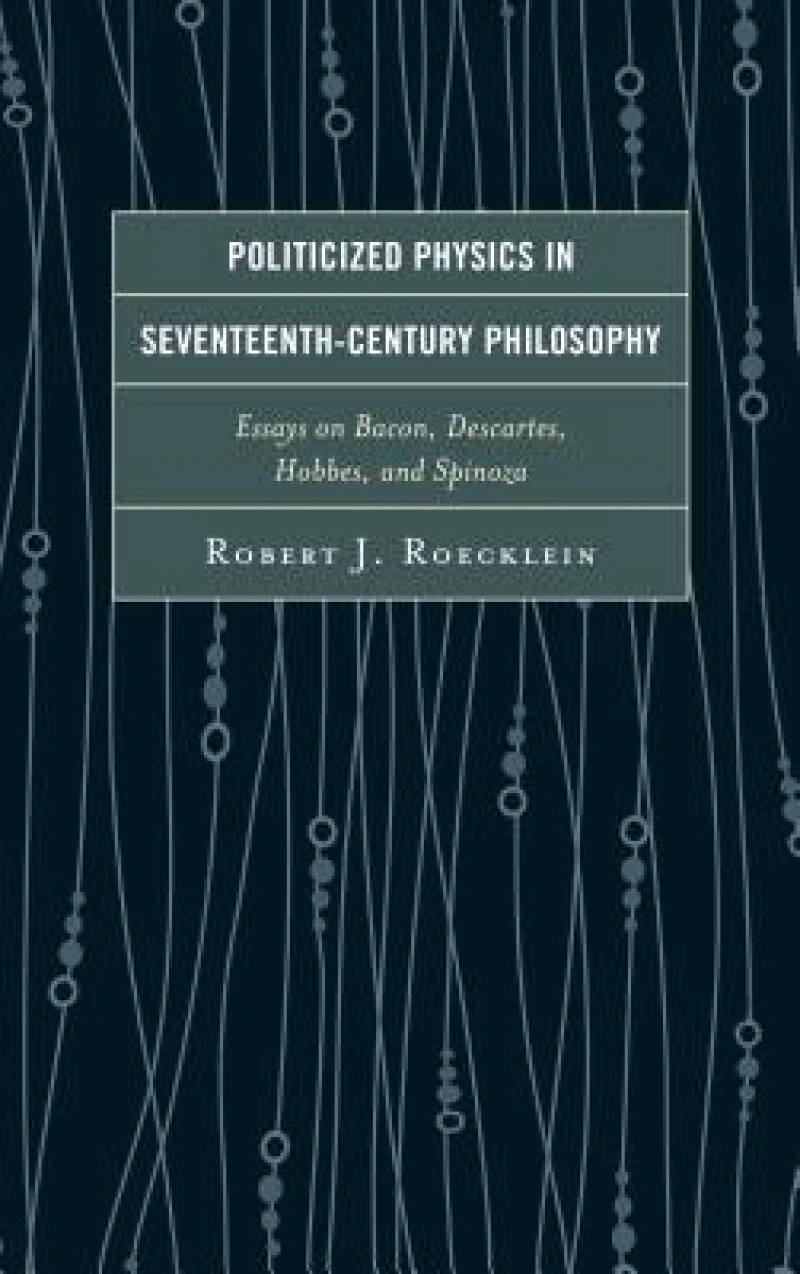
Politicized Physics in Seventeenth-Century Philosophy : Essays on Bacon, Descartes, Hobbes, and Spinoza
Book Details
Format
Paperback / Softback
ISBN-10
1498556531
ISBN-13
9781498556538
Publisher
Bloomsbury Publishing Plc
Imprint
Lexington Books
Country of Manufacture
GB
Country of Publication
GB
Publication Date
Mar 27th, 2017
Print length
266 Pages
Weight
426 grams
Dimensions
23.00 x 14.90 x 1.70 cms
Product Classification:
PhilosophyWestern philosophy: Ancient, to c 500Social & political philosophy
Ksh 9,950.00
Manufactured on Demand
Delivery in 29 days
Delivery Location
Delivery fee: Select location
Delivery in 29 days
Secure
Quality
Fast
In the origins of Western philosophical thought, doctrines of physics intertwined with the debate between political philosophers. It is for this reason that Plato devoted his dialogues Theatetus and Parmenides to investigating and meeting the arguments of his principal philosophical adversaries. The doctrine of atomism, which developed under the influence of Parmenides’ philosophy, is one that Plato refutes directly. In the modern era of philosophy and science, a revived doctrine of atomism has been treated as apolitical. Atomistic postulates lay at the root of the doctrines of Early Modern philosophers and exert a great influence upon cultural and political teachings. In order to understand Early Modern Philosophy, therefore, and especially in order to examine Early Modern political science, one must address the atomistic theory of body which lies at the root of Early Modern metaphysics. In the metaphysical domain, or in the domain of natural philosophy, the Early Modern philosophers radically reduce the role that ordinary opinion may play in political and cultural life. The majestic declarations concerning the rights of man, and the gospel of utility characteristic of the political domain of Early Modernity, therefore conceal a shrunken influence fated for the demos in the new politics. In order to take the measure of the new political science, it is necessary to take the measure of the revived doctrines of atomism. If these doctrines can be disproved, by reviving Plato’s critique, we will be able to take a critical look at the political doctrines that lie upon the foundations of the politicized atomism.
Get Politicized Physics in Seventeenth-Century Philosophy by at the best price and quality guaranteed only at Werezi Africa's largest book ecommerce store. The book was published by Bloomsbury Publishing Plc and it has pages.

