
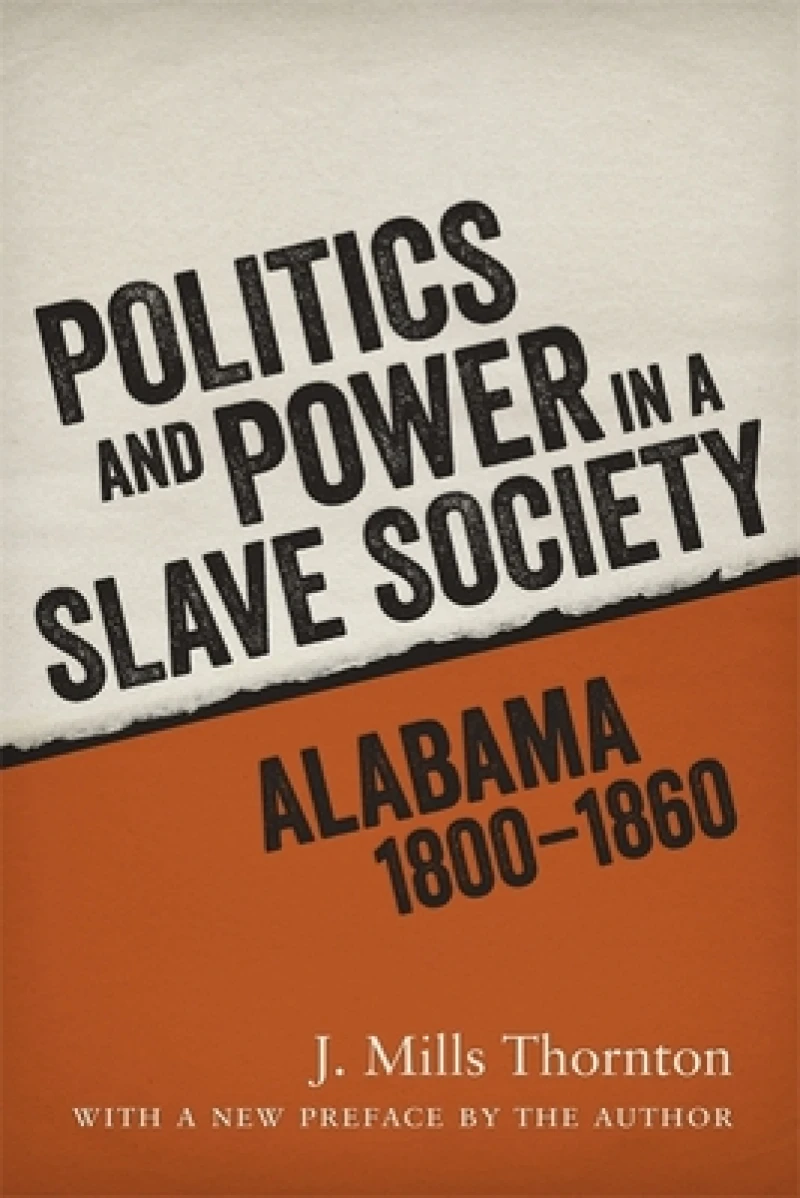
Politics and Power in a Slave Society : Alabama, 1800-1860
Book Details
Format
Paperback / Softback
ISBN-10
080715914X
ISBN-13
9780807159149
Publisher
Louisiana State University Press
Imprint
Louisiana State University Press
Country of Manufacture
US
Country of Publication
GB
Publication Date
Nov 20th, 2014
Print length
528 Pages
Weight
708 grams
Dimensions
22.90 x 15.20 x 2.50 cms
Product Classification:
History of the AmericasHistory of the Americas
Ksh 6,200.00
Temporarily out of stock, due soon
0 in stock
Delivery Location
Delivery fee: Select location
Secure
Quality
Fast
More than three decades after its initial publication, J. Mills Thornton's Politics and Power in a Slave Society remains the definitive study of political culture in antebellum Alabama. Controversial when it first appeared, the book argues against a view of prewar Alabama as an aristocratic society governed by a planter elite.
More than three decades after its initial publication, J. Mills Thornton's Politics and Power in a Slave Society remains the definitive study of political culture in antebellum Alabama. Controversial when it first appeared, the book argues against a view of prewar Alabama as an aristocratic society governed by a planter elite. Instead, Thornton claims that Alabama was an aggressively democratic state, and that this very egalitarianism set the stage for secession.
White Alabamians had first-hand experiences with slavery, and these encounters warned them to guard against the imposition of economic or social reforms that might limit their equality. Playing upon their fears, the leaders of the southern rights movement warned that national consolidation presented the danger that fanatic northern reformers would force alien values upon Alabama and its residents. These threats gained traction when national reforms of the 1850s gave state government a more active role in the everyday life of Alabama citizens; and ambitious young politicians were able to carry the state into secession in 1861.
Politics and Power in a Slave Society continues to inspire scholars by challenging one of the fundamental articles of the American creed: that democracy intrinsically produces good. Contrary to our conventional wisdom, slavery was not an un-American institution, but rather coexisted with and supported the democratic beliefs of white Alabama.
White Alabamians had first-hand experiences with slavery, and these encounters warned them to guard against the imposition of economic or social reforms that might limit their equality. Playing upon their fears, the leaders of the southern rights movement warned that national consolidation presented the danger that fanatic northern reformers would force alien values upon Alabama and its residents. These threats gained traction when national reforms of the 1850s gave state government a more active role in the everyday life of Alabama citizens; and ambitious young politicians were able to carry the state into secession in 1861.
Politics and Power in a Slave Society continues to inspire scholars by challenging one of the fundamental articles of the American creed: that democracy intrinsically produces good. Contrary to our conventional wisdom, slavery was not an un-American institution, but rather coexisted with and supported the democratic beliefs of white Alabama.
Get Politics and Power in a Slave Society by at the best price and quality guaranteed only at Werezi Africa's largest book ecommerce store. The book was published by Louisiana State University Press and it has pages.

