

Polygons, Polyominoes and Polycubes
Softcover Reprint of the Original 1st 2009 ed.
Book Details
Format
Paperback / softback
Book Series
Lecture Notes in Physics
ISBN-10
9401777128
ISBN-13
9789401777124
Edition
Softcover Reprint of the Original 1st 2009 ed.
Publisher
Springer
Imprint
Springer
Country of Manufacture
GB
Country of Publication
GB
Publication Date
Aug 23rd, 2016
Print length
490 Pages
Product Classification:
Cybernetics & systems theoryCybernetics and systems theoryDiscrete mathematicsNumerical analysisMathematical / Computational / Theoretical physicsMathematical physicsQuantum & theoretical chemistryQuantum and theoretical chemistryAlgorithms & data structuresAlgorithms and data structures
KSh 8,100.00
Currently unavailable
0 in stock
Delivery Location
Delivery fee: Select location
Secure
Quality
Fast
The problem of counting the number of self-avoiding polygons on a square grid, - therbytheirperimeterortheirenclosedarea,is aproblemthatis soeasytostate that, at ?rst sight, it seems surprising that it hasn’t been solved.
The problem of counting the number of self-avoiding polygons on a square grid, - therbytheirperimeterortheirenclosedarea,is aproblemthatis soeasytostate that, at ?rst sight, it seems surprising that it hasn’t been solved. It is however perhaps the simplest member of a large class of such problems that have resisted all attempts at their exact solution. These are all problems that are easy to state and look as if they should be solvable. They include percolation, in its various forms, the Ising model of ferromagnetism, polyomino enumeration, Potts models and many others. These models are of intrinsic interest to mathematicians and mathematical physicists, but can also be applied to many other areas, including economics, the social sciences, the biological sciences and even to traf?c models. It is the widespread applicab- ity of these models to interesting phenomena that makes them so deserving of our attention. Here however we restrict our attention to the mathematical aspects. Here we are concerned with collecting together most of what is known about polygons, and the closely related problems of polyominoes. We describe what is known, taking care to distinguish between what has been proved, and what is c- tainlytrue,but has notbeenproved. Theearlierchaptersfocusonwhatis knownand on why the problems have not been solved, culminating in a proof of unsolvability, in a certain sense. The next chapters describe a range of numerical and theoretical methods and tools for extracting as much information about the problem as possible, in some cases permittingexactconjecturesto be made.
Get Polygons, Polyominoes and Polycubes by A. J. Guttmann at the best price and quality guaranteed only at Werezi Africa's largest book ecommerce store. The book was published by Springer and it has 490 pages.
Customers Who Bought This Also Bought

Thinking in Systems
KSh 3,050.00

For Everyone Bible Study Guide: Luke
KSh 1,250.00
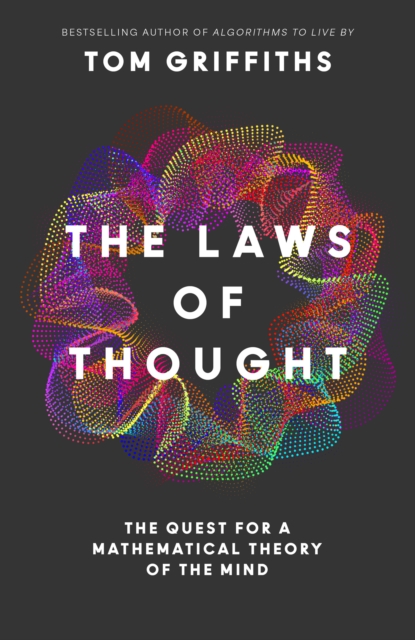
The Laws of Thought
KSh 2,000.00
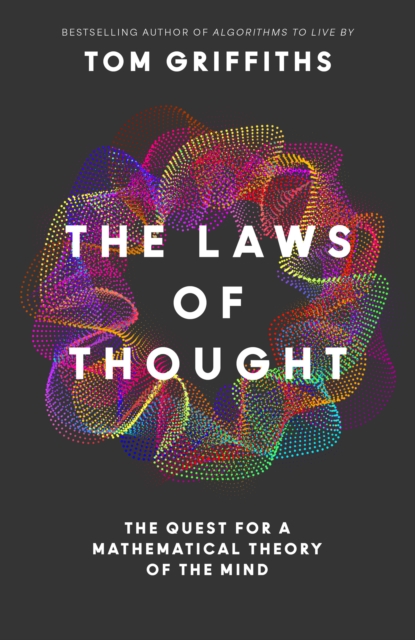
Laws of Thought
KSh 3,050.00
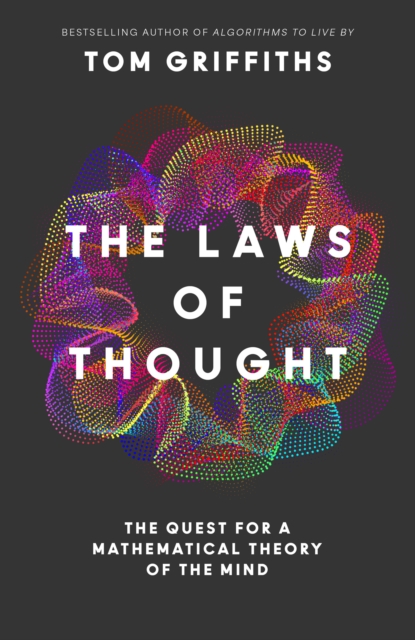
Laws of Thought
KSh 4,500.00

Frankenstein and STEAM – Essays for Charles E. Robinson
KSh 22,300.00

Algorithms in Advanced Artificial Intelligence
KSh 30,950.00

Algorithms in Advanced Artificial Intelligence
KSh 9,350.00

Linear Systems Theory
KSh 37,800.00

Fractals and Chaos
KSh 28,450.00

Theories and Models of Urbanization
KSh 26,800.00

Machine Intelligence and Data Analytics for Sustainable Future Smart Cities
KSh 27,000.00
