
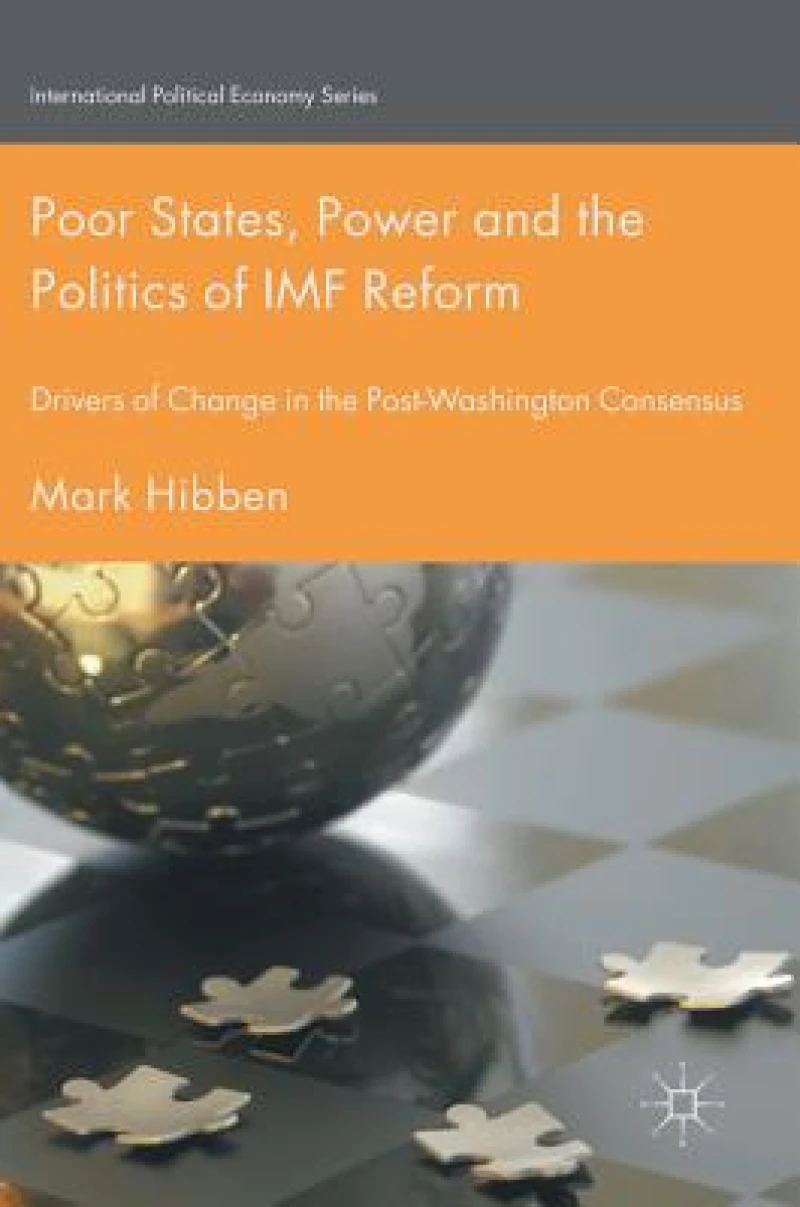
Poor States, Power and the Politics of IMF Reform : Drivers of Change in the Post- Washington Consensus
1st ed. 2016
by
Mark Hibben
Book Details
Format
Hardback or Cased Book
Book Series
International Political Economy Series
ISBN-10
1137577495
ISBN-13
9781137577498
Edition
1st ed. 2016
Publisher
Palgrave Macmillan
Imprint
Palgrave Macmillan
Country of Manufacture
GB
Country of Publication
GB
Publication Date
Jun 17th, 2016
Print length
185 Pages
Weight
378 grams
Dimensions
15.80 x 31.70 x 1.60 cms
Ksh 16,200.00
Werezi Extended Catalogue
0 in stock
Delivery Location
Delivery fee: Select location
Secure
Quality
Fast
This books provides a timely comparative case study that reveals the factors driving the International Monetary Fund's policy reform in Low Income Developing Countries (LIDCs), as a resurgent IMF expands its footprint in the world's poorest states.
This books provides a timely comparative case study that reveals the factors driving the International Monetary Fund''s policy reform in Low Income Developing Countries (LIDCs), as a resurgent IMF expands its footprint in the world''s poorest states. Through a research design that employs both mainstream and critical IPE theory, Mark Hibben uncovers three major tendencies. Principal-agent analysis, he argues, demonstrates that coalition formation among powerful states, IMF staff and management, and other influential actors is necessary for policy reform. At the same time, he uses constructivist analysis to show that ideational frameworks of what merits appropriate macroeconomic policy response also have an impact on reform efforts, and that IMF management and staff seek legitimacy in their policy choices. In response to the crises in 1999 and 2008, the author maintains, poverty and inequality now ''matter'' in IMF thinking and serve as an opportunity for policy insiders and external actors to deepen the institution''s new commitment to ''inclusive'' growth. Finally, Hibben draws on neo-Gramscian analysis to highlight how the IMF looked to soften the destabilizing effects of globalization through reforms focused on stakeholder participation in poor states and will continue to do so in its support of the new United Nation Sustainable Development Goals. This means that the 2015-2030 time period will be a critical juncture for IMF LIDC reform. By drawing from diverse theoretical traditions, the author thus provides a unique framework for the study of contemporary IMF change and how best those interested in LIDC policy reform can meet this objective.
Get Poor States, Power and the Politics of IMF Reform by at the best price and quality guaranteed only at Werezi Africa's largest book ecommerce store. The book was published by Palgrave Macmillan and it has pages.

