
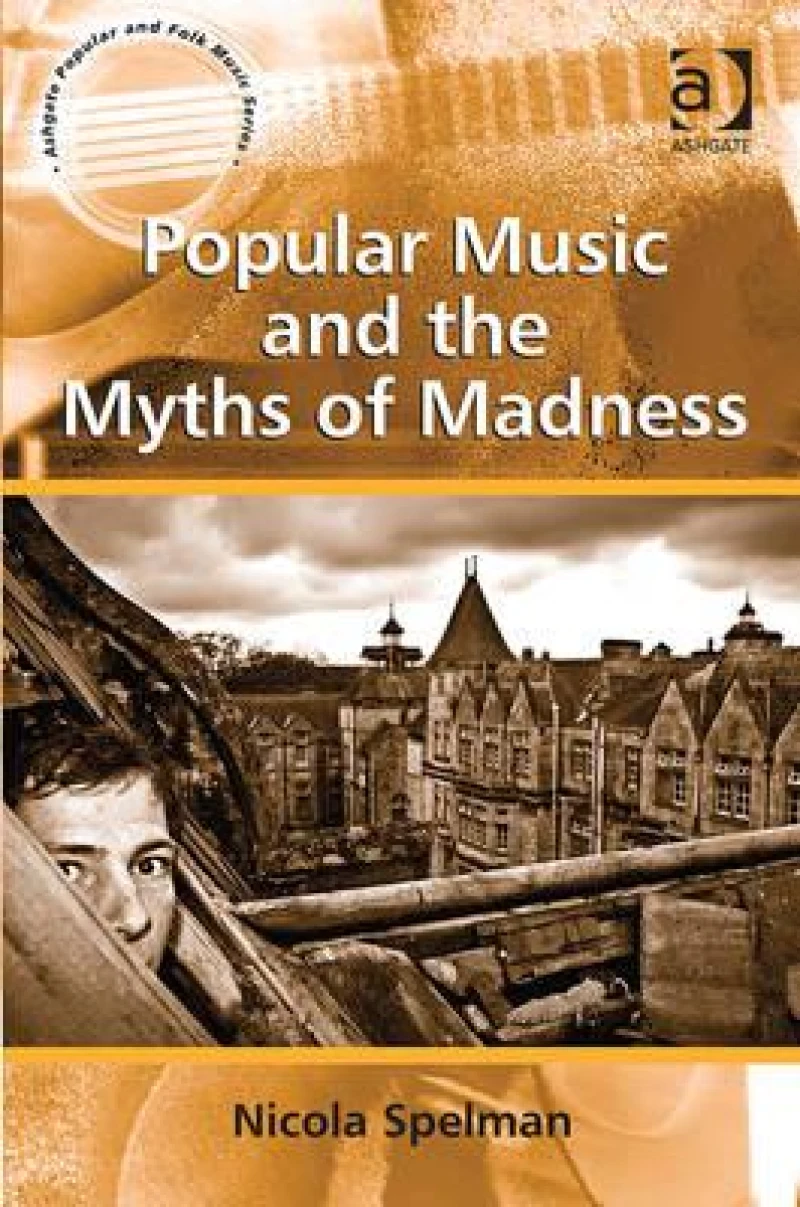
Popular Music and the Myths of Madness
Book Details
Format
Hardback or Cased Book
ISBN-10
1409418316
ISBN-13
9781409418313
Publisher
Taylor & Francis Ltd
Imprint
Routledge
Country of Manufacture
GB
Country of Publication
GB
Publication Date
May 11th, 2012
Print length
206 Pages
Weight
521 grams
Product Classification:
Rock & Pop music
Ksh 28,800.00
Werezi Extended Catalogue
0 in stock
Delivery Location
Delivery fee: Select location
Secure
Quality
Fast
Identifies links between the anti-psychiatry movement and representations of madness in popular music of the 1960s and 1970s, analysing the various ways in which ideas critical of institutional psychiatry are embodied both verbally and musically in specific songs by David Bowie, Lou Reed, Pink Floyd, Alice Cooper, the Beatles, and Elton John.
Studies of opera, film, television, and literature have demonstrated how constructions of madness may be referenced in order to stigmatise but also liberate protagonists in ways that reinforce or challenge contemporaneous notions of normality. But to date very little research has been conducted on how madness is represented in popular music. In an effort to redress this imbalance, Nicola Spelman identifies links between the anti-psychiatry movement and representations of madness in popular music of the 1960s and 1970s, analysing the various ways in which ideas critical of institutional psychiatry are embodied both verbally and musically in specific songs by David Bowie, Lou Reed, Pink Floyd, Alice Cooper, The Beatles, and Elton John. She concentrates on meanings that may be made at the point of reception as a consequence of ideas about madness that were circulating at the time. These ideas are then linked to contemporary conventions of musical expression in order to illustrate certain interpretative possibilities. Supporting evidence comes from popular musicological analysis - incorporating discourse analysis and social semiotics - and investigation of socio-historical context. The uniqueness of the period in question is demonstrated by means of a more generalised overview of songs drawn from a variety of styles and eras that engage with the topic of madness in diverse and often conflicting ways. The conclusions drawn reveal the extent to which anti-psychiatric ideas filtered through into popular culture, offering insights into popular music''s ability to question general suppositions about madness alongside its potential to bring issues of men''s madness into the public arena as an often neglected topic for discussion.
Get Popular Music and the Myths of Madness by at the best price and quality guaranteed only at Werezi Africa's largest book ecommerce store. The book was published by Taylor & Francis Ltd and it has pages.

