
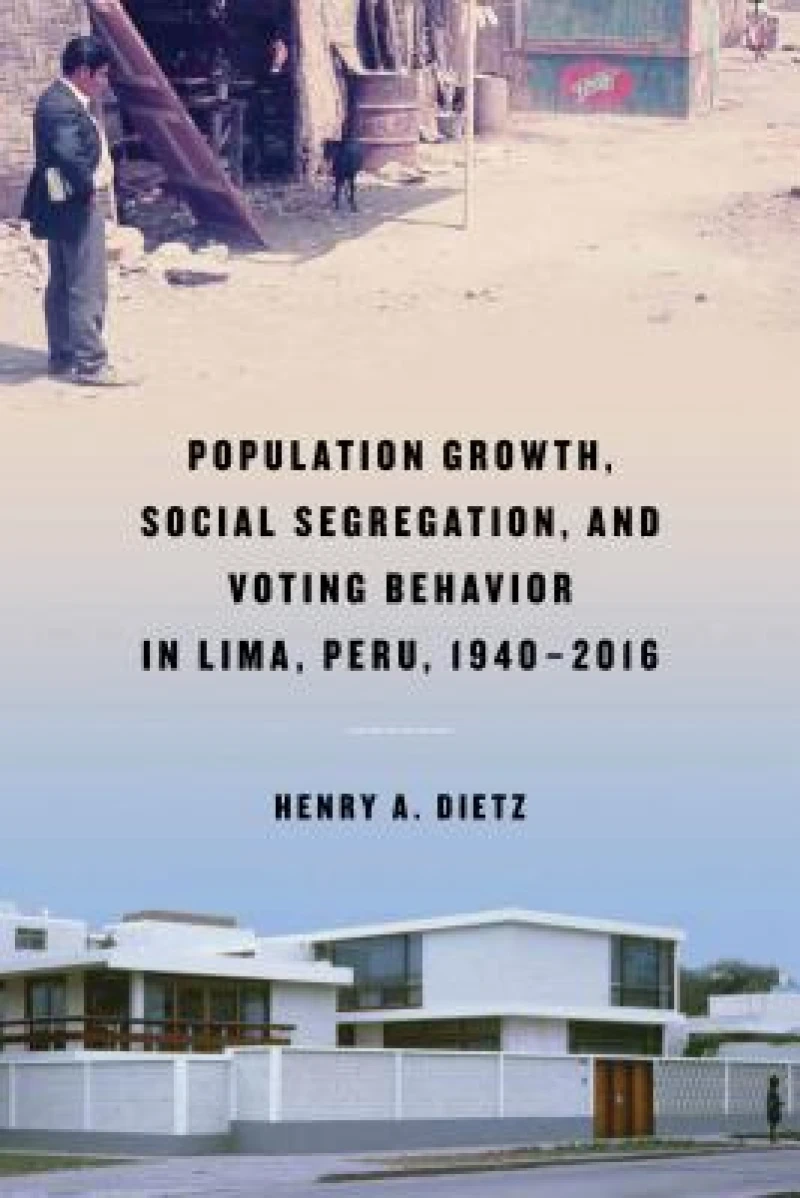
Population Growth, Social Segregation, and Voting Behavior in Lima, Peru, 1940–2016
Book Details
Format
Hardback or Cased Book
ISBN-10
0268106134
ISBN-13
9780268106133
Publisher
University of Notre Dame Press
Imprint
University of Notre Dame Press
Country of Manufacture
US
Country of Publication
GB
Publication Date
Sep 30th, 2019
Print length
277 Pages
Weight
507 grams
Dimensions
22.90 x 15.20 x 1.60 cms
Product Classification:
History of the AmericasPopulation & demographyElections & referenda
Ksh 8,650.00
Werezi Extended Catalogue
0 in stock
Delivery Location
Delivery fee: Select location
Secure
Quality
Fast
As one of South America's larger capital cities, Lima, Peru, is remarkably understudied as a demographic and economic entity unto itself. In this important book, Henry Dietz presents an in-depth historical, sociological, and political analysis of a major Latin American city in the post–World War II period.
As one of South America’s larger capital cities, Lima, Peru, is remarkably understudied as a demographic and economic entity unto itself. In this important book, Henry Dietz presents an in-depth historical, sociological, and political analysis of a major Latin American city in the post–World War II period. Dietz examines electoral data for Lima’s districts from six censuses conducted between 1940 and 2007, framed against a backdrop of extensive demographic data for the city, to trace the impact of economic collapse and extended insurgency on Lima and its voters. Urbanization in Lima since World War II has at times been rapid, violent, and traumatic, and has resulted in marked social inequalities. Dietz looks at how equity across the city has not in general improved; Lima is today segregated both spatially and socially. Dietz asks if and how a high degree of segregation manifests itself politically as well as socially and spatially. Do urban dwellers living under profound and enduring social segregation consistently support different parties and candidates? As institutional political parties have faded since the 1990s and have been replaced by personalist movements, candidacies, and governments, Dietz explores how voters of different social classes behave. The result is a vital resource for researchers seeking well-contextualized information on elections and economics in Peru. This book will be of interest to scholars of politics or economics, especially in Latin America, but also to a much wider audience interested in how the developments in Lima, Peru, affect the global sociopolitical climate.
Get Population Growth, Social Segregation, and Voting Behavior in Lima, Peru, 1940–2016 by at the best price and quality guaranteed only at Werezi Africa's largest book ecommerce store. The book was published by University of Notre Dame Press and it has pages.

