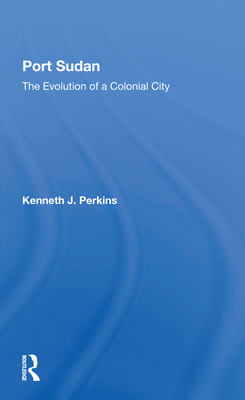
Port Sudan : The Evolution Of A Colonial City
Book Details
Format
Hardback
ISBN-10
0367283921
ISBN-13
9780367283926
Publisher
Taylor & Francis Ltd
Imprint
Routledge
Country of Manufacture
GB
Country of Publication
GB
Publication Date
May 7th, 2019
Print length
264 Pages
Weight
680 grams
Product Classification:
Regional studiesPolitics & government
KSh 30,950.00
Currently unavailable
0 in stock
Delivery Location
Delivery fee: Select location
Secure
Quality
Fast
This study examines the efforts of Port Sudan's builders and early administrators to tailor the urban environment to their own notions of the ideal colonial city–how it should look, how it should function, and how its human components should interact.
In 1904, only the unimposing tomb of a local holy man occupied the site chosen by British officials for the construction of a modern seaport to facilitate the Anglo-Egyptian Sudan''s expanded commerce. Built where no urban center had previously existed, Port Sudan was the quintessential colonial city, created and designed by Europeans, who organized its municipal services and devised the regulations for its day-to-day management. The advantages of a created city were clear: The colonial government did not need to accommodate an indigenous urban population with its own existing social structures, institutions, and cultural values. This study examines the efforts of Port Sudan''s builders and early administrators to tailor the urban environment to their own notions of the ideal colonial city–how it should look, how it should function, and how its human components should interact. It then focuses on the inter-war period, describing how the rapid growth of Port Sudan and its harbor posed insurmountable challenges to the maintenance of this ideal. Although the Sudanese population within the city steadily increased, their exclusion from any meaningful participation in municipal affairs during these troubled years left them physically and psychologically isolated. The situation began to change after World War II, but, as the study reveals, conditions in the post-war era only compounded long-standing political, economic, and social problems in Port Sudan, ensuring that the city the Sudanese inherited in 1956 still bore the marks of its colonial origins.
Get Port Sudan by Kenneth J Perkins at the best price and quality guaranteed only at Werezi Africa's largest book ecommerce store. The book was published by Taylor & Francis Ltd and it has 264 pages.
Customers Who Bought This Also Bought
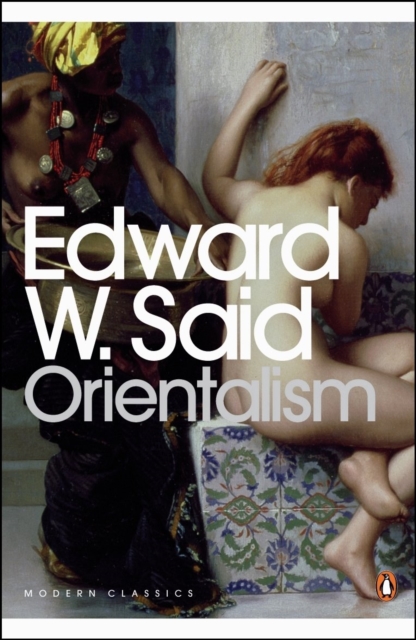
Orientalism
KSh 2,350.00

The Collected Essays of Ralph Ellison
KSh 3,600.00
Jorge Amado
KSh 8,850.00

The Guatemala Reader
KSh 4,950.00
Jorge Amado
KSh 30,950.00
Demoralization of Teachers
KSh 15,450.00
Except for Palestine
KSh 3,400.00
A Grammar of Mangghuer
KSh 10,050.00
Grammar of Mangghuer
KSh 30,950.00

Routledge Handbook on China-Middle East Relations
KSh 9,250.00
Except for Palestine
KSh 3,400.00

The Israeli-Palestinian Conflict
KSh 9,200.00