
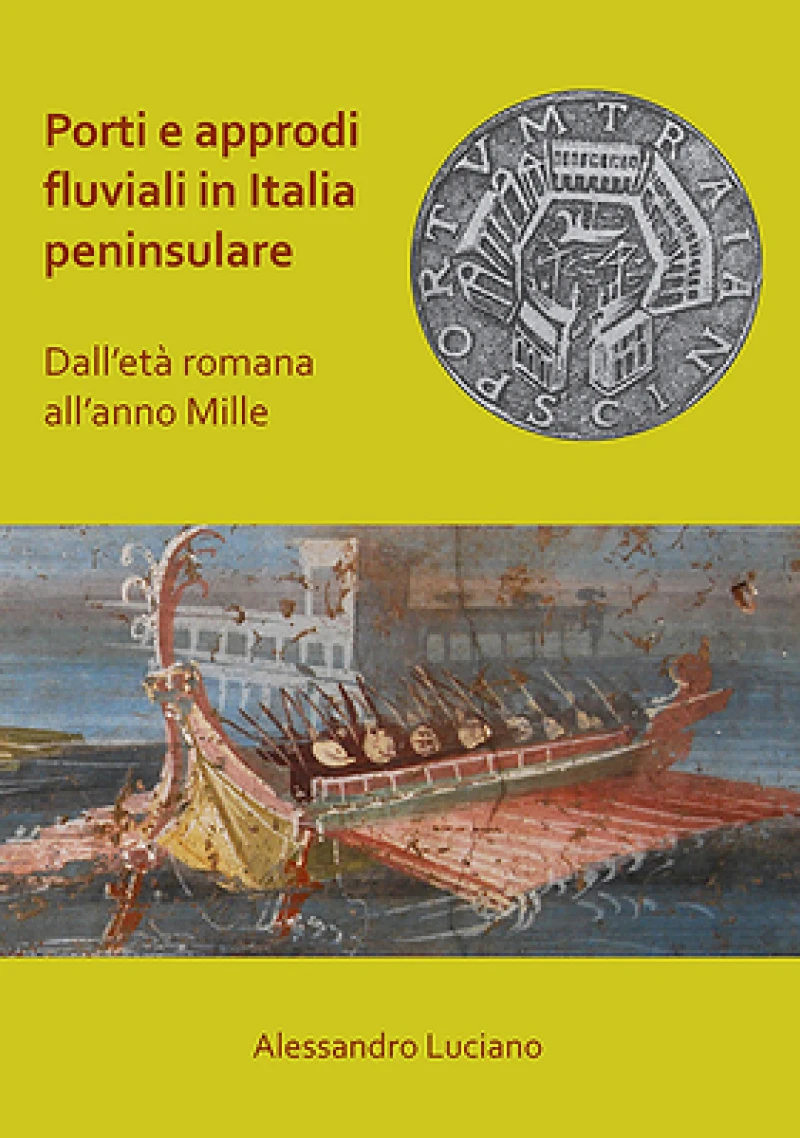
Porti e approdi fluviali in Italia peninsulare: dall’eta romana all’anno mille
Book Details
Format
Paperback / Softback
ISBN-10
1789692202
ISBN-13
9781789692204
Publisher
Archaeopress
Imprint
Archaeopress
Country of Manufacture
GB
Country of Publication
GB
Publication Date
Jun 30th, 2019
Print length
122 Pages
Weight
466 grams
Dimensions
20.50 x 29.00 x 1.90 cms
Product Classification:
Classical Greek & Roman archaeologyUnderwater archaeology
Ksh 4,850.00
Werezi Extended Catalogue
Delivery in 14 days
2 copies in stock
Delivery Location
Delivery fee: Select location
Delivery in 14 days
Secure
Quality
Fast
This book analyses the Roman and early medieval ports of Italy and the building techniques used in their structures; it displays the elements of continuity and discontinuity revealed during these centuries.
In the Imperial Age, many ports in Italy had been built in opus coementicium. The most important ones were in Latium (eg. Portus Romae, Antium and Centumcellae), in the Phlegrean Fields (portus Iulius, Misenum, Puteoli and Baiae) and along the northern-Adriatic coast (Classis-Ravenna, Aquileia and Altino). The military fleets of Augustus, in particular, were quartered in the ports of Classis and Misenum.
Most Roman ports were located at river mouths and/or in lagoon areas and were connected with inland areas by rivers or artificial canals. For this reason, port structures (piers and warehouses) were set at some distance from the sea, as in Rome (Emporium of Testaccio along the Tiber), in Pisa-San Rossore and in the Po valley.
In Late Antiquity many of the Roman ports gradually fell into disuse while others continued until the 7th century. In Ravenna, however, a new port settlement, known as Civitas Classis, came into being in the 5th century, after the creation of the suburb of Portus Romae.
In the Early Middle Ages, the northern-Adriatic coast became very important in connection with trade with Constantinople. New settlements equipped with timber port structures were created at Comacchio, Cittanova and in the Venetian lagoon. If maritime trade in the Tyrrhenian Sea decreased (although to a lesser extent in Byzantine towns like Naples), river-borne traade was still dynamic and often managed by abbeys and other ecclesiastical institutions. According to historical sources, many river wharves were located along the Po while San Vincenzo abbey managed the Volturno river. The Carolingian river wharves of San Vincenzo were composed of timber, stone and, according to the Roman tradition, concrete structures. A slow recovery of maritime trades is already evident in the Carolingian Age.
This book analyses the Roman and early medieval ports of Italy and the building techniques used in their structures; it displays the elements of continuity and discontinuity revealed during these centuries.
Get Porti e approdi fluviali in Italia peninsulare: dall’eta romana all’anno mille by at the best price and quality guaranteed only at Werezi Africa's largest book ecommerce store. The book was published by Archaeopress and it has pages.

