
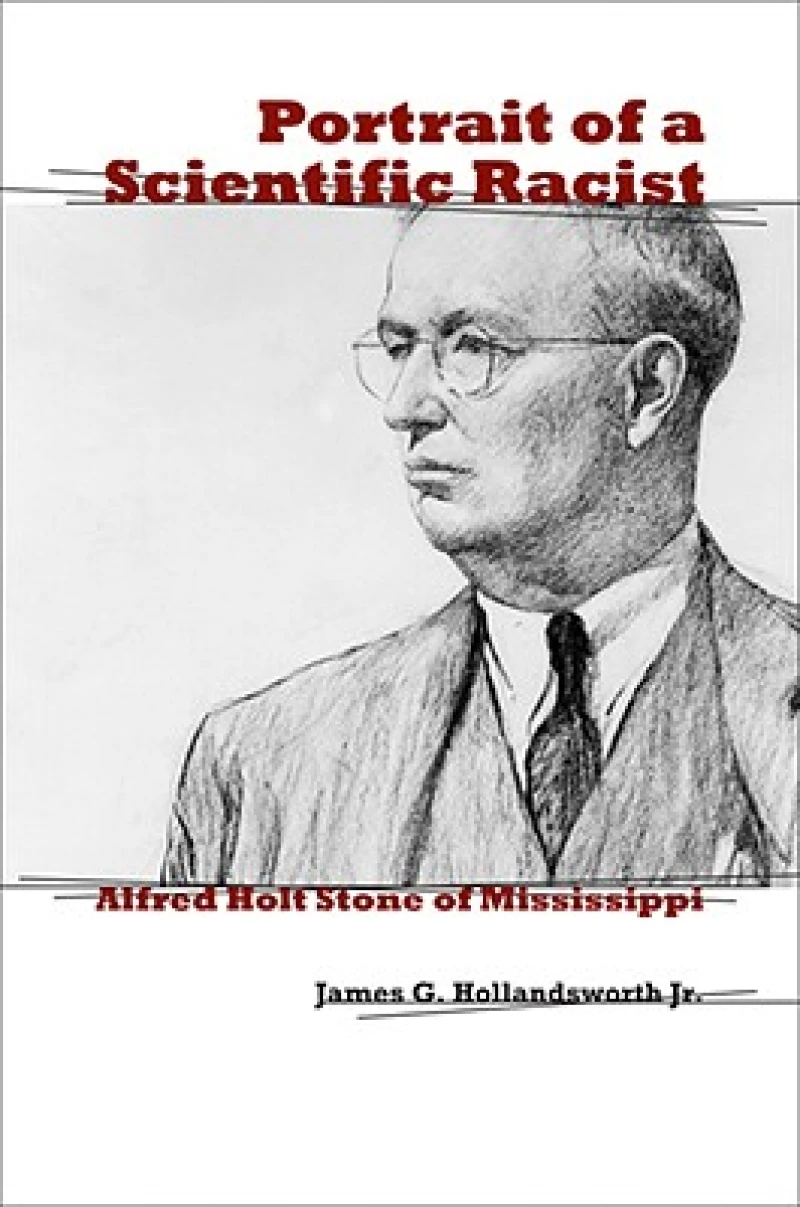
Portrait of a Scientific Racist : Alfred Holt Stone of Mississippi
Book Details
Format
Hardback or Cased Book
ISBN-10
0807133361
ISBN-13
9780807133361
Publisher
Louisiana State University Press
Imprint
Louisiana State University Press
Country of Manufacture
US
Country of Publication
GB
Publication Date
Nov 1st, 2008
Print length
344 Pages
Weight
612 grams
Dimensions
23.10 x 15.20 x 3.30 cms
Ksh 7,550.00
Temporarily out of stock, due soon
0 in stock
Delivery Location
Delivery fee: Select location
Secure
Quality
Fast
Reveals how the conjectures of one of America's most prominent racial theorists, Alfred Holt Stone, helped justify a repressive racial order that relegated African Americans to the margins of southern society in the early 1900s.
In the years after Reconstruction, racial tension soared, as many white southerners worried about how to deal with the millions of free African Americans among them -- an issue they termed the ""negro problem."" In an attempt to maintain the status quo, white supremacists resurrected old proslavery arguments and sought new justification in scientific theories purporting to ""prove"" people of African descent inherently inferior to whites. In Portrait of a Scientific Racist James G. Hollandsworth, Jr., reveals how the conjectures of one of the country's most prominent racial theorists, Alfred Holt Stone, helped justify a repressive racial order that relegated African Americans to the margins of southern society in the early 1900s.
In this revealing biography, Hollandsworth examines the thoughts and motives of this renowned man, focusing primarily on Stone's most intensive period of theorizing, from 1900 to 1910. A committed and vocal white supremacist, Stone believed black southern workers were inherently lazy, a trait he attributed to their African genes and heritage. He asserted that slavery helped improve the black race but that opportunities still existed during Reconstruction to mold the freedmen into efficient workers. Stone's central -- yet unspoken -- goal was to devise a way to maintain an obedient, productive labor force willing to work for low wages. Writing from both Washington, D.C., and his cotton plantation in the Mississippi Delta, Stone published numerous essays and collected more than 3000 articles and pamphlets on the ""American Race Problem"" -- including those written by bitter racists and enthusiastic ""race boosters.""
Though Stone lacked the credentials typically associated with scholarly experts of the time, he became an authority on the subject of black Americans, in part because of his close friendship with fellow scientific racist and statistician Walter F. Willcox. An early member of the American Economic Association and other academic groups, Stone went on to serve as head scholar of a division for race studies within the Carnegie Foundation. Interestingly, Stone recruited W. E. B. Du Bois and Booker T. Washington to collaborate with him on a major study for the Foundation, continuing his tendency to incorporate all perspectives into his study of race.
Hollandsworth uses Stone's extensive correspondence with Willcox, Du Bois, and Washington, as well as his personal writings -- both published and unpublished -- to reveal the secrets of this misguided, yet fascinating, figure.
In this revealing biography, Hollandsworth examines the thoughts and motives of this renowned man, focusing primarily on Stone's most intensive period of theorizing, from 1900 to 1910. A committed and vocal white supremacist, Stone believed black southern workers were inherently lazy, a trait he attributed to their African genes and heritage. He asserted that slavery helped improve the black race but that opportunities still existed during Reconstruction to mold the freedmen into efficient workers. Stone's central -- yet unspoken -- goal was to devise a way to maintain an obedient, productive labor force willing to work for low wages. Writing from both Washington, D.C., and his cotton plantation in the Mississippi Delta, Stone published numerous essays and collected more than 3000 articles and pamphlets on the ""American Race Problem"" -- including those written by bitter racists and enthusiastic ""race boosters.""
Though Stone lacked the credentials typically associated with scholarly experts of the time, he became an authority on the subject of black Americans, in part because of his close friendship with fellow scientific racist and statistician Walter F. Willcox. An early member of the American Economic Association and other academic groups, Stone went on to serve as head scholar of a division for race studies within the Carnegie Foundation. Interestingly, Stone recruited W. E. B. Du Bois and Booker T. Washington to collaborate with him on a major study for the Foundation, continuing his tendency to incorporate all perspectives into his study of race.
Hollandsworth uses Stone's extensive correspondence with Willcox, Du Bois, and Washington, as well as his personal writings -- both published and unpublished -- to reveal the secrets of this misguided, yet fascinating, figure.
Get Portrait of a Scientific Racist by at the best price and quality guaranteed only at Werezi Africa's largest book ecommerce store. The book was published by Louisiana State University Press and it has pages.

