
Cart 0
Post-Apartheid Gothic
Click to zoom

Share this book

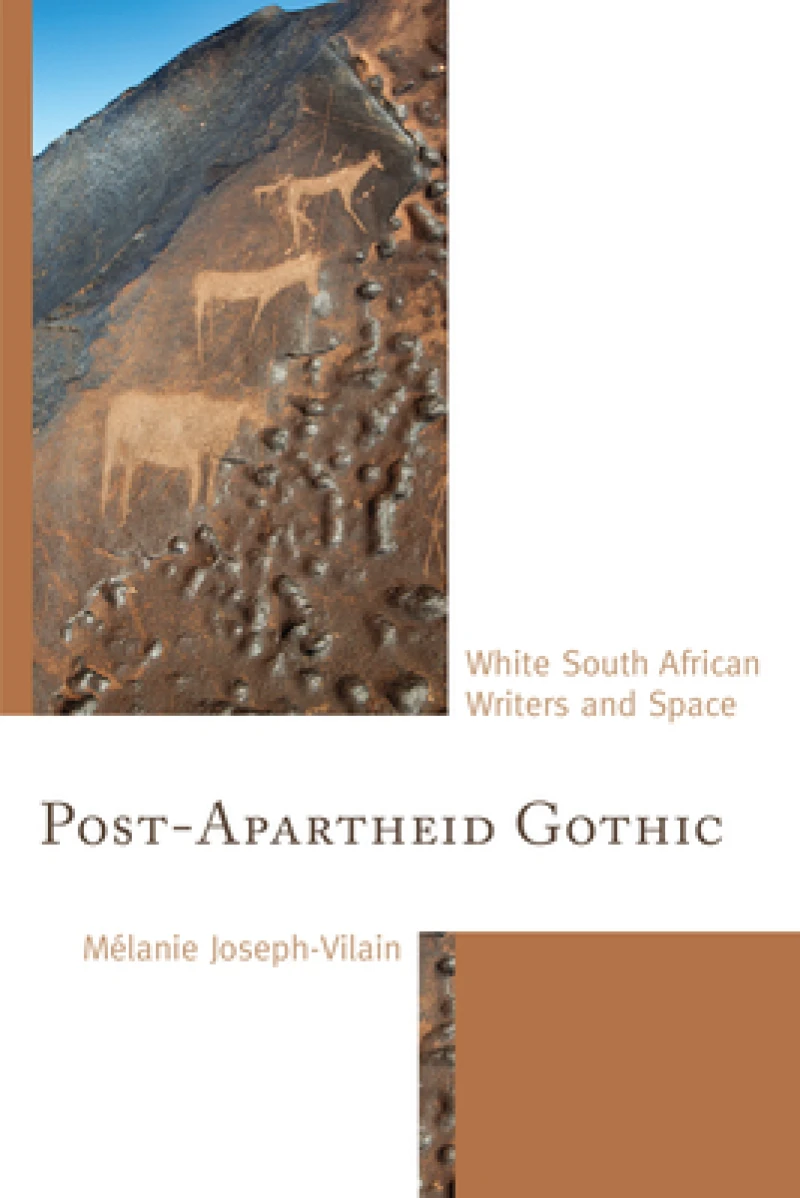
Post-Apartheid Gothic : White South African Writers and Space

Book Details

Format Hardback or Cased Book
ISBN-10 1683932455
ISBN-13 9781683932451
Publisher Fairleigh Dickinson University Press
Imprint Fairleigh Dickinson University Press
Country of Manufacture US
Country of Publication GB
Publication Date Apr 15th, 2021
Print length 268 Pages
Weight 552 grams
Dimensions 23.60 x 16.00 x 2.60 cms
Ksh 17,550.00
Manufactured on Demand 0 in stock

Delivery Location

Delivery fee: Select location

Secure
Quality
Fast
Post-Apartheid Gothic: White South African Writers and Space analyses the representation of space in recent works by South African writers. By combining analytical tools borrowed from Gothic studies with geocritical and postcolonial approaches, the author tries to assess and understand the literary mechanisms utilized by Damon Galgut, Henrietta Rose-Innes, Lauren Beukes, Justin Carwright or Lynn Freed to negotiate the complexities of post-apartheid identities in their fiction. The author argues that the literary representations of emblematic places, real or imagined (the home, the farm, the city or the “non-places” of dystopia) express and reveal anxieties linked to the sharing of space in post-apartheid South Africa. She has chosen to successively (re-)visit the places which have been shaping South African white writing since Olive Schreiner’s African Farm – in other words, its topoi, both in the etymological sense of “place” and in the literary sense of recurring themes or arguments. She argues that these Gothicized topoi have provided writers with tools to explore the deep anxieties generated by the redefinition of South African society as the Rainbow Nation. Even if she focuses on the specifically South African avatars of the Gothic and their interaction with local forms and genres, like the plaasroman, she also discusses the impact of globalization on South African literary, cultural, social and political identities.

Post-Apartheid Gothic: White South African Writers and Space analyses the representation of space in recent works by South African writers. By combining analytical tools borrowed from Gothic studies with geocritical and postcolonial approaches, the author tries to assess and understand the literary mechanisms utilized by Damon Galgut, Henrietta Rose-Innes, Lauren Beukes, Justin Carwright or Lynn Freed to negotiate the complexities of post-apartheid identities in their fiction. The author argues that the literary representations of emblematic places, real or imagined (the home, the farm, the city or the “non-places” of dystopia) express and reveal anxieties linked to the sharing of space in post-apartheid South Africa. She has chosen to successively (re-)visit the places which have been shaping South African white writing since Olive Schreiner’s African Farm – in other words, its topoi, both in the etymological sense of “place” and in the literary sense of recurring themes or arguments. She argues that these Gothicized topoi have provided writers with tools to explore the deep anxieties generated by the redefinition of South African society as the Rainbow Nation. Even if she focuses on the specifically South African avatars of the Gothic and their interaction with local forms and genres, like the plaasroman, she also discusses the impact of globalization on South African literary, cultural, social and political identities.


Get Post-Apartheid Gothic by at the best price and quality guaranteed only at Werezi Africa's largest book ecommerce store. The book was published by Fairleigh Dickinson University Press and it has pages.

Mind, Body, & Spirit

Shopping Cart

Africa largest book store

Sub Total:
Ebooks

Digital Library
Coming Soon

Our digital collection is currently being curated to ensure the best possible reading experience on Werezi. We'll be launching our Ebooks platform shortly.

