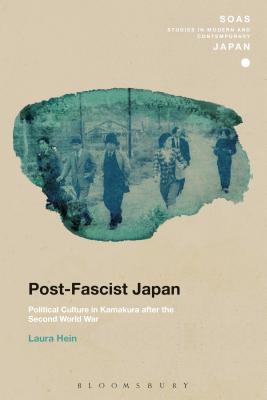
Post-Fascist Japan : Political Culture in Kamakura after the Second World War
by
Laura Hein
Book Details
Format
Paperback / softback
Book Series
SOAS Studies in Modern and Contemporary Japan
ISBN-10
1350126500
ISBN-13
9781350126503
Publisher
Bloomsbury Publishing PLC
Imprint
Bloomsbury Academic
Country of Manufacture
GB
Country of Publication
GB
Publication Date
Sep 19th, 2019
Print length
272 Pages
Weight
434 grams
Dimensions
15.50 x 23.70 x 1.30 cms
KSh 7,150.00
Temporarily out of stock, due soon
0 in stock
Delivery Location
Delivery fee: Select location
Secure
Quality
Fast
In late 1945 local Japanese turned their energies toward creating new behaviors and institutions that would give young people better skills to combat repression at home and coercion abroad. They rapidly transformed their political culture-policies, institutions, and public opinion-to create a more equitable, democratic and peaceful society.
Post-Fascist Japan explores this phenomenon, focusing on a group of highly educated Japanese based in the city of Kamakura, where the new political culture was particularly visible. The book argues that these leftist elites, many of whom had been seen as ''the enemy'' during the war, saw the problem as one of fascism, an ideology that had succeeded because it had addressed real problems. They turned their efforts to overtly political-legal systems but also to ostensibly non-political and community institutions such as universities, art museums, local tourism, and environmental policies, aiming not only for reconciliation over the past but also to reduce the anxieties that had drawn so many towards fascism.
By focusing on people who had an outsized influence on Japan''s political culture, Hein''s study is local, national, and transnational. She grounds her discussion using specific personalities, showing their ideas about ''post-fascism'', how they implemented them and how they interacted with the American occupiers.
Post-Fascist Japan explores this phenomenon, focusing on a group of highly educated Japanese based in the city of Kamakura, where the new political culture was particularly visible. The book argues that these leftist elites, many of whom had been seen as ''the enemy'' during the war, saw the problem as one of fascism, an ideology that had succeeded because it had addressed real problems. They turned their efforts to overtly political-legal systems but also to ostensibly non-political and community institutions such as universities, art museums, local tourism, and environmental policies, aiming not only for reconciliation over the past but also to reduce the anxieties that had drawn so many towards fascism.
By focusing on people who had an outsized influence on Japan''s political culture, Hein''s study is local, national, and transnational. She grounds her discussion using specific personalities, showing their ideas about ''post-fascism'', how they implemented them and how they interacted with the American occupiers.
Get Post-Fascist Japan by Laura Hein at the best price and quality guaranteed only at Werezi Africa's largest book ecommerce store. The book was published by Bloomsbury Publishing PLC and it has 272 pages.
Customers Who Bought This Also Bought

From Third World to First
KSh 3,200.00

Breakneck
KSh 4,500.00

India After Gandhi
KSh 4,850.00

Anarchy
KSh 2,700.00

On China
KSh 3,400.00
Apostles of Development
KSh 5,600.00
Shattered Lands
KSh 2,000.00

Indira Gandhi and the Years that Transformed India
KSh 5,050.00
India: A Wounded Civilization
KSh 2,000.00
Shattered Lands
KSh 3,200.00

Games without Rules
KSh 2,900.00

Ghost Nation
KSh 3,950.00