
Book Details
Format
Paperback / softback
Book Series
Polis: Fordham Series in Urban Studies
ISBN-10
153150468X
ISBN-13
9781531504687
Edition
New
Publisher
Fordham University Press
Imprint
Fordham University Press
Country of Manufacture
GB
Country of Publication
GB
Publication Date
Feb 13th, 2024
Print length
277 Pages
Weight
1,046 grams
Dimensions
23.00 x 22.80 x 3.10 cms
KSh 4,300.00
Currently unavailable
0 in stock
Delivery Location
Delivery fee: Select location
Secure
Quality
Fast
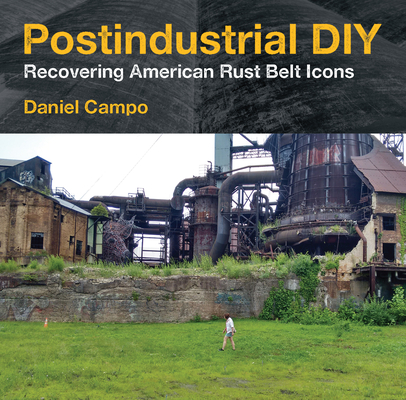
Chronicles grassroots efforts to recover, rebuild, and enjoy architecturally iconic but economically obsolete places in the American Rust Belt. A pioneering Detroit automobile factory. A legendary iron mill at the edge of Pittsburgh. A campus of concrete grain elevators in Buffalo. Two monumental train stations, one in Buffalo, the other in Detroit. These once-noble sites have since fallen from their towering grace. As local elected leaders did everything they could to destroy what was left of these places, citizens saw beauty and utility in these industrial ruins and felt compelled to act. Postindustrial DIY tells their stories. The culmination of more than a dozen years of on-the-ground investigation, ethnography, and historical analysis, author and urbanist Daniel Campo immerses the reader in this postindustrial landscape, weaving the perspectives of dozens of DIY protagonists as well as architects, planners, and preservationists. Working without capital, expertise, and sometimes permission in a milieu dominated by powerful political and economic interests, these do-it-yourself actors are driven by passion and a sense of civic duty rather than by profit or political expediency. They have craftily remade these sites into collective preservation projects and democratic grounds for arts and culture, environmental engagement, regional celebrations, itinerant play, and in-the-moment constructions. Their projects are generating excitement about the prospect of Rust Belt life, even as they often remain invisible to the uninformed passerby and fall short of professional preservation or environmental reclamation standards. Demonstrating that there is no such thing as a site that is "too far gone" to save or reuse, Postindustrial DIY is rich with case studies that demonstrate how great architecture is not simply for the elites or the wealthy. The citizen preservationists and urbanists described in this book offer looser, more playful, and often more publicly satisfying alternatives to the development practices that have transformed iconic sites into expensive real estate or a clean slate for the next profitable endeavor. Transcending the disciplinary boundaries of architecture, historic preservation, city planning, and landscape architecture, Postindustrial DIY suggests new ways to engage, adapt, and preserve architecturally compelling sites and bottom-up strategies for Rust Belt revival.
Get Postindustrial DIY by Daniel Campo at the best price and quality guaranteed only at Werezi Africa's largest book ecommerce store. The book was published by Fordham University Press and it has 277 pages.
Customers Who Bought This Also Bought

Murmur Trestle
KSh 7,250.00
Houston Then and Now®
KSh 3,350.00
Town – Prints and Drawings of Britain Before 1800
KSh 8,000.00

LFA Awards 2025
KSh 4,900.00

Venice for Pleasure
KSh 5,400.00

Luis Barragan: His Library
KSh 10,800.00

Hiroshi Sugimoto: Enoura Observatory
KSh 9,350.00

Others and Outcasts in Early Modern Europe
KSh 30,950.00

antike Rom und sein Bild
KSh 21,700.00

Lowry 2027 Year Planner - Month to View
KSh 700.00

Surrealist Sorcery
KSh 6,000.00

Lowry Wall Calendar 2027 (Art Calendar)
KSh 2,000.00
