
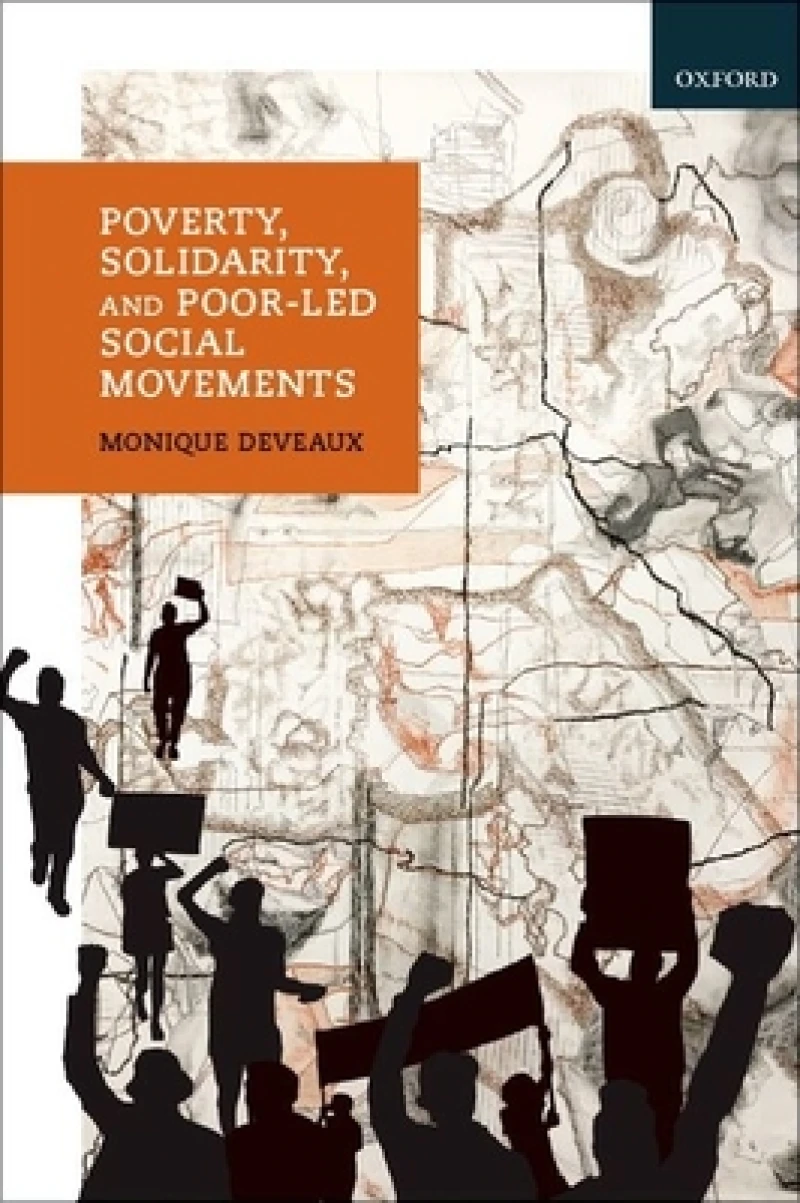
Poverty, Solidarity, and Poor-Led Social Movements
Book Details
Format
Hardback or Cased Book
ISBN-10
0190850280
ISBN-13
9780190850289
Publisher
Oxford University Press Inc
Imprint
Oxford University Press Inc
Country of Manufacture
US
Country of Publication
GB
Publication Date
Nov 23rd, 2021
Print length
280 Pages
Weight
550 grams
Dimensions
16.40 x 24.20 x 2.60 cms
Product Classification:
Ethics & moral philosophySocial & political philosophy
Ksh 13,300.00
Werezi Extended Catalogue
Delivery in 14 days
1 copies in stock
Delivery Location
Delivery fee: Select location
Delivery in 14 days
Secure
Quality
Fast
This book rejects familiar ethical framings of problems of poverty and inequality, arguing that they have produced apolitical solutions that ignore the demands of poor organizations and movements. Deveaux argues that normative thinking about poverty should engage with the insights and goals of "pro-poor" activists in order to develop action-guiding norms that better align with their justice claims. Defending the idea of a political responsibility for solidarity, she shows how nonpoor outsiders--individuals, institutions, and states--can help to advance a radical anti-poverty agenda by supporting the efforts of these movements.
This is an open access title available under the terms of a [CC BY-NC-ND 4.0 International] license. It is free to read at [Oxford Scholarship Online] and offered as a free PDF download from OUP and selected open access locations. Poverty is not only about material deprivation, but also about the subordination and disempowerment of poor populations. So why isn''t the emancipation and empowerment of the poor a core goal of ethical arguments for poverty reduction? Deveaux argues in this book that philosophers fail to prioritize these ends, and to recognize the moral and political agency of poor people, because they still conceive of poverty narrowly and apolitically as mere needs scarcity. By comparison, poor activists and critical poverty researchers who see deprivation as structural exclusion and powerlessness advocate a "poor-centered," poor-led, approach to reducing poverty. Stuck in an older paradigm of poverty thinking, philosophers have failed to recognize the power and moral authority of poor communities--and their movements for justice and social change.If normative ethicists seek to contribute to proposals for just and durable poverty reduction, they will need to look to the insights and aims of "pro-poor," poor-led social movements. From rural landless workers in Brazil, to urban shack dwellers in South Africa, to unemployed workers impoverished by neoliberal economic policies in Argentina, poor-led organizations and movements advance a more political understanding of poverty--and of what is needed to eradicate it. Deveaux shows how these groups develop the political consciousness and collective capabilities of poor communities and help to create the basis for solidarity among poor populations. Defending the idea of a political responsibility for solidarity, she shows how nonpoor outsiders--individuals, institutions, and states--can help to advance a transformative anti-poverty agenda by supporting the efforts of these movements.
Get Poverty, Solidarity, and Poor-Led Social Movements by at the best price and quality guaranteed only at Werezi Africa's largest book ecommerce store. The book was published by Oxford University Press Inc and it has pages.

