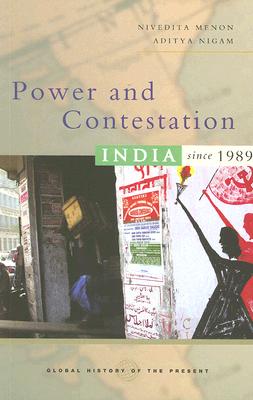
Power and Contestation : India since 1989
Book Details
Format
Paperback / softback
Book Series
Global History of the Present
ISBN-10
1842778153
ISBN-13
9781842778159
Publisher
Bloomsbury Publishing PLC
Imprint
Zed Books Ltd
Country of Manufacture
GB
Country of Publication
GB
Publication Date
Oct 1st, 2007
Print length
240 Pages
Weight
318 grams
Dimensions
21.50 x 13.90 x 1.50 cms
KSh 6,500.00
Currently unavailable
0 in stock
Delivery Location
Delivery fee: Select location
Secure
Quality
Fast
Gives an introduction to the changing history of India since the end of the Cold War. It also shows that the turbulence and turmoil are signs of India's continued vibrancy and democracy.
1989 marks the unraveling of India's 'Nehruvian Consensus' around the idea of a modern, secular nation with a self-reliant economy. Caste and religion have come to play major roles in national politics. Global economic integration has led to conflict between the state and dispossessed people, but processes of globalization have also enabled new spaces for political assertion, such as around sexuality. Older challenges to the idea of India continue from movements in Kashmir and the North-East, while Maoist insurgency has deepened its bases. In a world of American Empire, India as a nuclear power has abandoned non-alignment, a shift that is contested by voices within. Power and Contestation shows that the turbulence and turmoil of this period are signs of India's continued vibrancy and democracy. The book is an ideal introduction to the complex internal histories and external power relations of a major global player for the new century.
Get Power and Contestation by Aditya Nigam, Nivedita Menon at the best price and quality guaranteed only at Werezi Africa's largest book ecommerce store. The book was published by Bloomsbury Publishing PLC and it has 240 pages.
Customers Who Bought This Also Bought

From Third World to First
KSh 3,200.00

Breakneck
KSh 4,500.00

India After Gandhi
KSh 4,850.00

Anarchy
KSh 2,700.00

On China
KSh 3,400.00
Apostles of Development
KSh 5,600.00
Shattered Lands
KSh 2,000.00
Indira Gandhi and the Years that Transformed India
KSh 5,050.00
India: A Wounded Civilization
KSh 2,000.00
Shattered Lands
KSh 3,200.00

Games without Rules
KSh 2,900.00

Ghost Nation
KSh 3,950.00