
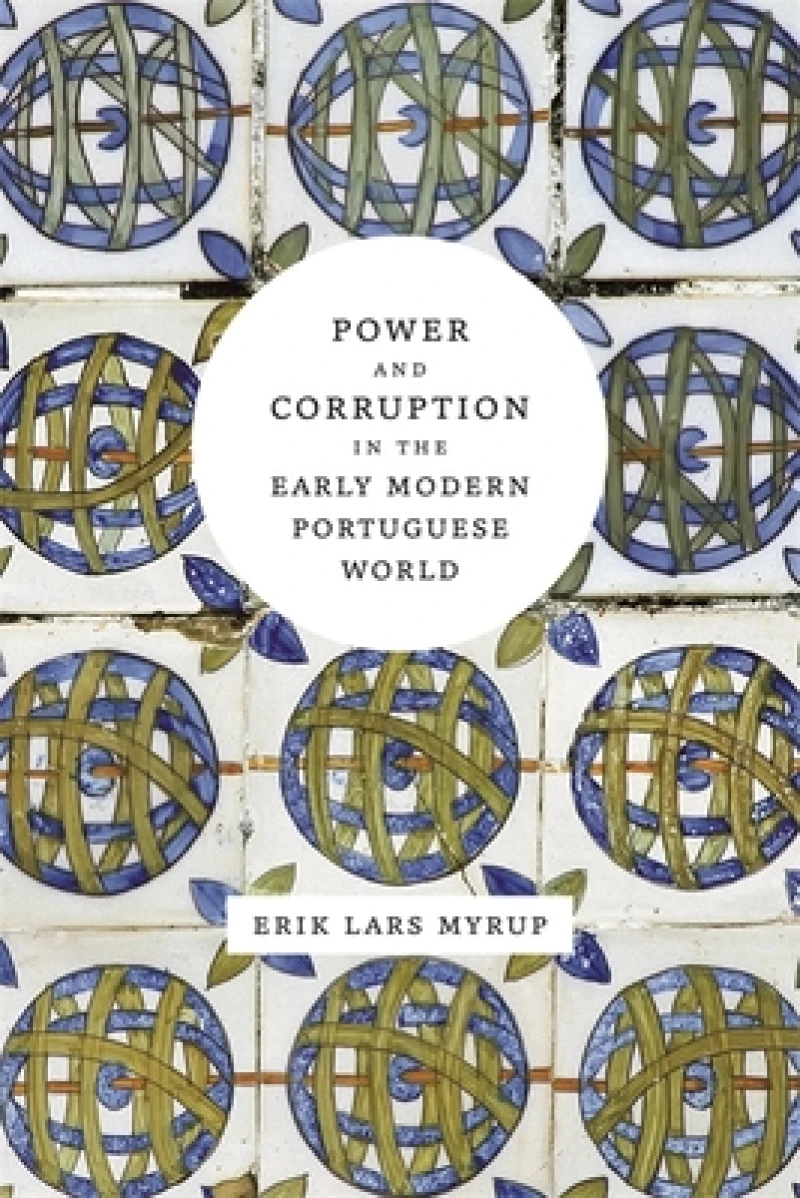
Power and Corruption in the Early Modern Portuguese World
Book Details
Format
Hardback or Cased Book
ISBN-10
0807159808
ISBN-13
9780807159804
Publisher
Louisiana State University Press
Imprint
Louisiana State University Press
Country of Manufacture
US
Country of Publication
GB
Publication Date
Jul 1st, 2015
Print length
256 Pages
Weight
540 grams
Dimensions
16.40 x 23.80 x 2.70 cms
Product Classification:
European historyEuropean history
Ksh 6,750.00
Publisher Out of Stock
0 in stock
Delivery Location
Delivery fee: Select location
Secure
Quality
Fast
In a masterful reconceptualization of the functioning of empire, Erik Lars Myrup's Power and Corruption in the Early Modern Portuguese World argues that beneath the surface of formal government, an intricate web of interpersonal relationships played a key role in binding together the Portuguese empire.
Encompassing numerous territories across four different continents, Portugal's early modern empire depended upon a vast and complex bureaucracy, yet colonial power did not reside solely in the centralized state. In a masterful reconceptualization of the functioning of empire, Erik Lars Myrup's Power and Corruption in the Early Modern Portuguese World argues that beneath the surface of formal government, an intricate web of interpersonal relationships played a key role in binding together the Portuguese empire.
Myrup draws on archival research in Portugal, Spain, Brazil, and China to demonstrate how informal networks of power and patronage offered a crucial means of navigating-or circumventing-the serpentine paths of the governmental hierarchy. The decisions of the Overseas Council, which governed Portugal's imperial holdings, reflected not only the merits of the petitions that came before it, but also the personal and institutional affiliations of the petitioner. In far-flung areas such as São Paulo and Macau, where the formal bureaucracy was weak, local cultural and economic factors held as much sway over the agents of the colonial state as did the dictates of the imperial court at Lisbon.
Populated by a host of colorful characters, from backland explorers to colonial magistrates, Power and Corruption in the Early Modern Portuguese World demonstrates how informal social connections both magnified and diminished the power of the colonial state. If such systems contributed to corruption and fraud, they also facilitated effective cross-cultural exchange and ensured the survival of empire in times of crisis and decline. Myrup has produced a truly global study that sheds new light on the influence of interpersonal networks on the administration of a vast overseas empire.
Myrup draws on archival research in Portugal, Spain, Brazil, and China to demonstrate how informal networks of power and patronage offered a crucial means of navigating-or circumventing-the serpentine paths of the governmental hierarchy. The decisions of the Overseas Council, which governed Portugal's imperial holdings, reflected not only the merits of the petitions that came before it, but also the personal and institutional affiliations of the petitioner. In far-flung areas such as São Paulo and Macau, where the formal bureaucracy was weak, local cultural and economic factors held as much sway over the agents of the colonial state as did the dictates of the imperial court at Lisbon.
Populated by a host of colorful characters, from backland explorers to colonial magistrates, Power and Corruption in the Early Modern Portuguese World demonstrates how informal social connections both magnified and diminished the power of the colonial state. If such systems contributed to corruption and fraud, they also facilitated effective cross-cultural exchange and ensured the survival of empire in times of crisis and decline. Myrup has produced a truly global study that sheds new light on the influence of interpersonal networks on the administration of a vast overseas empire.
Get Power and Corruption in the Early Modern Portuguese World by at the best price and quality guaranteed only at Werezi Africa's largest book ecommerce store. The book was published by Louisiana State University Press and it has pages.

