
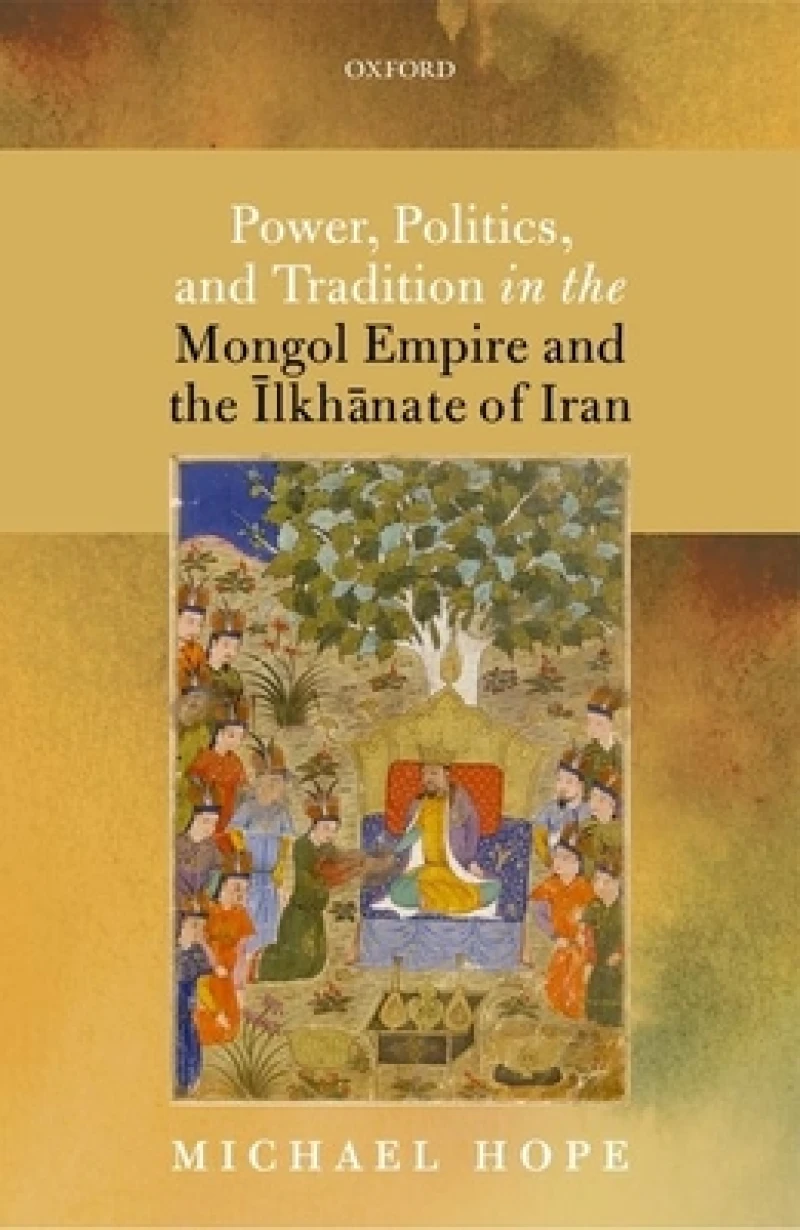
Power, Politics, and Tradition in the Mongol Empire and the Ilkhanate of Iran
by
Michael Hope
Book Details
Format
Hardback or Cased Book
ISBN-10
0198768591
ISBN-13
9780198768593
Publisher
Oxford University Press
Imprint
Oxford University Press
Country of Manufacture
GB
Country of Publication
GB
Publication Date
Oct 6th, 2016
Print length
252 Pages
Weight
514 grams
Dimensions
24.40 x 28.60 x 2.00 cms
Product Classification:
Asian historyEarly history: c 500 to c 1450/1500Colonialism & imperialism
Ksh 20,300.00
Manufactured on Demand
0 in stock
Delivery Location
Delivery fee: Select location
Secure
Quality
Fast
Traces the transmission of power within the Mongol Empire after the death of Chinggis Khan in 1227, exploring how the military aristocracy and the central government differed in their views of what constituted legitimate political authority, and the impact this had on the Ilkhanate, the Middle Eastern successor state of the Mongol Empire.
This study provides a new interpretation of how political authority was conceived and transmitted in the Early Mongol Empire (1227-1259) and its successor state in the Middle East, the Īlkhānate (1258-1335). Authority within the Mongol Empire was intimately tied to the character of its founder, Chinggis Khan, whose reign served as an idealized model for the exercise of legitimate authority amongst his political successors.Yet Chinggis Khan''s legacy was interpreted differently by the various factions within his army. In the years after his death, two distinct political traditions emerged within the Mongol Empire, the collegial and the patrimonialist. Each of these streams represented the economic and political interests of different groups within the Mongol Empire, respectively, the military aristocracy and the central government. The supporters of both streams claimed to adhere to the ideal of Chinggisid rule, but their different statuses within the Mongol community led them to hold divergent views of what constituted legitimate political authority.Michael Hope''s study details the origin of, and the differences between, these two streams of tradition; analyzing the role that these streams played in the political development of the Mongol Empire and the Īlkhānate; and assessing the role that ideological tension between the two streams played in the events leading up to the division of the Īlkhānate. Hope demonstrates that the policy and identity of both the Early Mongol Empire and the Īlkhānate were defined by the conflict between these competing streams of Chinggisid authority.
Get Power, Politics, and Tradition in the Mongol Empire and the Ilkhanate of Iran by at the best price and quality guaranteed only at Werezi Africa's largest book ecommerce store. The book was published by Oxford University Press and it has pages.

